We could not believe how unsettled we became when we saw the original version of the Victorian thriller, Gaslight (1940), from British National Films.
Now, we’ve seen the more luxurious MGM version of Gaslight (1944), starring Ingrid Bergman and Charles Boyer, which is a superb film. Yet, it didn’t unsettle us like the British version did, and we’re going to use you, Dear Reader, as a Sounding Board while we work through this.
First: the film itself. It was based on the stage play Gas Light, which opened in London in 1939, then on Broadway in 1941 as Angel Street. IMDb says this is still the longest-running melodrama in Broadway history.
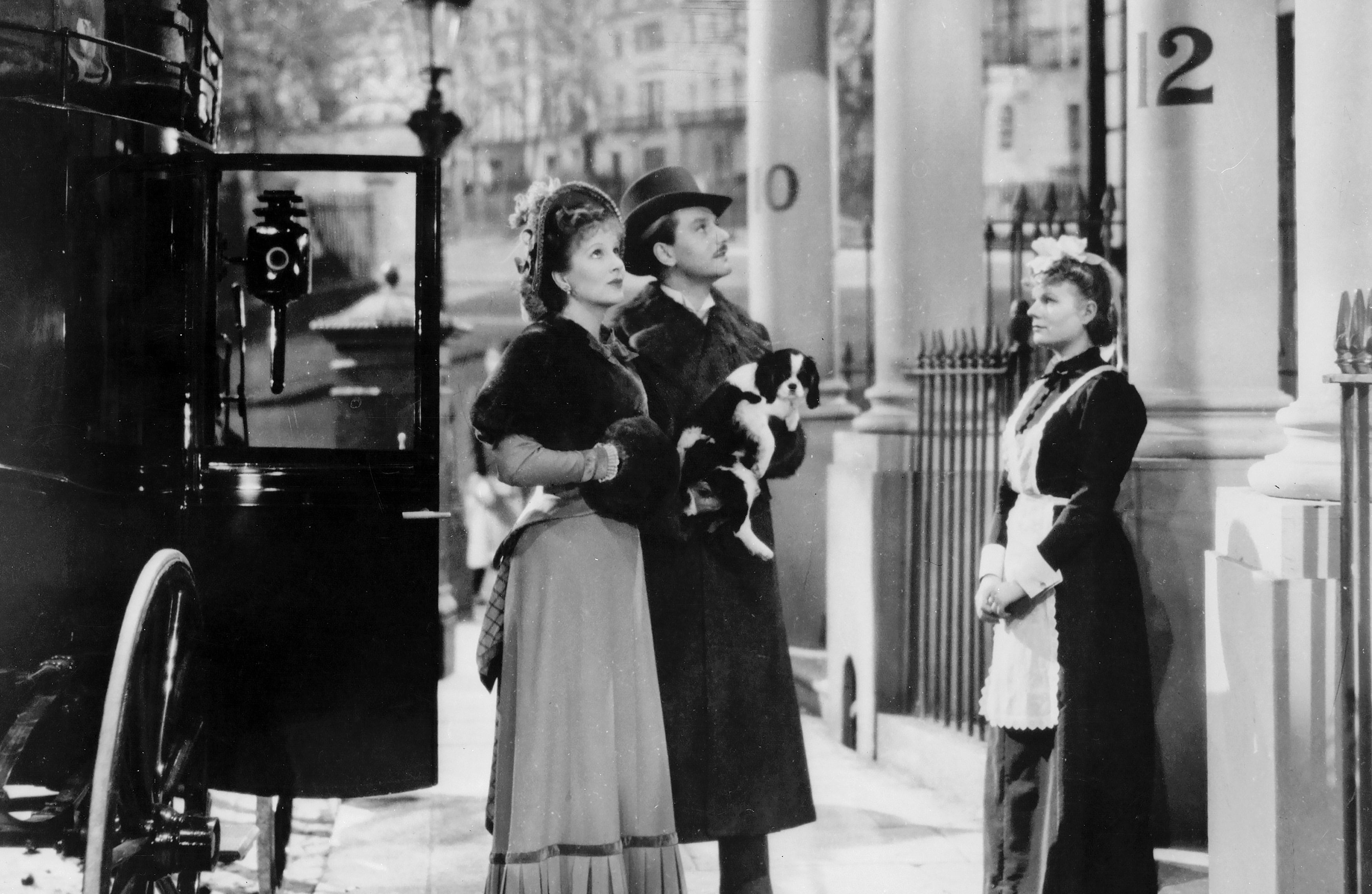
The 1940 British film, which we would not classify as “melodrama”, stars British actress Diana Wynyard and Austrian actor Anton Walbrook as a newly-married couple who purchase a vacant townhouse in London’s Pimlico Square.
The house has been vacant for several years, ever since the previous owner was murdered in it – an unhelpful tidbit in a real estate sale.
The film has beautiful Victorian-era costumes and sets, and it features a marvelous cast. Even the supporting actors make their characters engaging, creating a world where you feel you could step inside and make yourself at home, if the atmosphere weren’t so filled with dread.
Wynyard is convincing as the young, naive woman, but this is Anton Walbrook’s movie, and he’s the perfect choice as a man who gaslights his young wife.
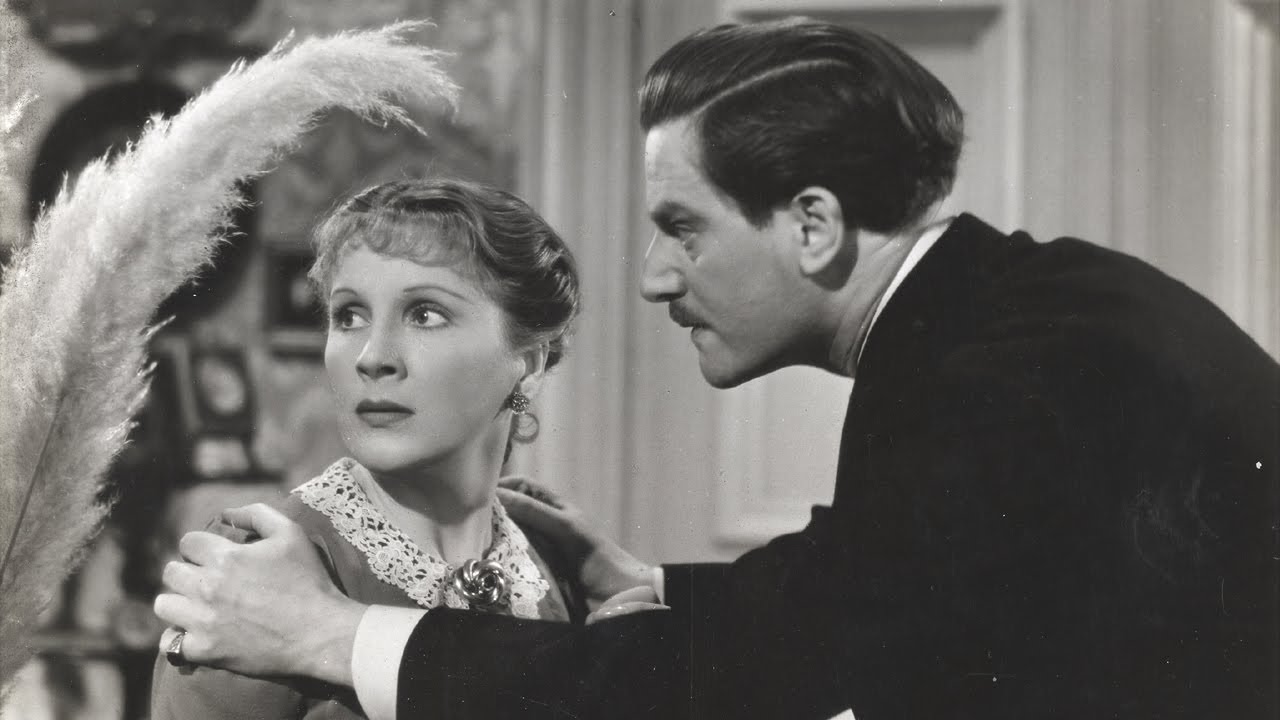
You don’t know what you think you know! Image: YouTube
Walbrook keeps us on Edge. He is a mean, calculating husband who manipulates Wynyard into believing she’s going crazy. Any tenderness he evinces is for himself and his exaggerated forbearance with his Unfortunate Situation. His whole aura is, Mind your business; I know best.
As he convinces Wynyard that her mental stability is weakening, we see it’s Walbrook’s own Grasp of Reality that’s slipping. The more he descends into mental chaos, the more he projects this fear and hatred of it onto Wynyard, blaming her for his own deterioration.
She, of course, takes it on the chin, because challenging Walbrook only makes things worse.
Walbrook’s character is a master of rearranging the landscape to suit himself. He composes it so carefully, it’s almost a work of Art. You can’t mingle with the neighbours, he tells Wynyard, because you’re not well. Your family can’t visit due to your health.
He’s also not above causing a public embarrassment to prove a point. His obsession for control is so consuming, he humiliates Wynyard at a music recital filled with people who could otherwise be her friends. If he permitted it.
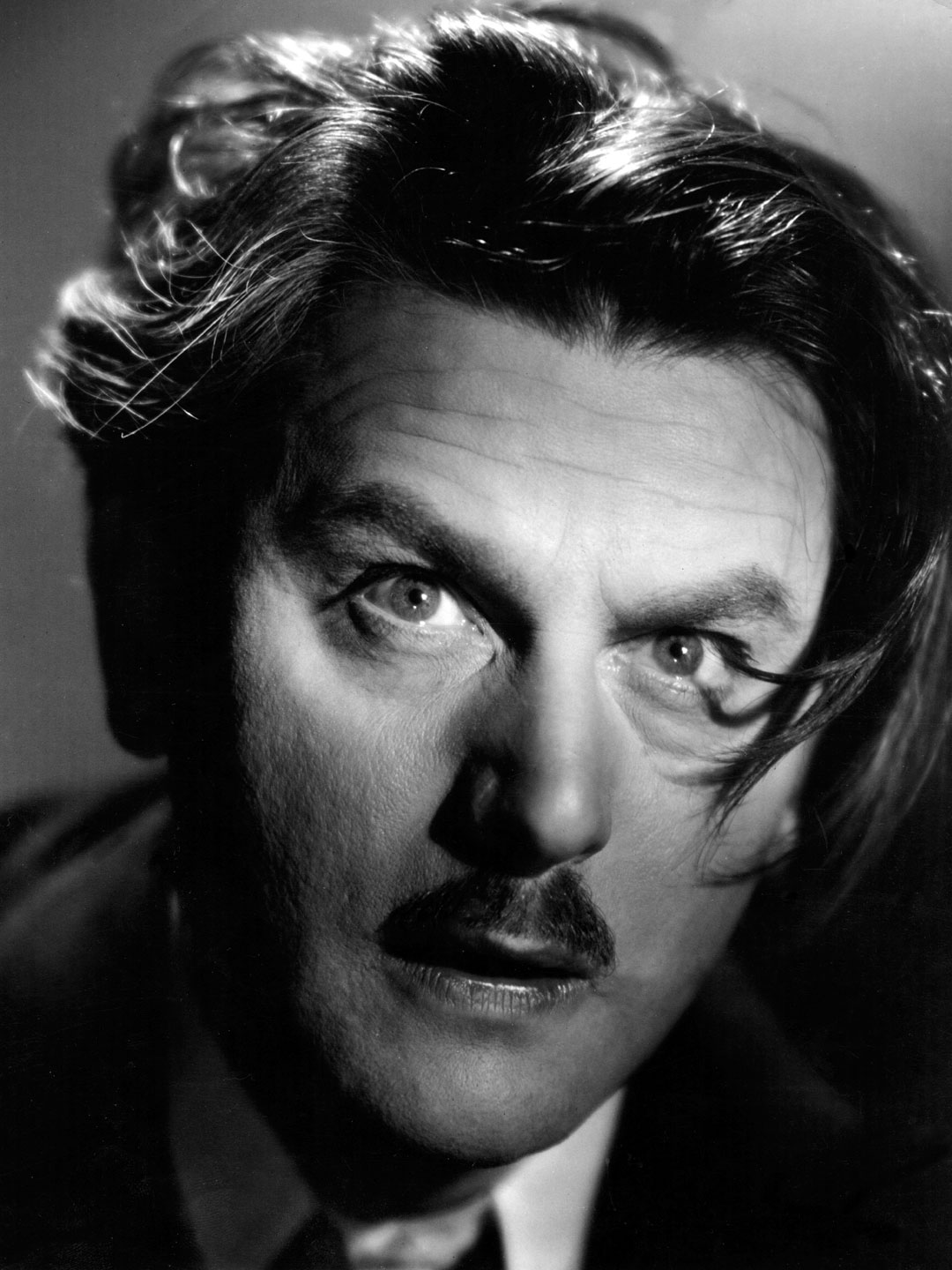
True colours revealed. Image: Rotten Tomatoes
You have to hand it to these British filmmakers for not sugar-coating this story, considering it was released just months after the start of WWII. You also have to admire Walbrook for his uncompromising performance.
Of course, it’s significant that the husband-villain in this film has an Austrian accent, which gets thicker as the story progresses. This would have reminded audiences of a certain Austrian-born politician of the day who was bent on World Domination.
Gaslight‘s cautionary tale of those who assume and abuse power is just as relevant today. Have you seen this version? If not, we urge you to give it a Go.
Gaslight: starring Anton Walbrook, Diana Wynyard, Frank Pettingell. Directed by Thorold Dickinson. Written by Patrick Hamilton, A.R. Rawlinson & Bridget Boland. British National Films, 1940, B&W, 84 mins.
You called it! He has a moustache, albeit the non-twirly variety. This is an excellent film, and I hope you get the chance to see it. I think you’d really enjoy it.
Thanks! The Hollywood version is soo good, yet this one really got to me. We see Walbrook struggling with his own mental health and taking it out on Wynyard. It’s masterfully done.
You’re right. I’ve heard people say this is their fave version, and I can see why. One can only imagine how chilling it would’ve been to wartime audiences.
Suddenly, an actor of whom I was blissfully unaware, Anton Walbrook, is popping up all over the place: on my own blog, and now in two posts for this blogathon! It’s as if his ghost, via that Rotten Tomatoes photo, is commanding me to become more aware and watch his movies. Kidding aside, this is a great pick – a classic original adaptation that has been eclipsed by a glossier, more star-powered version, but is well worth a look.
Anton Walbrook is such a talented actor. If you ever see The Life and Death of Colonel Blimp (1943), he gives an astonishing monologue as a German refugee in a British immigration office. Very low key, but you can’t take your eyes off him.
Thank you for giving me the nudge I needed to check out this version of Gaslight. I’ve had it in my collection for years, part of some low-budget box set, but I’ve never watched it. You can bet I will be dusting it off and giving it a go soon!
You’ll like it, Karen. Anton Walbrook’s performance is unforgettable, and the rest of the cast is absolutely terrific. I’m sad it took me so long to see it!
Oh! I only saw the version with Ingrid Bergman and the original was kind of a “I guess I’ll see it some day” thing for me, but you made me want to see it sooner than later! Great review!
Thanks, Virginie! This version is a Must See. Anton Walbrook isn’t just a mean husband, he’s also grappling with madness. His performance is remarkable.
Wow! I’ve never heard of this version, and if I like it half as much as Bergman’s, it’s worth the watch. Your review makes it sound very compelling. Thanks.
This version is, apparently, closer to the stage play than the Bergman version. At first it may not seem as rich as the MGM film, but it really sucks you in. I think you might like it.
I saw this version on the back side of a library dvd. Wow, I was astounded at how good and complex it was. Scared me too, and then I was cheering for Bella during her big moment. So good.
Complex is right! Anton Walbrook is mesmerizing, isn’t he? But the rest of the cast is superb too, hey? The whole thing has an overriding sense of doom and terror.
This is such a good movie, and thanks to the marvellous and underrated Anton Walbrook. He shines in this performance and is pure evil, as you said. It’s an unsettling movie, even after all those years: probably and exactly what the filmmakers must have wanted.
Cheers!
Le
Anton Walbrook seems to be largely forgotten today, outside of classic movie circles, doesn’t he? It’s a shame because his performances are master classes in acting. Like you said, this is an unsettling movie, and I’ll never forget it.






 Silver Screenings
I had to check out if the villain had a moustache.. and interesting here not the twirly type. I love your engaging title too.
LikeLiked by 1 person
You called it! He has a moustache, albeit the non-twirly variety. This is an excellent film, and I hope you get the chance to see it. I think you’d really enjoy it.
LikeLiked by 1 person
Only know the Hollywood version. Must watch this one. Great review.
LikeLiked by 1 person
Thanks! The Hollywood version is soo good, yet this one really got to me. We see Walbrook struggling with his own mental health and taking it out on Wynyard. It’s masterfully done.
LikeLike
This is a great version of Gaslight, such a fantastic film, and often overlooked. The victorian era sets and costumes are fabulously done as well.
LikeLiked by 1 person
You’re right. I’ve heard people say this is their fave version, and I can see why. One can only imagine how chilling it would’ve been to wartime audiences.
LikeLiked by 1 person
Ooh, I didn’t know about this one—looks like a master class!
LikeLiked by 1 person
It is a master class. Anton Walbrook is unforgettable.
LikeLiked by 1 person
Suddenly, an actor of whom I was blissfully unaware, Anton Walbrook, is popping up all over the place: on my own blog, and now in two posts for this blogathon! It’s as if his ghost, via that Rotten Tomatoes photo, is commanding me to become more aware and watch his movies. Kidding aside, this is a great pick – a classic original adaptation that has been eclipsed by a glossier, more star-powered version, but is well worth a look.
LikeLiked by 1 person
Anton Walbrook is such a talented actor. If you ever see The Life and Death of Colonel Blimp (1943), he gives an astonishing monologue as a German refugee in a British immigration office. Very low key, but you can’t take your eyes off him.
LikeLike
Thank you for giving me the nudge I needed to check out this version of Gaslight. I’ve had it in my collection for years, part of some low-budget box set, but I’ve never watched it. You can bet I will be dusting it off and giving it a go soon!
— Karen
LikeLiked by 1 person
You’ll like it, Karen. Anton Walbrook’s performance is unforgettable, and the rest of the cast is absolutely terrific. I’m sad it took me so long to see it!
LikeLiked by 1 person
Oh! I only saw the version with Ingrid Bergman and the original was kind of a “I guess I’ll see it some day” thing for me, but you made me want to see it sooner than later! Great review!
LikeLiked by 2 people
Thanks, Virginie! This version is a Must See. Anton Walbrook isn’t just a mean husband, he’s also grappling with madness. His performance is remarkable.
LikeLiked by 1 person
Wow! I’ve never heard of this version, and if I like it half as much as Bergman’s, it’s worth the watch. Your review makes it sound very compelling. Thanks.
LikeLiked by 1 person
This version is, apparently, closer to the stage play than the Bergman version. At first it may not seem as rich as the MGM film, but it really sucks you in. I think you might like it.
LikeLike
I’m with everyone else–this other version is completely unknown to me. It looks amazing. 🙂
LikeLiked by 1 person
It is! You must see it!
LikeLiked by 1 person
I confess to not even knowing there was a previous version. You’ve peaked my interest!
LikeLiked by 1 person
It’s well worth your time, if you come across it.
LikeLiked by 1 person
I saw this version on the back side of a library dvd. Wow, I was astounded at how good and complex it was. Scared me too, and then I was cheering for Bella during her big moment. So good.
LikeLiked by 1 person
Complex is right! Anton Walbrook is mesmerizing, isn’t he? But the rest of the cast is superb too, hey? The whole thing has an overriding sense of doom and terror.
LikeLiked by 1 person
It affected me deeply, and I agree, the whole show was well cast
LikeLiked by 1 person
This is such a good movie, and thanks to the marvellous and underrated Anton Walbrook. He shines in this performance and is pure evil, as you said. It’s an unsettling movie, even after all those years: probably and exactly what the filmmakers must have wanted.
Cheers!
Le
LikeLiked by 2 people
Anton Walbrook seems to be largely forgotten today, outside of classic movie circles, doesn’t he? It’s a shame because his performances are master classes in acting. Like you said, this is an unsettling movie, and I’ll never forget it.
LikeLike