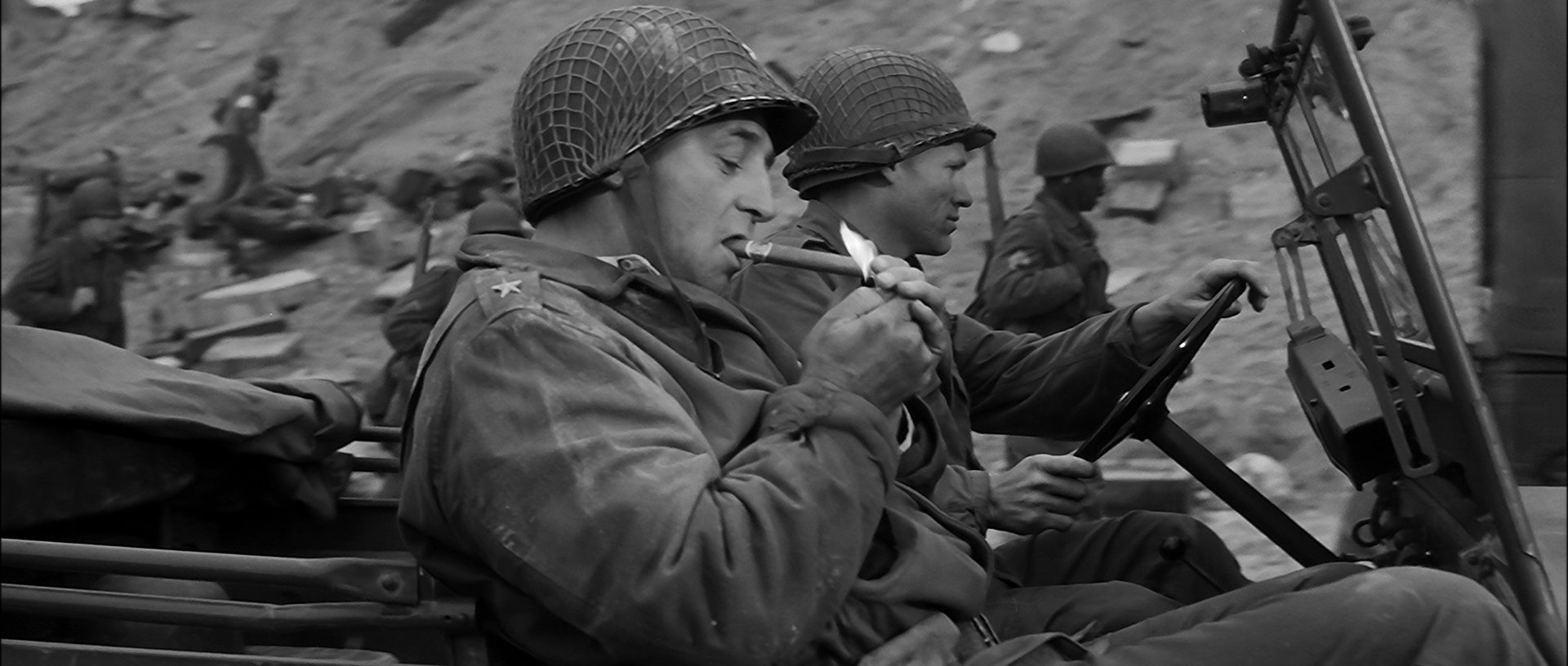
Robert Mitchum in the reenactment film, The Longest Day (1962). Image: FanPop
Has a Hollywood war movie left its thumbprint on you?
For us, one such film was Apocalypse Now (1979), a haunting dreamscape in an exotic war zone. It confronted us with the reminder the world isn’t always the place we wish it to be.
We were mulling this over after seeing a new five-part documentary, released by Cantilever Films, that looks at American war films and how they reflect North American society.
War Movie: The American Battle in Cinema (2023) is a thorough examination of over a century of Hollywood films, from 1900 to 2020. Historians, academics, and army personnel are interviewed, giving different perspectives on the ways war is portrayed by Hollywood.
They offer surprising insights:
“Most people who make war movies have seen more war movies than actual war.”
“We conflate World War II with a World War II movie.”
“Iron Man is the most successful [war] movie set in Afghanistan.”
Agree or disagree, War Movie challenges us to view war movies – portrayals of the ultimate conflict – as reflections of us and our society.
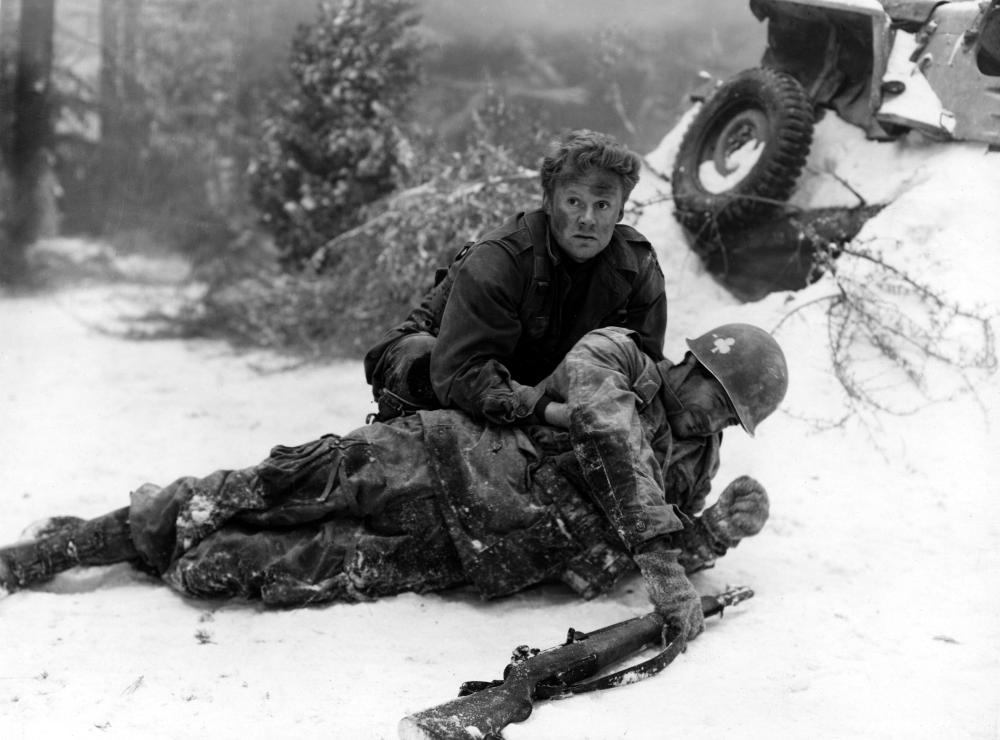
Van Johnson under siege in Battleground (1949). Image: Cineplex
The documentary is divided into five parts:
The Camera and the Gun, 1900-1938
The “Good” War, 1938-1949
The Shifting Tide, 1950-1975
Into the Jungle, 1976-2000
Brave New World, 2001-2020
Each part runs approximately an hour, and each offers thoughtful analyses on the wars that were portrayed, the effects of battle, and how society reacted to both the war and movie depictions.
It explores the early years of film and Hollywood portrayals of WWI and WWII, along with the role of propaganda.
The documentary then turns its attention to the Cold War years of the 1950s and 60s, and the resurgence of sci-fi, westerns, and American Civil War movies. There was also a trend for “re-enactment” films, such as The Longest Day (1962), The Great Escape (1963), and Lawrence of Arabia (1962).
Then there was the Vietnam War, the first American conflict to be televised. Much was documented about the protests in the United States, but it wasn’t until 1977-1979 that American filmmakers felt ready to tackle the subject.
Movies about the Vietnam War struggled to make sense of the thing, as did many Americans personally, whether veterans or civilians. Coming Home (1978) tried to answer the question, “What happened?”, while First Blood (1982) and Rambo: First Blood Part II (1985) tried to “rewrite” the war.
“War movies,” says one expert, “became a metaphor for the public’s disenchantment with the U.S. government and its military policies.”
Even so, Hollywood would continue to collaborate with the American military. One famous example is Top Gun (1986), a movie that created the biggest spike in U.S. Navy enrollment in years.
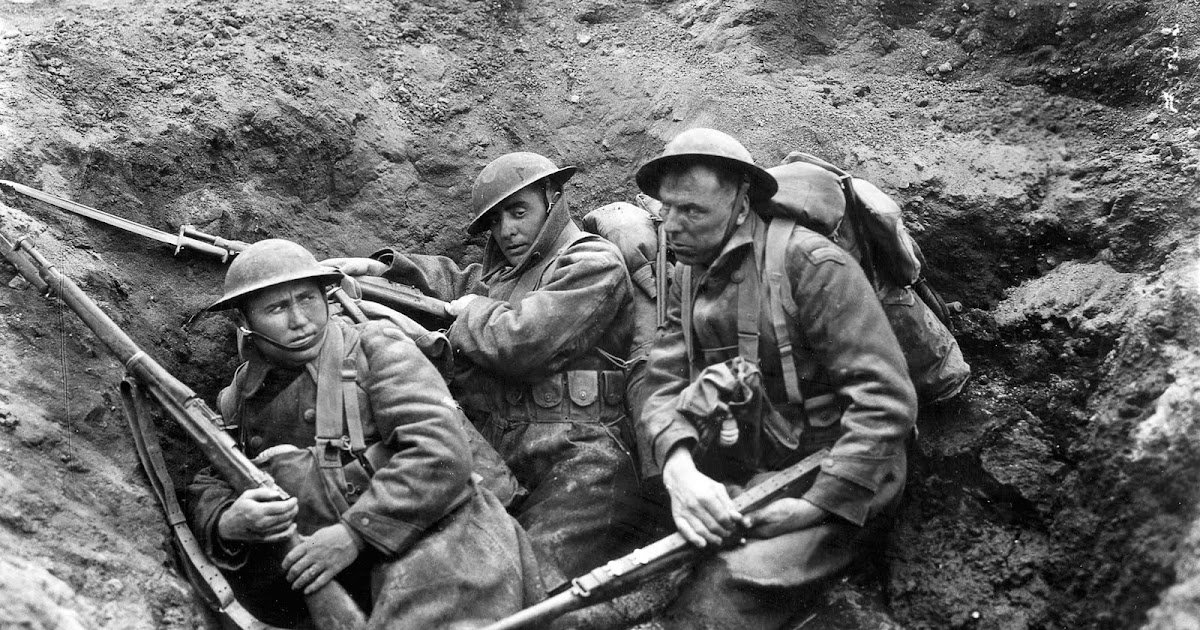
The Big Parade (1925), one of the first films about war trauma. Image: Silent Film Live Music
Current Hollywood war movies deal with the war on terror, an ongoing conflict with no real conclusion in sight.
They also take a clear-eyed look at the personal cost of war, just like The Big Parade (1925) and The Red Badge of Courage (1951) had decades before.
Yet, movies such as The Hurt Locker (2008) and American Sniper (2014) ask, What do repeated deployments do to a person’s psyche?
As for War Movie, it is careful and curious, and sometimes it says the Quiet Part out loud.
Don’t let the five-hour runtime deter you; it’s worth every minute. You don’t have to be a film aficionado or a military historian to see its value.
Because there are so many interesting observations, and we can’t possibly list them all, we’ll save them for you to discover on your own.
You can thank us later.
Disclosure: Cantilever Films sent us streaming links in exchange for an unbiased review.
There are also some great AFTER WAR movies which would make an interesting post, such as THE BEST YEARS OF OUR LIVES and THE THIRD MAN –but perhaps I should apologize for changing the subject.
I’ve seen a lot of war movies at this point and just about everyone disturbed me in some way. I think it’s mostly movies set in Vietnam that leave the biggest psychological impact. WWII is often romantized with the exception of say Saving Private Ryan.
You make a good point when you say WWII has been often romanticized. You hear stories from WWII veterans, and some of the accounts are really disturbing – not at all like the movies.
Movies about Vietnam mess with you, don’t they? I realize they’re meant to…a movie about the Vietnam War is not easily forgotten.
I think you’d like this one. The interviews are with historians and former military personnel, so you get some truly interesting insights. Highly recommended.
Apocalypse Now is a brilliant adaptation of Heart of Darkness. I found it so interesting that the latest Top Gun didn’t even specify who they were fighting. Imaginary enemies or not, the flying sequences were great!
War movies are not my favourite, in general, but there are many war movies I liked very much: Rambo First Blood, The Hurt Locker, Jarhead, The Covenent, The Great Escape, Paths of Glory… But, if you ask me to think about “war in American movies” what pops in my mind is Forrest Gump.
I totally forgot Forrest Gump was in the Vietnam War – is that where he meets Bubba?
You mentioned a couple of war films I haven’t seen & I’ll watch for them. The documentary talks about the films you listed, including Paths of Glory. Even though war movies may not be your favourite, you might like this doc if you ever come across it.
Exactly, in Vietnam Forrest meets Bubba and Lieutenant Dan, two wonderful characters. In those scenes you actually see how war must have been like, even if Forrest himself doesn’t really understand what’s going on around him. The choice not to let us ear his speech about war in Washington was pure genius from Zemeckis: in the end we feel that Forrest is the only one who actually understood what really war is.
Did they make the claim, that First Blood tried to rewrite the Vietnam war? Because it did not. It is about the post war trauma of the veteran and a society that bullies poor people. It is an exellent movie.
The Rambo sequels are ridiculous as there has been no military skill, or historical knowledge behind them. Rambo shoots through the windshield of his chopper with an RPG, but the flame would have scorched everybody inside, both the POWs he just saved and Rambo himself. In number 3 he conquers a Soviet tank by throwing a Molotov cocktail on the engine grill (wich the crew would propably not even notice) and and apparently both drives it while simultaneously firing the cannon accurately enough to hit a helicopter, but in reality could not possibly reach both the gunner and driver controlls.
Many American films trie to turn the US soldiers into heroes and sore defeats into victories. Just compare “Black Hawk Down” or “Sole Survivor” to what is known to have really happened. In films the US heroes are firing left and right dropping enemies as these charge towards the heroes, to – I don’t know what… to hit them with the automatic weapons? When we can read the reports, where hardly any enemies were hit, but Americans lose men and helicopters by the scores.
Yet, such films also tell interresting stories and raise curious questions, like why does the US military send their diver core on missions to the desert, the mountains etc. ??? Do they not have specialists for those environments? Other armies use mountain troops in mountains, and send divers in only when swimming is required.







 Silver Screenings
There are also some great AFTER WAR movies which would make an interesting post, such as THE BEST YEARS OF OUR LIVES and THE THIRD MAN –but perhaps I should apologize for changing the subject.
LikeLiked by 2 people
Ha! No, you make a good point. The documentary did briefly touch on those very films, but a deeper dive would indeed be interesting.
LikeLiked by 2 people
Thanks. Nice review – I will look out for it.
LikeLiked by 2 people
It’s well worth your time. I hope you’re able to see it.
LikeLiked by 1 person
I’ve seen a lot of war movies at this point and just about everyone disturbed me in some way. I think it’s mostly movies set in Vietnam that leave the biggest psychological impact. WWII is often romantized with the exception of say Saving Private Ryan.
LikeLiked by 1 person
You make a good point when you say WWII has been often romanticized. You hear stories from WWII veterans, and some of the accounts are really disturbing – not at all like the movies.
Movies about Vietnam mess with you, don’t they? I realize they’re meant to…a movie about the Vietnam War is not easily forgotten.
LikeLiked by 1 person
This sounds like a fantastic documentary. I don’t normally watch war movies that much, but think I’d certainly check this out.
LikeLiked by 1 person
I think you’d like this one. The interviews are with historians and former military personnel, so you get some truly interesting insights. Highly recommended.
LikeLiked by 1 person
Apocalypse Now is a brilliant adaptation of Heart of Darkness. I found it so interesting that the latest Top Gun didn’t even specify who they were fighting. Imaginary enemies or not, the flying sequences were great!
LikeLiked by 1 person
I loved Top Gun: Maverick and those flying sequences! After 2 years of lockdowns, they felt so liberating.
LikeLiked by 1 person
War movies are not my favourite, in general, but there are many war movies I liked very much: Rambo First Blood, The Hurt Locker, Jarhead, The Covenent, The Great Escape, Paths of Glory… But, if you ask me to think about “war in American movies” what pops in my mind is Forrest Gump.
LikeLiked by 1 person
I totally forgot Forrest Gump was in the Vietnam War – is that where he meets Bubba?
You mentioned a couple of war films I haven’t seen & I’ll watch for them. The documentary talks about the films you listed, including Paths of Glory. Even though war movies may not be your favourite, you might like this doc if you ever come across it.
LikeLiked by 1 person
Exactly, in Vietnam Forrest meets Bubba and Lieutenant Dan, two wonderful characters. In those scenes you actually see how war must have been like, even if Forrest himself doesn’t really understand what’s going on around him. The choice not to let us ear his speech about war in Washington was pure genius from Zemeckis: in the end we feel that Forrest is the only one who actually understood what really war is.
LikeLiked by 1 person
Excellent point.
LikeLiked by 1 person
Did they make the claim, that First Blood tried to rewrite the Vietnam war? Because it did not. It is about the post war trauma of the veteran and a society that bullies poor people. It is an exellent movie.
The Rambo sequels are ridiculous as there has been no military skill, or historical knowledge behind them. Rambo shoots through the windshield of his chopper with an RPG, but the flame would have scorched everybody inside, both the POWs he just saved and Rambo himself. In number 3 he conquers a Soviet tank by throwing a Molotov cocktail on the engine grill (wich the crew would propably not even notice) and and apparently both drives it while simultaneously firing the cannon accurately enough to hit a helicopter, but in reality could not possibly reach both the gunner and driver controlls.
Many American films trie to turn the US soldiers into heroes and sore defeats into victories. Just compare “Black Hawk Down” or “Sole Survivor” to what is known to have really happened. In films the US heroes are firing left and right dropping enemies as these charge towards the heroes, to – I don’t know what… to hit them with the automatic weapons? When we can read the reports, where hardly any enemies were hit, but Americans lose men and helicopters by the scores.
Yet, such films also tell interresting stories and raise curious questions, like why does the US military send their diver core on missions to the desert, the mountains etc. ??? Do they not have specialists for those environments? Other armies use mountain troops in mountains, and send divers in only when swimming is required.
LikeLiked by 1 person
Thanks for dropping by and making some excellent points to think about.
LikeLike