Sometimes we think movie audiences in the early 1950s were a little spoiled.
Hear us out. The early 1950s were a time of remarkable cinematic innovation, such as CinemaScope and 3-D, and filmmakers seemed interested in compelling stories.
Even “forgettable” films from this era can be thoughtful and engaging. For example, look at the psychological thriller, Don’t Bother to Knock (1952).
Marilyn Monroe, in her first major dramatic role, and Oscar-nominated Richard Widmark star as two guests navigating a fractious evening in a New York hotel. The action unfolds in almost real time.
Widmark plays a pilot who’s just been Dumped by girlfriend Anne Bancroft. Stinging from this fresh breakup, he spots and pursues Monroe. Perhaps his evening won’t be a Wash-Out after all!
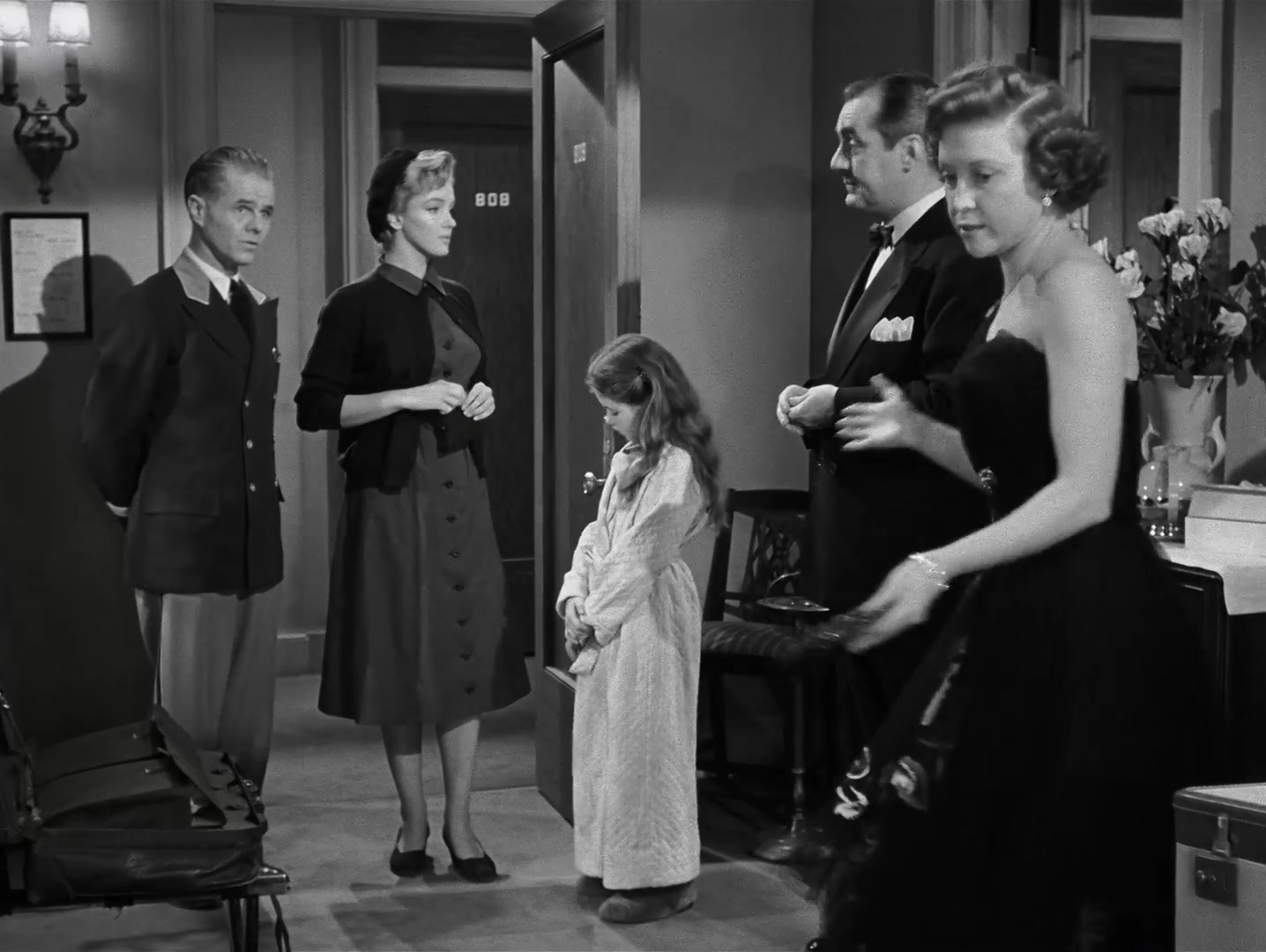
Monroe is a newcomer to NYC. She’s been hired to babysit the daughter of an out-of-town couple attending an awards banquet in the hotel. There’s a vague uneasiness about Monroe’s character, something the mother (Lurene Tuttle) senses.
Meanwhile, we the audience discover Monroe’s character isn’t entirely truthful – or trustworthy.
As the movie/evening progresses, Monroe’s character begins to reveal signs of mental distress, and she sinks into it, pulling down those around her.
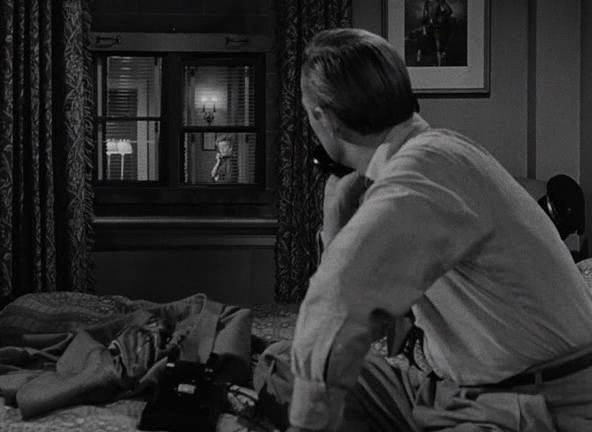
Phones and windows are recurring themes. Image: Film Fanatic
This is a terrific film. But here’s what we mean about the early 1950s: Critics complained about it. They didn’t like the script or Monroe’s performance. They said it was forgettable.
Forgettable!
Bosley Crowther of the New York Times adopted a Long-Suffering and Pitying stance in his review. “[A]ll the equipment that Miss Monroe has to handle the job are a childishly blank expression and a provokingly feeble, hollow voice,” he wrote. “All in all, Miss Monroe needs much more practice than she shows in ‘Don’t Bother to Knock’.”1
We must disagree with dear Bosley.
First, Monroe’s “blank expression” puts us on Edge. Her character isn’t warm or welcoming. In fact, when she first meets the family employing her, she barely glances at the daughter. Her blank expression masks her immaturity, along with a Sadness so deep she can barely keep afloat.
Second, Monroe’s character plays with the truth, trying on Lies like she’s trying on outfits. How does this Lie look? How does it feel? Then she tries on a fancier Lie; perhaps this one suits her better.
Third, Monroe uses vocal inflection as signposts of her character’s mental state. In seducing Widmark, her voice is soft and doughy, but when speaking to the child, her voice is harsh. When Widmark questions her unorthodox childcare techniques, she dismisses his concerns with a brusqueness that hints at her own childhood.
These changes in tone are not accidental, dear Bosley. Many people refer to this as acting.
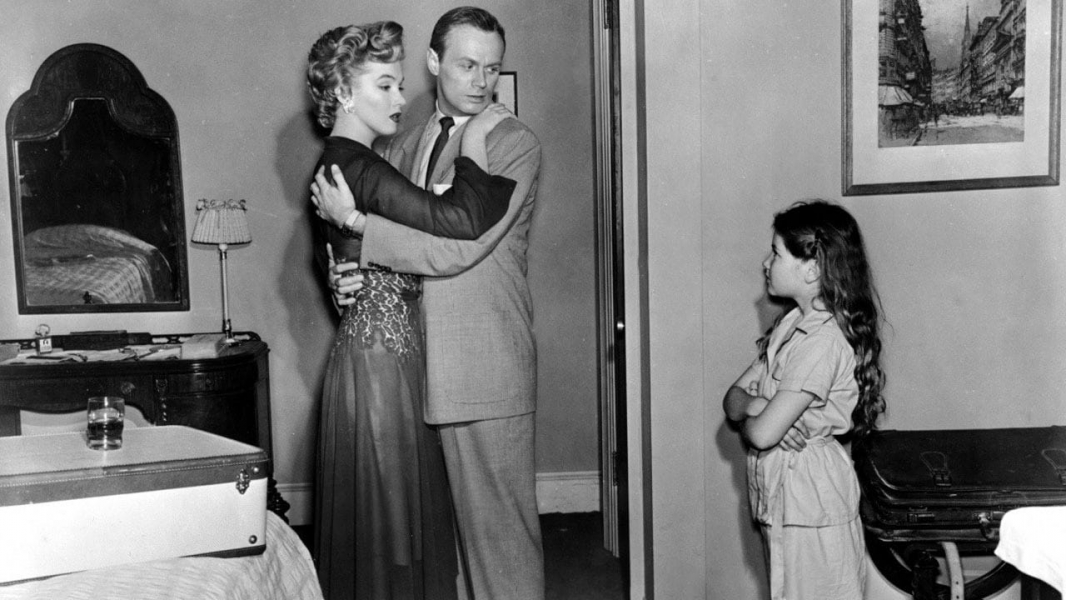
This isn’t what it looks like. Image: MyFlixer
Don’t Bother to Knock was based on the 1950 novel, Mischief, by American novelist and playwright Charlotte Armstrong.
Filming the screen adaptation proved troublesome. Monroe relied on her acting coach while on set, resulting in conflicts with director Roy Baker. Things Came to a Head three weeks into production, and Monroe’s coach was banned from the soundstage.
Baker also wasn’t happy with Monroe as lead, and her habitual tardiness and inability to gain momentum in a scene only added to his headaches.
“It soon became clear to me that this movie would have to be put together piecemeal,” he said. “There could be no such thing as a master scene (but rather) single lines and reactions (derived) from several takes.”2
Even so, Monroe delivers a credible performance and Holds Her Own with costars Widmark and Bancroft. She proves she can carry a film, which put her in good stead for 1953, the year she made three Top 10 box office movies.
So don’t be so complain-y, you 1950s critics. We 21st-Century movie fans will take this “forgettable” thriller any day.
Don’t Bother to Knock: starring Richard Widmark, Marilyn Monroe, Ann Bancroft. Directed by Roy Ward Baker. Written by Daniel Taradesh. Twentieth Century-Fox, 1952, B&W, 100 mins.
I really liked this movie. I gasped out loud a couple of times because there were some things I did NOT see coming. Hope you enjoy if you so get the chance to see it?
I haven’t seen this one and probably won’t, because a Marilyn Monroe fan I’m not, though I liked her a lot in “Some Like It Hot” (pardon my perverse verse). But I am a fan of Ann Bancroft (this was her film debut) and Richard Widmark (who usually played the bad guy)..
Anne Bancroft is fab in this movie, isn’t she? You’d never know this was her first film – she handles it like a pro. And Richard Widmark is always terrific, isn’t he? He always gives you your money’s worth.
I saw this film years and years back, and actually thought it wasn’t bad. Nowadays I see it as one of the rare instances where a pre 1960’s or 1970’s film took mental illness seriously, showing the majority of people who had the various maladies needed help, not be shunned or treated like criminals. Given this was one of Marilyn Monroe’s first big roles, she does very well her first time out. It’s not perfect by any means but is still a worthwhile performance.
Oh, said she running to a as unread book on Marilyn Monroe’s movies your review and this film plot has me wanting to learn more.. Richard Widmark and Marilyn in the same movie, this I must see. Thanks Ruth for putting it in my radar…
You have really got my attention with the mental health mention, she always seems such a vulnerable soul, she seemed perfect casting. Just adding it to my review list.
Speaking of review lists, writing up on David Soul atm for my tribute and thought of you seeing Starsky’s knitwear in Starsky and Huch…
So are you, I was so touched by the Christopher Plummer chunky jumper post you wrote (and researched) for me. I love it so much and it’s one of my favourite reads xx
I finally saw Don’t Bother to Knock last year after giving it several passes over the years. I’m not the biggest Marilyn Monroe fan either, but this one is a very interesting outlier both for the times and her career. Her performance is spot-on, and I’m glad that this film has survived its initial critical drubbing and enjoys a much better reputation these days. Monroe was gifted with that indefinable “something,” but I can sympathize with the directors who had to deal with all her issues.
It would’ve been really frustrating to be on this set, but the final product is good. I like what you said about Marilyn’s “indefinable ‘something’.” So true!
I often overlooked Don’t Bother to Knock, but when I did finally see it I really enjoyed it. The 50’s was such a transformative time for cinema, the art medium was still very much evolving, and I think those stuffy old critics just refused to move with the times perhaps?
The 1950s were an incredible time for movies, thanks to technology, technique, telling more realistic stories, etc., as you pointed put. A really exciting time for movie-goers.
I wonder the same thing re: movie critics of the 1950s. But maybe I’d be no different…
I had never heard of this movie, but I believe you when you say Marilyn was so good in it: I saw Niagara and thought she was great also in dramatic roles, even if she is so well known for musical and comedy, where she’s terrific.
Marilyn has great comedic timing, doesn’t she? Like you say, she’s fabulous in comedies & musicals.
In this dramatic film, Marilyn really puts the audience on edge. Her character does some surprising things, and you don’t know what’s coming next. Plus, she shows us how wounded her character is, and we believe it.
Ah, the interesting world of art criticism. It always intrigues me to discover how many “classics” were initially panned when first put out for public consumption. As tastes and ideas and gatekeeping standards change so do the critics.
Brilliantly said. And you’re so right about the number of movies that found appreciation with later audiences. That would make an interesting post in itself, now that I think about it. Thanks!
Monroe was not exactly a gifted actress. Her primary attribute was her face, followed by her body. When she spoke, it was with a purring lilt that made certain men think she had a burr up her ass. But oh well. She was a marquee idol.
Come visit my blog, and leave some comments, if you like
Why am I not surprised that Bosley Crowther had nothing nice to say? That guy. I enjoyed your write-up, Ruth, and your appreciation of Marilyn’s performance in this film. I think she did a bang-up job. Bosley can kick rocks.
Haha! Poor Bosley. He wrote the review like it was a Major Imposition to do so, but that’s the job so let’s grit our teeth and get on it.
I can see how a person might become jaded about movies after reviewing them for many years. However, you’ve been reviewing them for many years, too, haven’t you? Yet, I’ve never sensed a boredom or disdain for films in your writings.
Totally agree with you, Ruth! Monroe was terrific in Don’t Bother to Knock. She gave her character the right balance of haunting and disturbing and made us feel for her while doing it.
Glad to see appreciation for this film! I was blown away by Monroe’s sensitive performance and the film’s compassion towards those living with mental illness. Monroe’s character could have easily been portrayed in typical “bunny boiler” fashion, but by the end, you want her to be helped, not destroyed.
As for Crowther– I don’t think I’ve yet come across a review of his that didn’t leave me eye-rolling.
Beautifully said. Marilyn’s portrayal was sensitive, like you said, and the script treated her character’s condition with care. I was amazed by her performance.
Poor Bosley Crowther. Did he find much joy in watching movies?
I saw this film not long ago and I thought Monroe was excellent (so was the rest of the cast). I always loved Monroe in those early 50s films before she was typecast as the “dumb blond” (like Niagra and Clash By Night).
I’m surprised to learn that this movie was deemed “forgettable”! It is, in my opinion, the best performance by Marilyn Monroe in her whole career, and the other actors are not bad neither. Sometimes, time just do good to a film, like in this case.
I love this film and to me, it is not forgettable at all. I loved Marilyn Monroe’s dramatic performance and she proves that she was every bit as masterful at comedy as she was at drama 🙂 Great post as always 🙂
She sure did 🙂 Speaking of her comedies, I actually rank Gentlemen Prefer Blondes somewhere within my top 10 of my favorite American/English-Language Films of All-Time 🙂






 Silver Screenings
I’ve never even heard of this movie, but now I’m intrigued! Maggie
LikeLiked by 1 person
I really liked this movie. I gasped out loud a couple of times because there were some things I did NOT see coming. Hope you enjoy if you so get the chance to see it?
P.S. Are you on an expedition right now?
LikeLiked by 1 person
No we’re home, but we’re having some of the coldest weather we’ve had in a few years – why aren’t we travelling now!!?? 🙂 Maggie
LikeLiked by 1 person
Bahaha! I feel for you.
LikeLiked by 1 person
I haven’t seen this one and probably won’t, because a Marilyn Monroe fan I’m not, though I liked her a lot in “Some Like It Hot” (pardon my perverse verse). But I am a fan of Ann Bancroft (this was her film debut) and Richard Widmark (who usually played the bad guy)..
LikeLiked by 1 person
Anne Bancroft is fab in this movie, isn’t she? You’d never know this was her first film – she handles it like a pro. And Richard Widmark is always terrific, isn’t he? He always gives you your money’s worth.
LikeLiked by 1 person
I saw this film years and years back, and actually thought it wasn’t bad. Nowadays I see it as one of the rare instances where a pre 1960’s or 1970’s film took mental illness seriously, showing the majority of people who had the various maladies needed help, not be shunned or treated like criminals. Given this was one of Marilyn Monroe’s first big roles, she does very well her first time out. It’s not perfect by any means but is still a worthwhile performance.
LikeLiked by 1 person
Well said. This film doesn’t diminish or dismiss the issue of mental health. And the top-notch cast handles it well.
LikeLiked by 1 person
Oh, said she running to a as unread book on Marilyn Monroe’s movies your review and this film plot has me wanting to learn more.. Richard Widmark and Marilyn in the same movie, this I must see. Thanks Ruth for putting it in my radar…
LikeLiked by 1 person
Gill, you in particular must see this one. I’d love to know what you think.
LikeLiked by 1 person
You have really got my attention with the mental health mention, she always seems such a vulnerable soul, she seemed perfect casting. Just adding it to my review list.
Speaking of review lists, writing up on David Soul atm for my tribute and thought of you seeing Starsky’s knitwear in Starsky and Huch…
LikeLiked by 1 person
You are the Absolute Best.
LikeLiked by 1 person
So are you, I was so touched by the Christopher Plummer chunky jumper post you wrote (and researched) for me. I love it so much and it’s one of my favourite reads xx
LikeLiked by 1 person
Aw, thanks so much! You just made my week.
LikeLiked by 1 person
As you made mine with that post, I hope the research didn’t take up too much of your time…
LikeLiked by 1 person
Haha! That’s the best kind of research.
LikeLiked by 1 person
I finally saw Don’t Bother to Knock last year after giving it several passes over the years. I’m not the biggest Marilyn Monroe fan either, but this one is a very interesting outlier both for the times and her career. Her performance is spot-on, and I’m glad that this film has survived its initial critical drubbing and enjoys a much better reputation these days. Monroe was gifted with that indefinable “something,” but I can sympathize with the directors who had to deal with all her issues.
LikeLiked by 1 person
It would’ve been really frustrating to be on this set, but the final product is good. I like what you said about Marilyn’s “indefinable ‘something’.” So true!
LikeLike
I often overlooked Don’t Bother to Knock, but when I did finally see it I really enjoyed it. The 50’s was such a transformative time for cinema, the art medium was still very much evolving, and I think those stuffy old critics just refused to move with the times perhaps?
LikeLiked by 1 person
The 1950s were an incredible time for movies, thanks to technology, technique, telling more realistic stories, etc., as you pointed put. A really exciting time for movie-goers.
I wonder the same thing re: movie critics of the 1950s. But maybe I’d be no different…
LikeLiked by 1 person
It sounds really good! No wonder Monroe struggled so much when she was dealing with constant criticism.
LikeLiked by 1 person
Yeah, I thought that criticism was a little harsh. But she certainly showed ’em the following year with 3 Top 10 box office movies.
LikeLiked by 1 person
I have never heard of this movie! Thank you for sharing this story.
Incidentally, I just saw that today is the anniversary of her marriage to Joe DiMaggio.
LikeLiked by 1 person
No way! Well, this was very timely. 😉
I hope you get a chance to see this movie. I think you might enjoy it.
LikeLiked by 1 person
I will get to work on that! You have great timing!
LikeLiked by 1 person
Here’s what “spoiled” means. I get a distinctly bad movie, but I also get to eyeball a young Marilyn Monroe. That still feels like a “win.”
LikeLiked by 1 person
Hahaha! You’re always able to find the nugget of gold in any movie.
LikeLike
I had never heard of this movie, but I believe you when you say Marilyn was so good in it: I saw Niagara and thought she was great also in dramatic roles, even if she is so well known for musical and comedy, where she’s terrific.
LikeLiked by 1 person
Marilyn has great comedic timing, doesn’t she? Like you say, she’s fabulous in comedies & musicals.
In this dramatic film, Marilyn really puts the audience on edge. Her character does some surprising things, and you don’t know what’s coming next. Plus, she shows us how wounded her character is, and we believe it.
LikeLiked by 1 person
I saw this movie as a teen, and frankly thought it was one of the best movies I had ever seen.
LikeLiked by 1 person
It’s such a good movie, isn’t it? It was hard to know how it would all work out.
LikeLiked by 1 person
Ah, the interesting world of art criticism. It always intrigues me to discover how many “classics” were initially panned when first put out for public consumption. As tastes and ideas and gatekeeping standards change so do the critics.
LikeLiked by 1 person
Brilliantly said. And you’re so right about the number of movies that found appreciation with later audiences. That would make an interesting post in itself, now that I think about it. Thanks!
LikeLiked by 1 person
Haha, you’re welcome! Looking forward to reading it…
LikeLiked by 1 person
Monroe was not exactly a gifted actress. Her primary attribute was her face, followed by her body. When she spoke, it was with a purring lilt that made certain men think she had a burr up her ass. But oh well. She was a marquee idol.
Come visit my blog, and leave some comments, if you like
http://www.catxman.wordpress.com
LikeLiked by 1 person
Thanks for the link to your blog. I’ll drop by soon!
LikeLike
Why am I not surprised that Bosley Crowther had nothing nice to say? That guy. I enjoyed your write-up, Ruth, and your appreciation of Marilyn’s performance in this film. I think she did a bang-up job. Bosley can kick rocks.
— Karen
LikeLiked by 1 person
Haha! Poor Bosley. He wrote the review like it was a Major Imposition to do so, but that’s the job so let’s grit our teeth and get on it.
I can see how a person might become jaded about movies after reviewing them for many years. However, you’ve been reviewing them for many years, too, haven’t you? Yet, I’ve never sensed a boredom or disdain for films in your writings.
LikeLike
Totally agree with you, Ruth! Monroe was terrific in Don’t Bother to Knock. She gave her character the right balance of haunting and disturbing and made us feel for her while doing it.
LikeLiked by 1 person
You said it! Haunting and disturbing perfectly describes her character.
LikeLiked by 1 person
Glad to see appreciation for this film! I was blown away by Monroe’s sensitive performance and the film’s compassion towards those living with mental illness. Monroe’s character could have easily been portrayed in typical “bunny boiler” fashion, but by the end, you want her to be helped, not destroyed.
As for Crowther– I don’t think I’ve yet come across a review of his that didn’t leave me eye-rolling.
LikeLiked by 1 person
Beautifully said. Marilyn’s portrayal was sensitive, like you said, and the script treated her character’s condition with care. I was amazed by her performance.
Poor Bosley Crowther. Did he find much joy in watching movies?
LikeLike
I saw this film not long ago and I thought Monroe was excellent (so was the rest of the cast). I always loved Monroe in those early 50s films before she was typecast as the “dumb blond” (like Niagra and Clash By Night).
LikeLiked by 1 person
That’s a great point about Marilyn Monroe in the early 1950s films. They proved she had real talent.
Thanks for dropping by!
LikeLike
I’m surprised to learn that this movie was deemed “forgettable”! It is, in my opinion, the best performance by Marilyn Monroe in her whole career, and the other actors are not bad neither. Sometimes, time just do good to a film, like in this case.
LikeLiked by 1 person
Agreed. Marilyn’s performance is SO good, and she holds her own with the other cast members. Or, should I say, they hold their own with her!
LikeLike
This looks great. I will have to check it out!
LikeLiked by 1 person
I hope you get the chance to see it. Marilyn Monroe is really good here.
LikeLiked by 1 person
Great review! I can watch any MM film anytime and always be entertained! xox
LikeLiked by 1 person
Same here! Marilyn M is wonderful in just about anything, isn’t she?
LikeLike
I love this film and to me, it is not forgettable at all. I loved Marilyn Monroe’s dramatic performance and she proves that she was every bit as masterful at comedy as she was at drama 🙂 Great post as always 🙂
LikeLiked by 2 people
Thanks so much, and thank you for dropping by. I’m behind in my blog-reading these days, but I’ll pay you a visit soon.
As for Marilyn Monroe, I agree she was as good at drama as she was at comedy. She really did have a lot of talent, didn’t she?
LikeLiked by 1 person
She sure did 🙂 Speaking of her comedies, I actually rank Gentlemen Prefer Blondes somewhere within my top 10 of my favorite American/English-Language Films of All-Time 🙂
LikeLiked by 1 person
Deservedly so! I avoided that film for the longest time, but I immediatelt fell in love with it when I finally did see it. So well done in every way.
LikeLiked by 1 person