There’s much for a movie-lover to be grateful with modern tech such as YouTube and Google Translate. When you mesh the two, a person can enjoy movies from all over the world. What a time to be alive!
The downside is these films often have poor visual quality, and sometimes Google Translate creates weird dialogue.
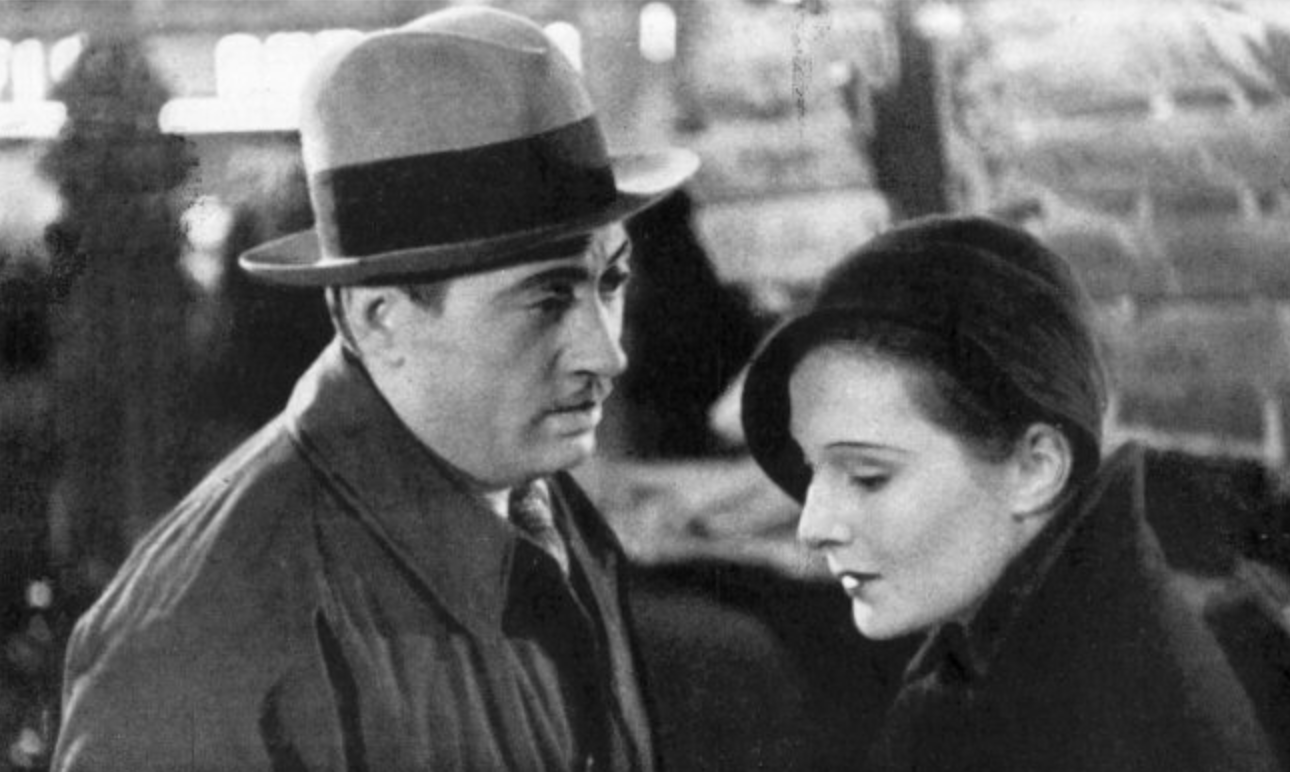
Exhibit A: The vintage Italian film, T’amerò sempre (1933), translated as I’ll Always Love You, is a story about a young woman abandoned by her boyfriend who’s also left her with a baby.
Some say this film is a Telefoni Bianchi (White Telephone) film, which shows, in part, the lavish lifestyle of the wealthy and their white designer phones. At that time, only the Upper Crust could afford the elusive white telephone; the masses used the more economical black Bakelite phones.
Telefoni Bianchi films borrowed their lavish style from American comedies of the 1930s. T’amerò sempre is a drama rather than a breezy comedy, but the scenes showing the Lifestyles of the Wealthy are Hollywood-studio glamorous.
The film illustrates the injustice of the affluent who are Above the Law, along with the struggles of an unwed mother raising a Secret Child.
Alas, the version we found on YouTube has not been kind to the filmmakers’ vision. Images are blurry and sometimes shaky, and it feels like some scenes are missing.
Then there is the unfortunate Google Translate. This translation service reminds us of why people study the art of translation, and why they are justifiably paid for their work.
In today’s movie, there are times the actors speak so fast, Google Translate can’t keep up. We see animated conversation with, undoubtedly, valuable plot information, but subtitles are woefully absent.
Then! Suddenly! Google Translate catches up and chokes out bizarre dialogue. For example:
“I got it from the robot.”
“At the time of the Paris Exhibition in 1900, everyone wore a T-shirt.”
“Where is the head she has.”
[A woman receives perfume and says], “I want to put it on my bags.”
Incredibly, these translation gaffes, along with the fuzzy images, do not ruin this compelling story.
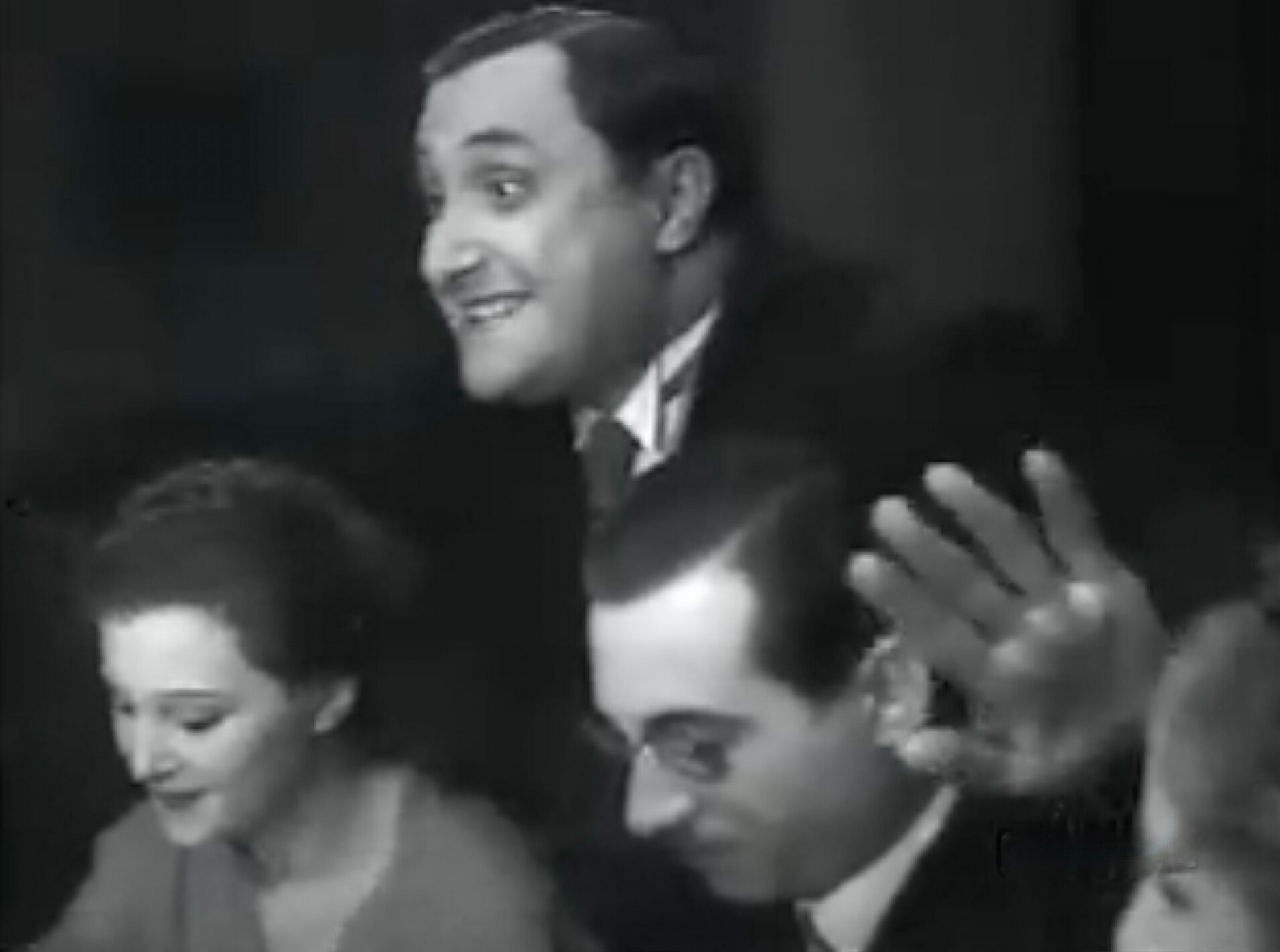
There’s one at every family gathering. Image: Wikimedia Commons
There are two worlds in this film: (1) The world of working class who Toil for their meagre pay; and (2) The world of the wealthy who treat themselves to indulgences galore.
Much of the action takes place in a spa/salon, where Adriana, the forsaken mother, works. She’s among the staff who pamper and take the blame for the spoiled clientele.
This spa/salon is a peculiar place. It has a hair salon, a massage parlour, and something Google Translate calls a “Shape Sculpture”, which sounds both promising and terrifying.
The salon is open until late in the evening, and the privileged clientele treat it like a Club. While young women are receiving their treatments, their boyfriends show off their mad string skills with shiny yo-yos* that could be made of gold.
But this movie has Heart. There is an unsophisticated but very kind man who works at the salon, a bookkeeper whom – according to Google Translate – everyone calls “Accountant”. Even his next-door neighbour calls him Accountant.
His name is Mario, and Accountant Mario is in love with Adriana. She, however, will not return his affections, for fear he will reject her due to her secret child.
There is a scene where Accountant Mario declares his feelings for Adriana; he painfully stutters and fumbles his way through his desperate speech, until he finally says he wants to marry her.
Adriana responds slowly and with great sadness, “It’s impossible.” She steps out a door and, probably, out of his life. Accountant Mario wipes his eyes after she leaves, and we are genuinely moved by both his courage and his subsequent heartbreak.
Some sources say T’amerò sempre is a “lost” film, which is a shame. It must have been beautiful to see it on a theatre screen when first released.
However, we can make do with the murky YouTube version and the imperfect Google Translate. This film is worth it.
This post is dedicated to the fabulous Cinemuffin.
*Wikipedia says there’s evidence the yo-yo was around in 440 B.C. It gained mass popularity in the late 1920s and early 1930s.
T’amerò sempre starring Elsa Di Giorgi, Nino Besozzi, Mino Doro. Directed by Mario Camerini. Written by Ivo Perilli, Guglielmo Alberti & Mario Camerini. Cines-Pittaluga, 1933, B&W, 70 mins.
I’m so flattered you have been thinking of me! I’m tempted to change my blog’s name into “fabulous Cinemuffin” now! XD In Italy we are masters of bad translations, I doubt any new arrived Google Translate can beat us, after decades of hot dogs eaten with Italian “Mostarda” (a very spicy sauce made with fruit) instead of “mustard” and cheese-and-ham hot sandwiches (“toasts”) eaten at weddings instead of congratulation speeches.
Thanks for struggling with the translation to bring us this lovely post for the blogathon. I hate google translate but will willingly put up with it if it’s a movie worth it for the cast or plot. I’d rather have that than a badly dubbed Delon or Schneider that takes you out of the movie. Thanks for bringing this post and movie… and hope you get to see the real thing, translated properly one day.
This sounds interesting and timely. And that’s fascinating about the White Telephone film, didn’t know that. Translation and captioning done properly is I think a bit under appreciated, it’s really an art. Having said that, I kinda want to see the Italian 1933 movie with the floating head, robot and everyone in tees! Double feature with the Classical Greek Drama featuring Pericles and his yo-yo. 🙂 Thanks as always for joining the blogathon, it’s never the same without you!
This movie sounds interesting, Ruth — I am always looking to add to the foreign-language films I see; they’re always so good! I love that about the white phone — it makes me want to get one, LOL. Also, the translation examples you gave were so funny to me. (Finally, I don’t know if it’s because I’m in a hospital right now and they sometimes prevent going to certain sites, but I couldn’t access the Cinemuffin site when I clicked the link. Is it just me?)
I too am one of those people willing to put up with a blurry copy on YouTube if that’s the only way to see it. I’ve not done anything in conjunction with Google Translate, but is sounds like 1.) you get the gist of what’s being said, and 2.) there’s a sort of a Mystery Science Theater 3K experience as an added bonus. I’ve got my eye on an obscure Mexican horror film streaming on YouTube for just such an experiment!
This sounds like an interesting watch 🙂 One of the things I love about this blogathon is that with some of the entries, I am learning about Italian films that I have never seen and this is one of them. And this is coming from a guy who knows every Fellini, Rossellini, Antonioni, Visconti, Pasolini film out there. Did I leave any masters out? 🙂 I shall give this a watch 🙂
I am glad I found this! As a movie buff myself, the biggest roadblock has always been catching up with the international films, especially if you can’t find appropriate subtitles. Ones that can be streamed come with a good one ~ YouTube, where most of these marvels dwell come with no subs. Probably this is what I need. Though like you said it may not be the best ~ at least there is something. [Something is better than nothing!] Cheers!
It sounds like a movie worth watching. I must admit I’m very picky whan it comes to watching a movie. I’m very much into high quality images, great sound and original versions, so this Youtube /Google Translate option doesn’t seem to be my thing.
Watching a film this way is indeed an experience, but it also shows how strong the visual stories are – you can still get the gist without every bit of dialogue. I’d be curious to know what you think if you try it.








 Silver Screenings
Art tries to warn us if only we listened, even in faulty translation.
LikeLiked by 2 people
You make an excellent point. Even faulty translation can deliver the meaning of a well-crafted film.
LikeLiked by 1 person
I’m so flattered you have been thinking of me! I’m tempted to change my blog’s name into “fabulous Cinemuffin” now! XD In Italy we are masters of bad translations, I doubt any new arrived Google Translate can beat us, after decades of hot dogs eaten with Italian “Mostarda” (a very spicy sauce made with fruit) instead of “mustard” and cheese-and-ham hot sandwiches (“toasts”) eaten at weddings instead of congratulation speeches.
LikeLiked by 3 people
Haha! Mostarda and “toasts” (LOL!!) sound like magnificent translations. I’m going to watch more vintage Italian movies on YouTube for that reason.
And yes, you should definitely add the word “Fabulous” to your blog’s name.
LikeLiked by 2 people
Thanks for struggling with the translation to bring us this lovely post for the blogathon. I hate google translate but will willingly put up with it if it’s a movie worth it for the cast or plot. I’d rather have that than a badly dubbed Delon or Schneider that takes you out of the movie. Thanks for bringing this post and movie… and hope you get to see the real thing, translated properly one day.
LikeLiked by 2 people
You said it! Google Translate is far superior to bad dubbing any day.
LikeLiked by 2 people
It’s like The Portrait of Dorian Gray, it’s a shame Helmut Berger didn’t get to redub his own role when he spoke better English…
LikeLiked by 2 people
That is a true shame.
LikeLiked by 2 people
It is, especially after you hear him in Dynasty.
LikeLiked by 1 person
I’ve never tried Google translate with a movie before!
LikeLiked by 2 people
You should try it. There’s great entertainment value.
LikeLiked by 2 people
This sounds interesting and timely. And that’s fascinating about the White Telephone film, didn’t know that. Translation and captioning done properly is I think a bit under appreciated, it’s really an art. Having said that, I kinda want to see the Italian 1933 movie with the floating head, robot and everyone in tees! Double feature with the Classical Greek Drama featuring Pericles and his yo-yo. 🙂 Thanks as always for joining the blogathon, it’s never the same without you!
LikeLiked by 2 people
Bahaha! That is SO funny. I want to see that exact double feature too.
LikeLiked by 2 people
Good that we still need people for something 😊 Maggie
LikeLiked by 2 people
You said it! And Google Translate proves how difficult translation actually is.
LikeLiked by 2 people
This movie sounds interesting, Ruth — I am always looking to add to the foreign-language films I see; they’re always so good! I love that about the white phone — it makes me want to get one, LOL. Also, the translation examples you gave were so funny to me. (Finally, I don’t know if it’s because I’m in a hospital right now and they sometimes prevent going to certain sites, but I couldn’t access the Cinemuffin site when I clicked the link. Is it just me?)
Karen
LikeLiked by 2 people
Ack! I’ll look into the Cinemuffin link – thanks!
I want to get a white phone, too! I never considered them glam before.
Also, I’m sorry to hear you’re in the hospital. I hope things are somewhat okay?
LikeLiked by 1 person
I too am one of those people willing to put up with a blurry copy on YouTube if that’s the only way to see it. I’ve not done anything in conjunction with Google Translate, but is sounds like 1.) you get the gist of what’s being said, and 2.) there’s a sort of a Mystery Science Theater 3K experience as an added bonus. I’ve got my eye on an obscure Mexican horror film streaming on YouTube for just such an experiment!
LikeLiked by 2 people
Oh, that sounds great!!
LikeLiked by 1 person
This sounds like an interesting watch 🙂 One of the things I love about this blogathon is that with some of the entries, I am learning about Italian films that I have never seen and this is one of them. And this is coming from a guy who knows every Fellini, Rossellini, Antonioni, Visconti, Pasolini film out there. Did I leave any masters out? 🙂 I shall give this a watch 🙂
LikeLiked by 1 person
I hope you enjoy it. And I’m looking forward to reading all the entries this weekend! I’ll be dropping by your site then.
LikeLiked by 1 person
I am glad I found this! As a movie buff myself, the biggest roadblock has always been catching up with the international films, especially if you can’t find appropriate subtitles. Ones that can be streamed come with a good one ~ YouTube, where most of these marvels dwell come with no subs. Probably this is what I need. Though like you said it may not be the best ~ at least there is something. [Something is better than nothing!] Cheers!
LikeLiked by 1 person
Like you said – something is better than nothing. Sadly, many international films in YouTube don’t have subtitles. I got lucky with this one.
LikeLike
It sounds like a movie worth watching. I must admit I’m very picky whan it comes to watching a movie. I’m very much into high quality images, great sound and original versions, so this Youtube /Google Translate option doesn’t seem to be my thing.
LikeLiked by 1 person
I don’t blame you. The images in this version are blurry, but I’m secretly hoping a lost version will be discovered and restored…
LikeLiked by 1 person
Yes, hopefully!
LikeLiked by 1 person
I was not aware of the White Telephone name, it is fascinating!
Also, what don’t we movie lovers do to nurture this love?
Cheers!
Le
LikeLiked by 1 person
Ha! You said it. We movie lovers sit through some pretty poor-quality movies, but there are often gems to be found.
LikeLike
Sounds like a wonderful film but I laughed so much over those weird translations!
LikeLiked by 1 person
The translations are priceless. They almost create a whole new movie!
LikeLiked by 1 person
I want to know more about the robots!
LikeLiked by 1 person
Ohh this sounds like a courageous way to watch a film haha! Thanks for making the effort and making us discover the film. Really enjoyed your article!
LikeLiked by 1 person
Thanks! The film is worth it, even with the crazy subtitles.
LikeLiked by 1 person
This is the neatness thing I have ever heard of. I have never watched a film this way. Brilliant idea! Thank you for sharing! xox
LikeLiked by 1 person
Watching a film this way is indeed an experience, but it also shows how strong the visual stories are – you can still get the gist without every bit of dialogue. I’d be curious to know what you think if you try it.
LikeLike
I can imagine how difficult it is by this process.
LikeLiked by 2 people
It’s not as difficult as it sounds. The movie is still worth watching. I hope you get the chnce to see it.
LikeLike