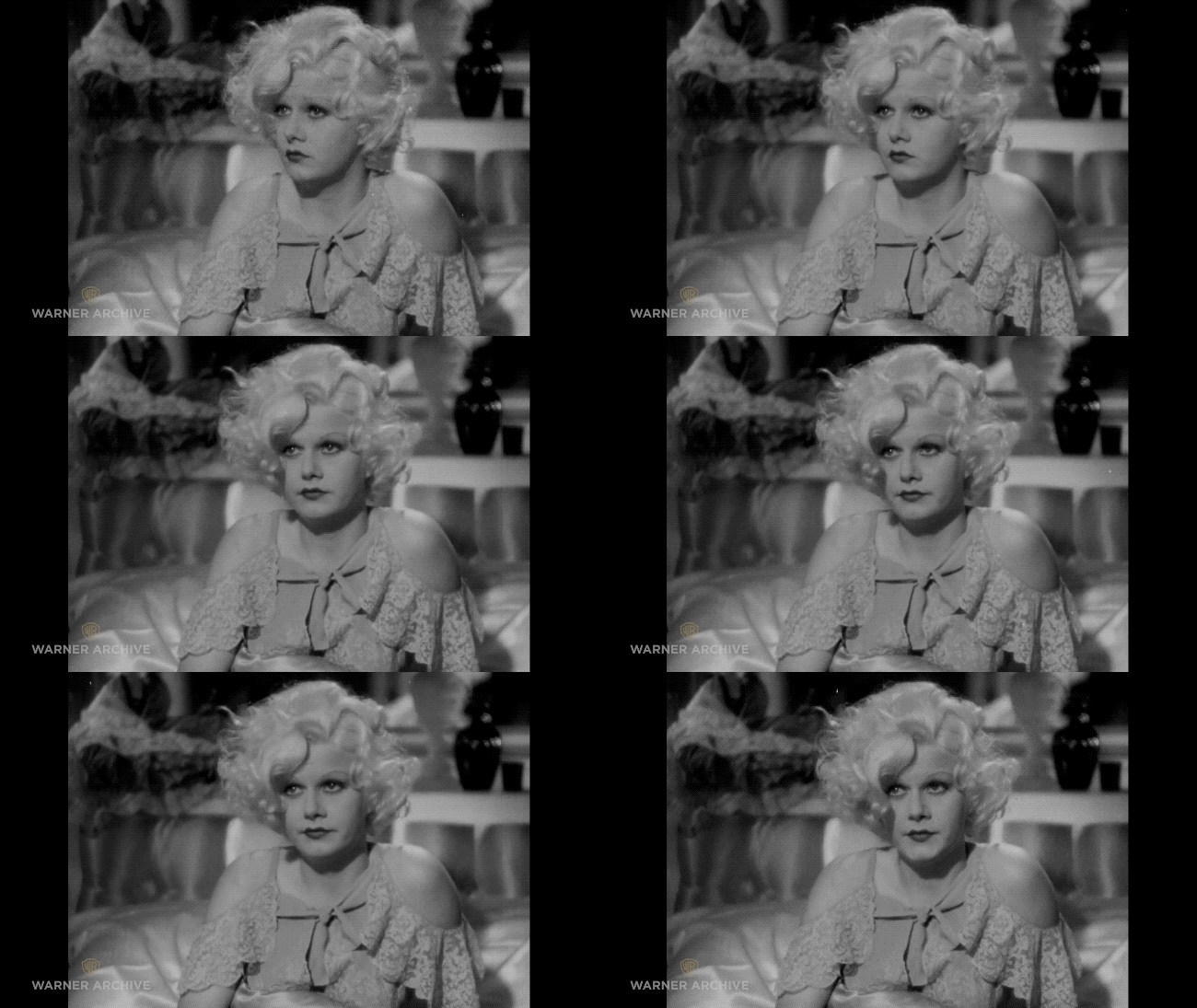
When you know you’re making a bad decision. Image: IMDb
Dear Reader, this post is an apology to Alfred Hitchcock.
When we decided to watch the early Hitchcock thriller, Blackmail (1929), we fully intended to mock it. Blackmail is a British film made at the end of the silent era, and was initially conceived as such.
Yet, in 1929, the British film industry was beginning to embrace movie-sound technology, and Hitchcock was hopeful his new film would be one of the first. According to biographer Patrick McGilligan, Hitchcock was shooting a silent version as per his studio’s directive, but “was also shooting separate takes of each shot in order to prepare a negative for the sound version of the film.”¹
For some reason, we expected a rustic, half-baked movie that awkwardly tried to bridge the gap between these two eras.
Boy oh boy, were we wrong.
It takes less than 10 minutes to forget this film is something of a hybrid. Hitchcock blends silent and sound storytelling like the master he is, and in no time you’re immersed in a world of deceit, betrayal, and, of course, blackmail.
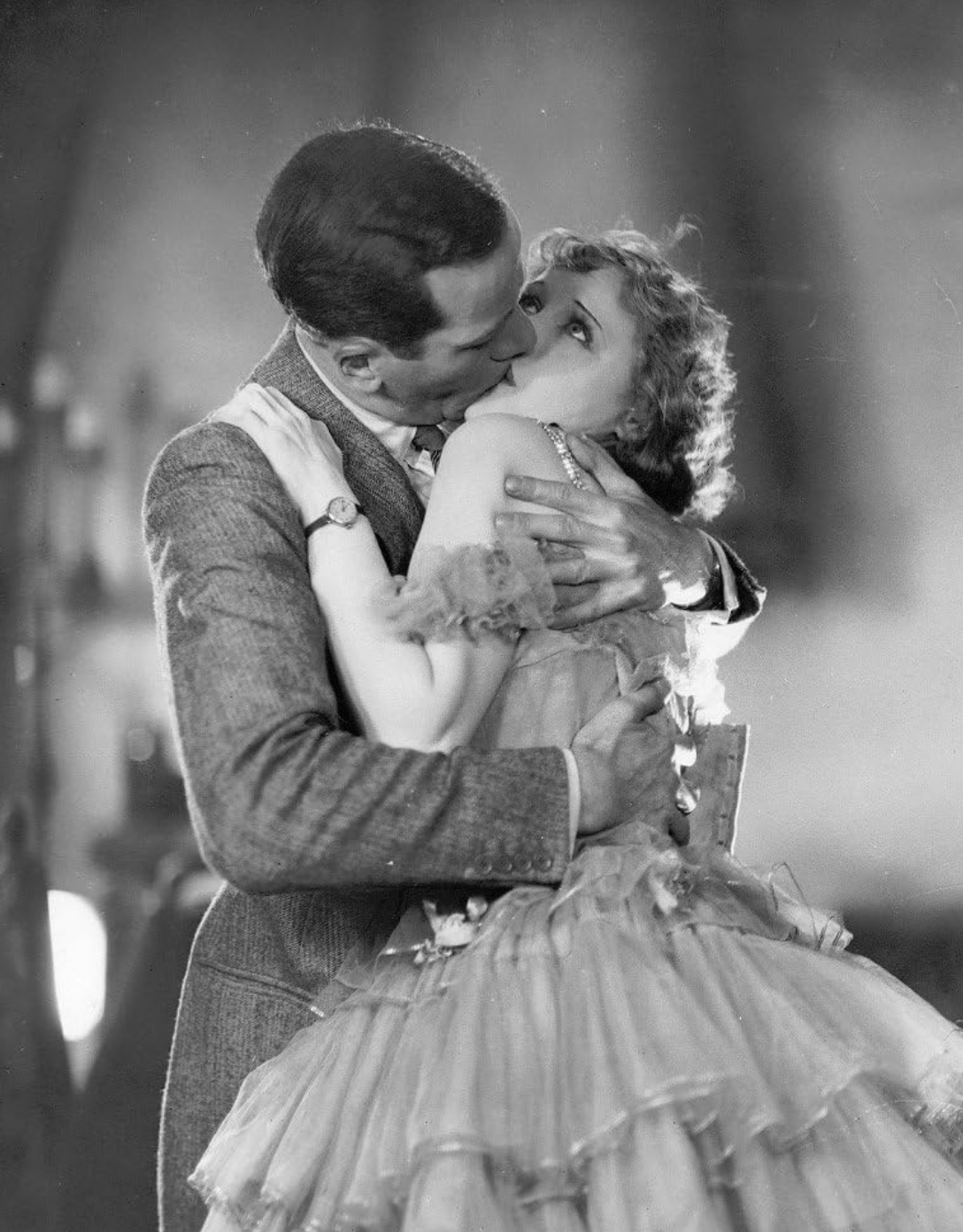
The story, briefly: A young woman ditches her policeman-boyfriend to spend an evening with a handsome Artist. Being easily manipulated by cheap flattery, she’s persuaded to Go Upstairs to the artist’s studio apartment. There, a lighthearted evening of flirtation gets ugly, and she stabs the artist in self-defense.
Things become even more Interesting when the policeman-boyfriend is assigned to investigate the killing. Then there’s the realization that someone else Knows about this business, and intends to profit from it.
The tension here is almost unbearable at times. Will the policeman-boyfriend arrest his girlfriend? Will the girl crack under the Strain of this Situation?
And, will the blackmailer make it through the day alive?
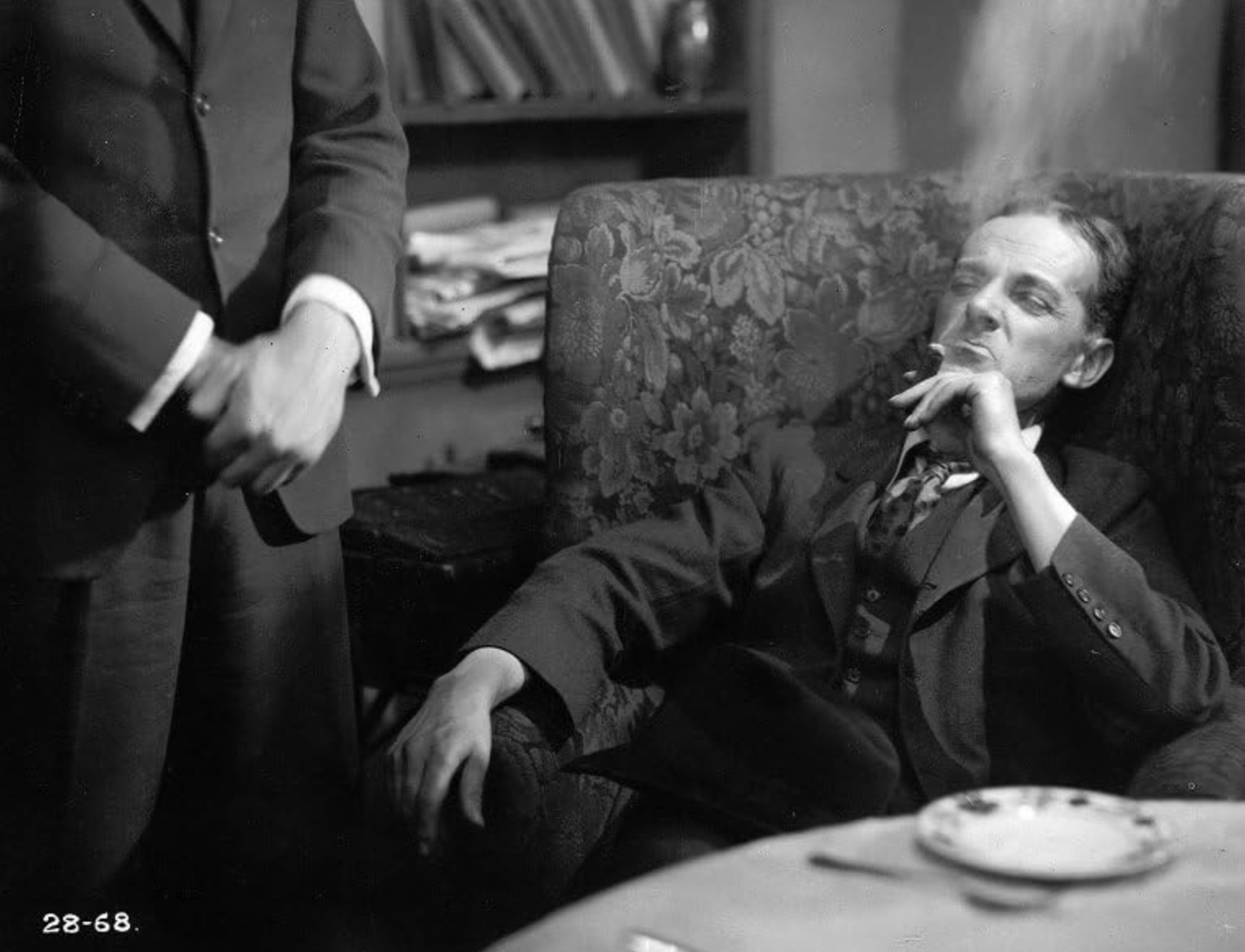
Nah, this guy ain’t suspicious. Image: IMDb
The behind-the scenes production of Blackmail could almost be a template for the 1952 musical, Singin’ in the Rain, which illustrated the struggles filmmakers met in adapting to sound technology.
Hitchcock & Co. also faced several of these issues when making Blackmail. One involved the lead actress, Czechoslovakian Anny Ondra, whose accent wasn’t a fit for her character, a born-and-bred Londoner.
But Hitchcock was devoted to Ondra, and worked out a clever solution: He hired British actress Joan Barry as Ondra’s “voice”. Barry stood just outside the camera’s frame and spoke the dialogue as Onya mouthed the words.²
Another complication was the constant noise the camera motors made, so cameras had be placed inside soundproof, mobile “kiosks”. These were difficult to maneuver, which hampered the camera’s movement.
Not only that, it must have been quite a spectacle to be on the set. McGilligan says sound “effects specialists lined up on the sidelines, letting forth screams and laughter, making doors slam, horns honk, and birds sing – filling the film with noise.”³
Is the sound in this film primitive? No. Some of it isn’t as slick as movie technology today, but Hitchcock obviously enjoyed experimenting with the new medium.
For example, the morning after the murder, Onya’s character is at breakfast when a neighbour stops by to chat. The murder is the Big Topic of the day, and the neighbour’s chatter is presented as nonsensical droning, except when she says “knife”, a shiny, sharp word that stabs at the guilt-ridden Onya.
As an aside, our resident canary, who considers himself an expert on most things, thought the sound in this film was excellent. He had no interest in the plot until the scene with a(nother) yappy canary. The sound quality was so good, our canary ceased all his business, and began looking around the room for his potential new friend.
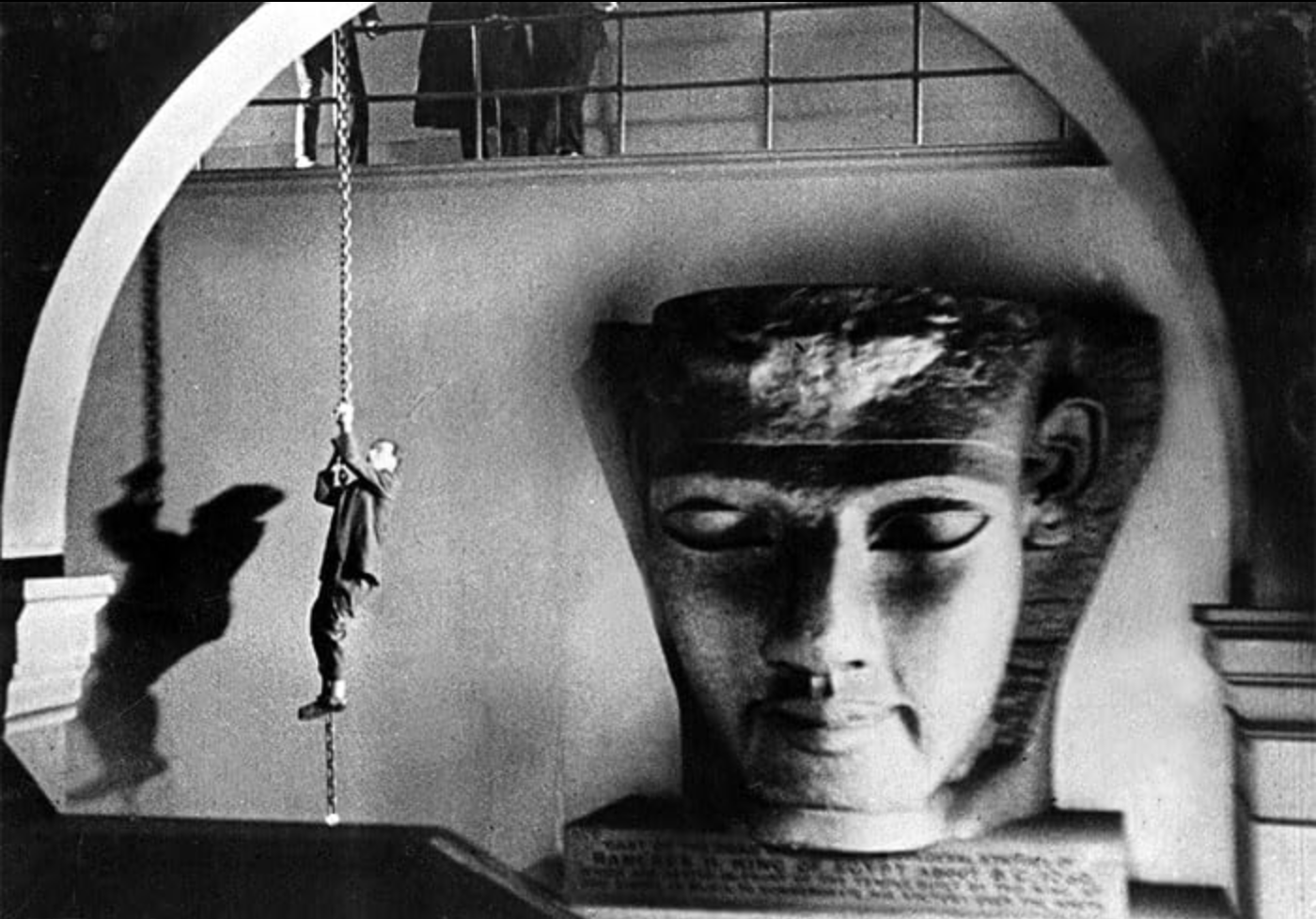
Mayhem in the British Museum. Image: IMDb
Although Blackmail was a box office disappointment in the US, it was a Big Hit in the UK; it was regarded as one of the best films of the year. It wasn’t the first British sound feature put into production, but it was the first to be ready for release, thanks to Hitchcock’s far-sightedness.
Two versions of this film were released, one a “talkie”, and the other a silent. The silent version was the more financially successful, because most cinemas in the UK were not yet equipped with movie-sound capability.
Besides the sound engineering, other reasons to watch Blackmail include:
the lengthy Hitchcock cameo.
innovative camera angles.
the way Hitchcock adds small but frustrating obstacles for the characters while torquing the tension.
the climactic scene inside – and on top of – the British Museum.
Happily, you can find a fairly decent version on YouTube. Enjoy!
Blackmail starring Anny Ondra, John Longden, Sara Allgood. Directed by Alfred Hitchcock. Written by Alfred Hitchcock & Benn Levy. British International Pictures, 1929, B&W, 85 mins.
Notes
¹McGilligan, Patrick (2003) Alfred Hitchcock: A Life in Darkness and Light. New York, NY. ReganBooks, p. 120. ²Ibid., p. 123. ³Ibid.
This sounds great fun and an interesting one in Hitchcock’s TV… I do love it when you can add a friendly mock to some movies, but find like you when it’s the right film or cast you can’t. Adding another to my recommended by Ruth list…
BLACKMAIL is excellent in silence or sound, but I adore how Hitchcock experiments with the new technology. You can tell he put a lot of thought into it.
Don’t you just love it when a film defies your expectations?! I’m so glad you enjoyed this one so much, Ruth. It’s interesting witnessing him trying out the new technology and transitioning from one era of his career to the next.
Apologies, Maddy. I initially tried to respond to your comment whilst in bright sunshine & kept pressing the SEND button. Thanks for hosting this blogathon!
Great review Ruth 🙂 I love Blackmail as well whether it be silent or sound 🙂 Every few times a year, I go to this farm that pays homage to the 1920’s and sometimes they will show a screening of a memorable silent film from that era. This next one will be Blackmail 🙂 Also, yes, that climactic scene with the British museum is amazing 🙂
Loved reading your review. I immediately looked for it and found it on my Amazon Prime. The intense suspense you described got me hooked! Need to watch it asap-thank you! :))
Excellent review, Ruth. I love Alfred Hitchcock movies and I remember wtaching this particular one with my dad many years ago. It’s a really good suspense movie.
This is fascinating. I’m so bummed because, as part of our summer, we watched a week of Hitchcock (my son had never seen any). This was not even on the list to choose from! Now I need to watch it. But I’ll reread this before I do. Seriously fascinating. And brilliant.






 Silver Screenings
This sounds great fun and an interesting one in Hitchcock’s TV… I do love it when you can add a friendly mock to some movies, but find like you when it’s the right film or cast you can’t. Adding another to my recommended by Ruth list…
LikeLiked by 3 people
I think you’d really like this. A terrific story with a somewhat ambiguous ending.
LikeLiked by 2 people
BLACKMAIL is excellent in silence or sound, but I adore how Hitchcock experiments with the new technology. You can tell he put a lot of thought into it.
LikeLiked by 3 people
Exactly. It’s as though he’d been thinking about incorporating sound for years.
LikeLiked by 1 person
Don’t you just love it when a film defies your expectations?! I’m so glad you enjoyed this one so much, Ruth. It’s interesting witnessing him trying out the new technology and transitioning from one era of his career to the next.
Thanks so much for joining.
LikeLiked by 3 people
True! I can’t imagine the planning
LikeLiked by 2 people
Ack! Premature send. 🤦♀️ I meant
LikeLiked by 1 person
Apologies, Maddy. I initially tried to respond to your comment whilst in bright sunshine & kept pressing the SEND button. Thanks for hosting this blogathon!
LikeLiked by 1 person
Great review Ruth 🙂 I love Blackmail as well whether it be silent or sound 🙂 Every few times a year, I go to this farm that pays homage to the 1920’s and sometimes they will show a screening of a memorable silent film from that era. This next one will be Blackmail 🙂 Also, yes, that climactic scene with the British museum is amazing 🙂
LikeLiked by 2 people
That sounds MARVELLOUS! How do they show the films?
I love that scene with the British Museum. The film deserves that kind of a big finish.
LikeLiked by 1 person
The museum actually shows it on a television screen 🙂
As for Blackmail’s climax, I agree with you 100 percent Ruth 🙂
LikeLiked by 1 person
Hitchcock may have been a creep but he did make excellent films!
LikeLiked by 1 person
Agreed, on both counts.
LikeLiked by 1 person
How do you know I haven’t seen this movie? OK, you’re right, I haven’t. You win…it’s going on my watch list 🙂
LikeLiked by 1 person
Bahaha! Glad it’s going on the watch list.
LikeLiked by 1 person
Oh boy! Have to give this one a viewing 🙂
LikeLiked by 1 person
Oh yes! It’s quite suspenseful!
LikeLiked by 1 person
Loved reading your review. I immediately looked for it and found it on my Amazon Prime. The intense suspense you described got me hooked! Need to watch it asap-thank you! :))
LikeLiked by 2 people
I hope you enjoy. It’s well worth a watch.
LikeLiked by 1 person
Excellent review, Ruth. I love Alfred Hitchcock movies and I remember wtaching this particular one with my dad many years ago. It’s a really good suspense movie.
LikeLiked by 2 people
It’s really good, isn’t it? And memorable. I can’t believe it’s taken me this long to see it.
LikeLiked by 1 person
This is fascinating. I’m so bummed because, as part of our summer, we watched a week of Hitchcock (my son had never seen any). This was not even on the list to choose from! Now I need to watch it. But I’ll reread this before I do. Seriously fascinating. And brilliant.
LikeLiked by 2 people
Happy Autumn! 🍂🍃
LikeLiked by 1 person
A week of Hitchcock! There’s a neat idea. Did your son find some new fave films?
LikeLiked by 1 person
It was so fun! 🙂 His faves were The Birds and Rear Window as the “classic Hitchcock” and loved North by Northwest.
LikeLiked by 1 person
He has excellent taste!
LikeLiked by 1 person