Jean Harlow (seated) gives Clark Gable the Stink Eye. Image: Pinterest
One thing Hollywood was surprisingly good at in the 1930s and 40s was producing movies that make you feel you’re in an exotic location.
For example, look at China Seas (1935). Filmmakers convince you the actors really are on a ship sailing from Hong Kong to Singapore. It’s hard to imagine they were filming inside a nondescript studio building, with easy access to the studio canteen for lunch.
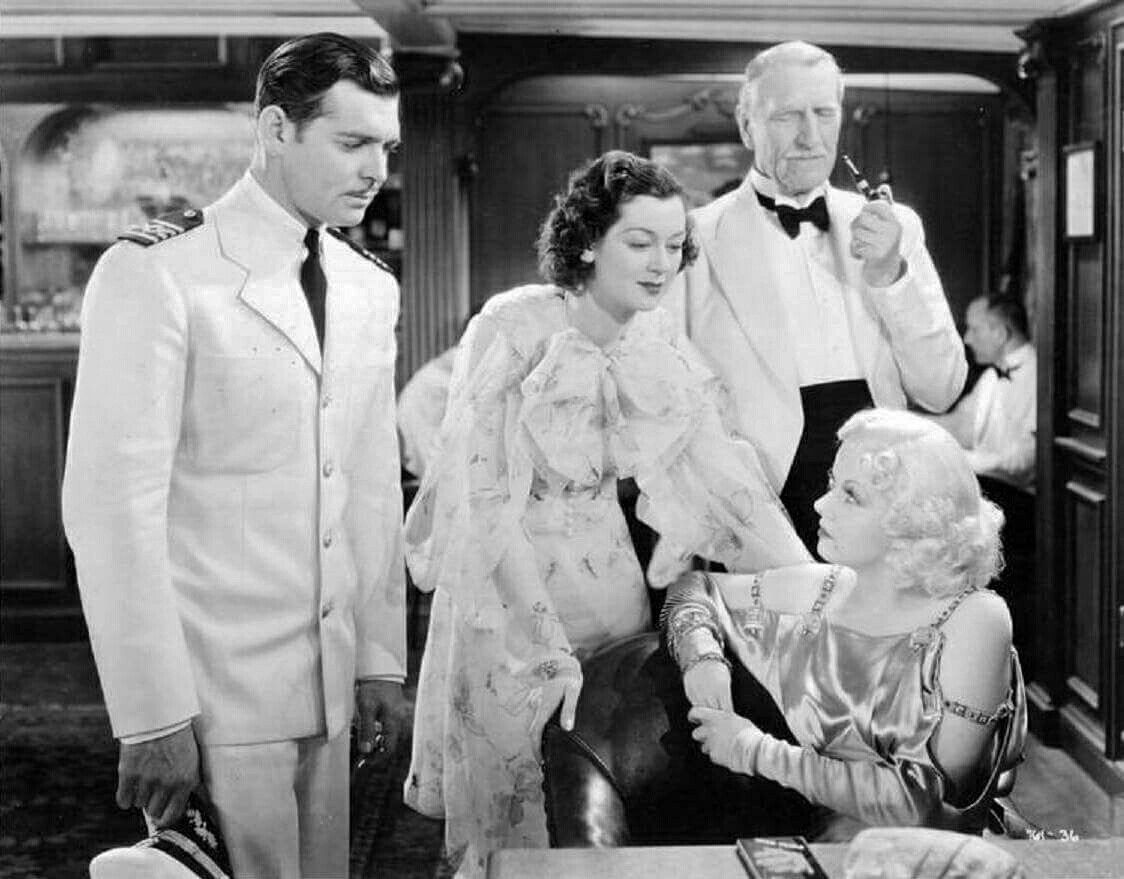
China Seas is a glam MGM production, starring some of its biggest box office stars – Clark Gable, Jean Harlow, and Wallace Beery – and it features pirates, a gold heist, a nautical storm, and hundreds of extras.
You’ve probably guessed there are many characters with interesting back stories on this ship. Happily, these back stories are supplied with a line or two of dialogue, and that’s all we need to get Up To Speed.
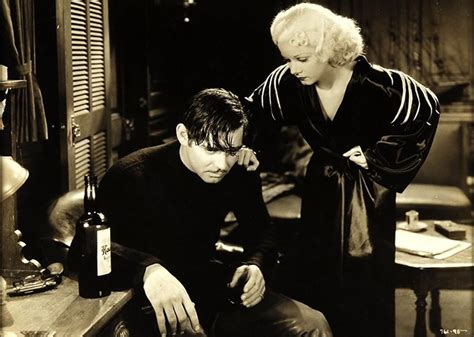
The handsome Gable plays the captain of the Kin Lun, a man who loves the bottle nearly as much as he loves Jean Harlow, but won’t admit it. He’s gruff and demanding, but also kindhearted when he feels he has to be.
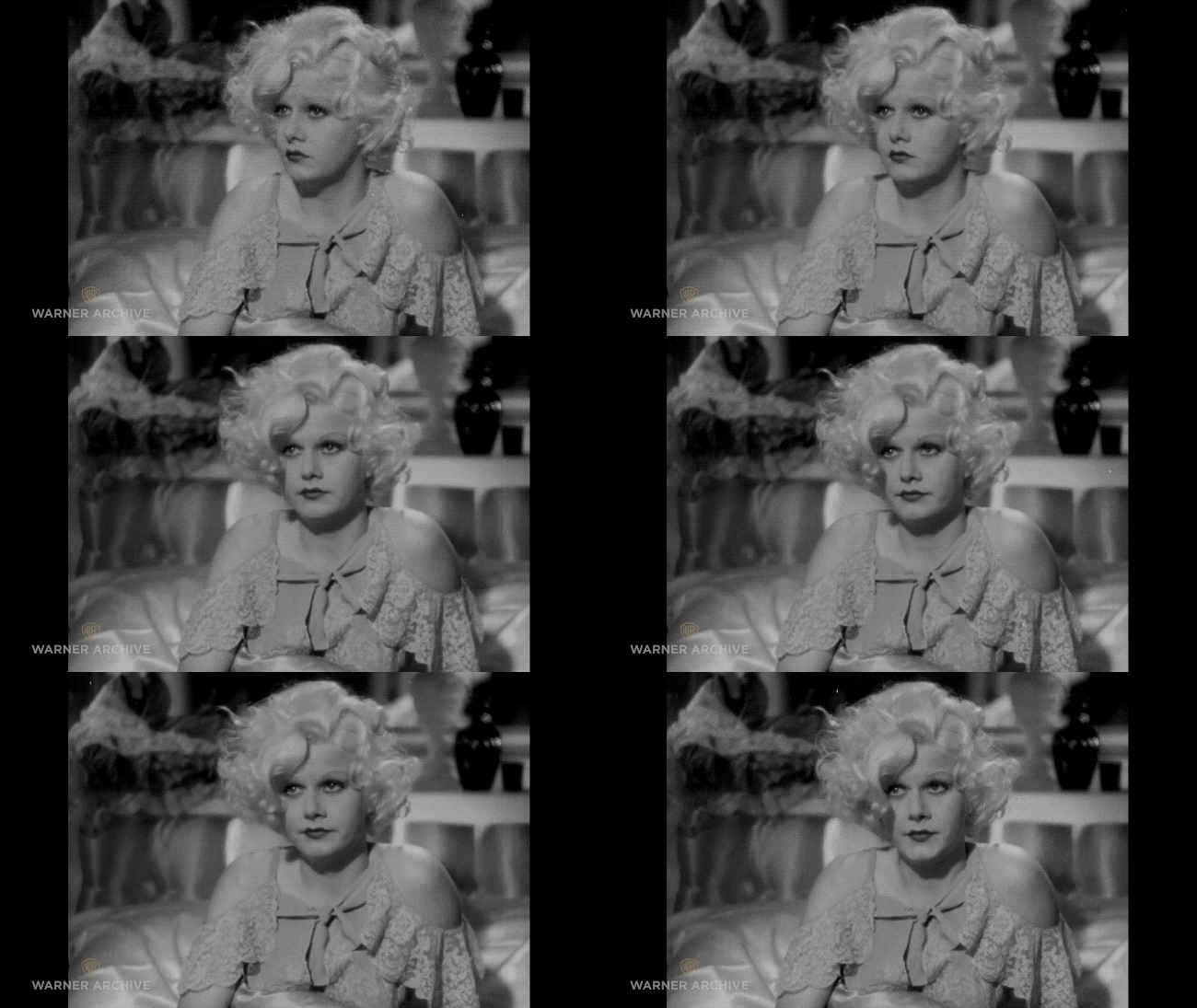
Then there’s the glam Jean Harlow, although there are times she looks like a clown with her bizarrely thin eyebrows and spidery eyelashes. Harlow is the type of actress who portrays Big Feelings in a Big Way, yet remains utterly credible.
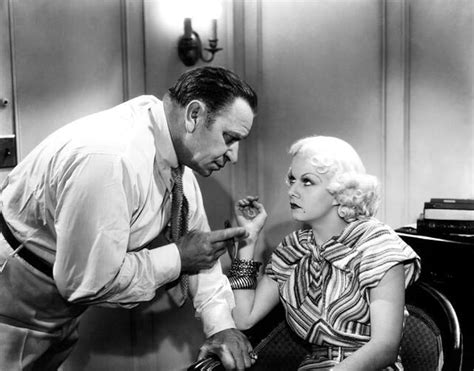
Wallace Beery is also on board, stealing scenes and acting all suspicious. Beery is someone who is not attractive, yet he has so much charisma you can’t take your eyes off him.
Additionally, we have Rosalind Russell as a British woman from Gable’s past, and Robert Benchley as a perpetually-drunk writer.
Anchors aweigh!
Gable and Harlow: Love and Misery. Image: IMDb
The Kin Lun is a ship that caters to rich white passengers while relegating Asian characters to its lower depths. We noticed only one authentic Asian person in First Class, a wealthy and snobby woman who would make for an interesting movie by herself.
Aside from that, the ship is filled with people and their Motives, which makes them Opportunists. Each character we’re introduced to is angling for something:
Rosalind Russell wants to rekindle a romance with Gable.
Gable wants Russell’s real estate in England.
Harlow wants revenge.
Beery wants Something, although we’re not immediately sure what it is.
Pirates want the gold bullion locked in the cargo hold.
One of the ship’s officers wants Gable’s job.
Harlow’s maid, played by Hattie McDaniel, wants Harlow’s wardrobe.
And a cowardly Third Officer wants a chance for redemption.
The cowardly officer, played by Lewis Stone, is an intriguing character who seems displaced on this ship of romance and intrigue. He’s an older man whose cowardice cost the lives of several men on another voyage, and he demonstrates more of the same on the Kin Lun voyage.
The men understandably do not respect Stone, but Gable decides gives him Another Chance. Stone gives the movie heart, and it’s a shame more time wasn’t devoted to his character. However, there’s that palpable chemistry between Gable and Harlow, so, naturally, they get the majority of screen time.
There is one disturbing scene, near the end of the film, that shows the lengths the pirates – the ultimate opportunists – will go to fulfill their mission. If you’ve seen the film, you know what we mean; let’s just say Gable’s stellar performance in this scene will make you squirm.
Wallace Beery means business. Image: IMDb
According to Wikipedia, China Seas was the third highest-grossing film of 1935, with Gable and Beery being two of Hollywood’s highest-paid actors. The film cleared $653,000 US ($15.4 million US today).
Gable and Harlow had been paired onscreen before, most notably in Red Dust (1932), and China Seas has a suspiciously similar plot. In total, Gable and Harlow appeared in six films together, including Saratoga (1937) during which Harlow died from various health issues, including kidney failure.
China Seas is a a mix of Hollywood-isms: a love triangle, melodrama, adventure, robbery, man-against-nature, redemption, and some amusing lighthearted moments tossed in for Good Measure.
We hope you get the chance to see this film, and experience one of the Depression-era films that made a lot of buzz.
China Seas starring Clark Gable, Jean Harlow, Wallace Beery. Directed by Tay Garnett. Written by Jules Furthman & James Kevin McGuinness. Metro-Goldwyn-Mayer, 1935, B&W, 87 mins.






 Silver Screenings
Your enthusiasm about this movie and as it does sound like a fun cast, now adding to the recommended by Ruth pile.
LikeLiked by 3 people
Ha! It’s a really good time. So much going on! The movie doesn’t lag for a second.
LikeLiked by 1 person