Taken as a whole, war movies can be somewhat double-minded.
When a nation isn’t involved in military conflict, filmmakers can make movies about the damages and consequences of war, and ask questions like, What was it all for?
However, when a nation is embroiled in military action, filmmakers are pressured to inspire people to adopt the cause of the war as their own and be prepared to die for it.
A film that tries to bridge these two approaches is the WWII drama, This Above All (1942), starring Tyrone Power and Joan Fontaine.
The film is an examination of War and Romance, and is not entirely successful at marrying the two (haha).
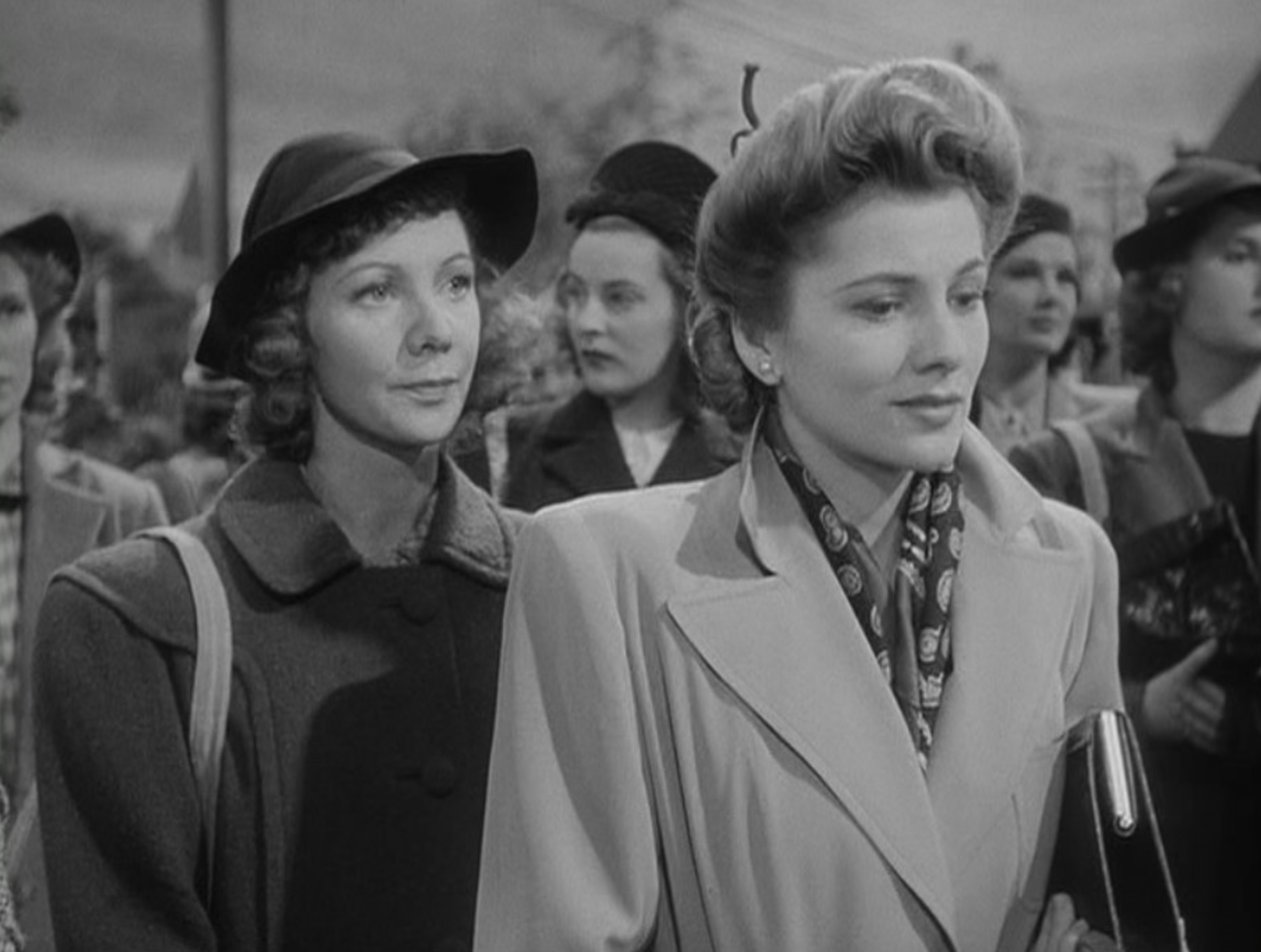
Fontaine is a young, beautiful British aristocrat, hopelessly saddled with a saviour complex. She enlists in the WAAF (Women’s Auxiliary Air Force), partly because it shocks her family, and partly because it gives her the chance to save England from Nazi Germany.
During a Night on the Town, she meets Tyrone Power, a handsome man without uniform (or British accent, for some reason), and he has a Secret. Fontaine’s character is morbidly fascinated by the events at Dunkirk, and she suspects Power was one of the evacuees. She tries unsuccessfully to pry the details out of him.
Power will not talk about his war service but, as the film progresses, we realize he has mental issues. This, however, does not prevent him from giving lectures on his disillusionment with the War Machine.
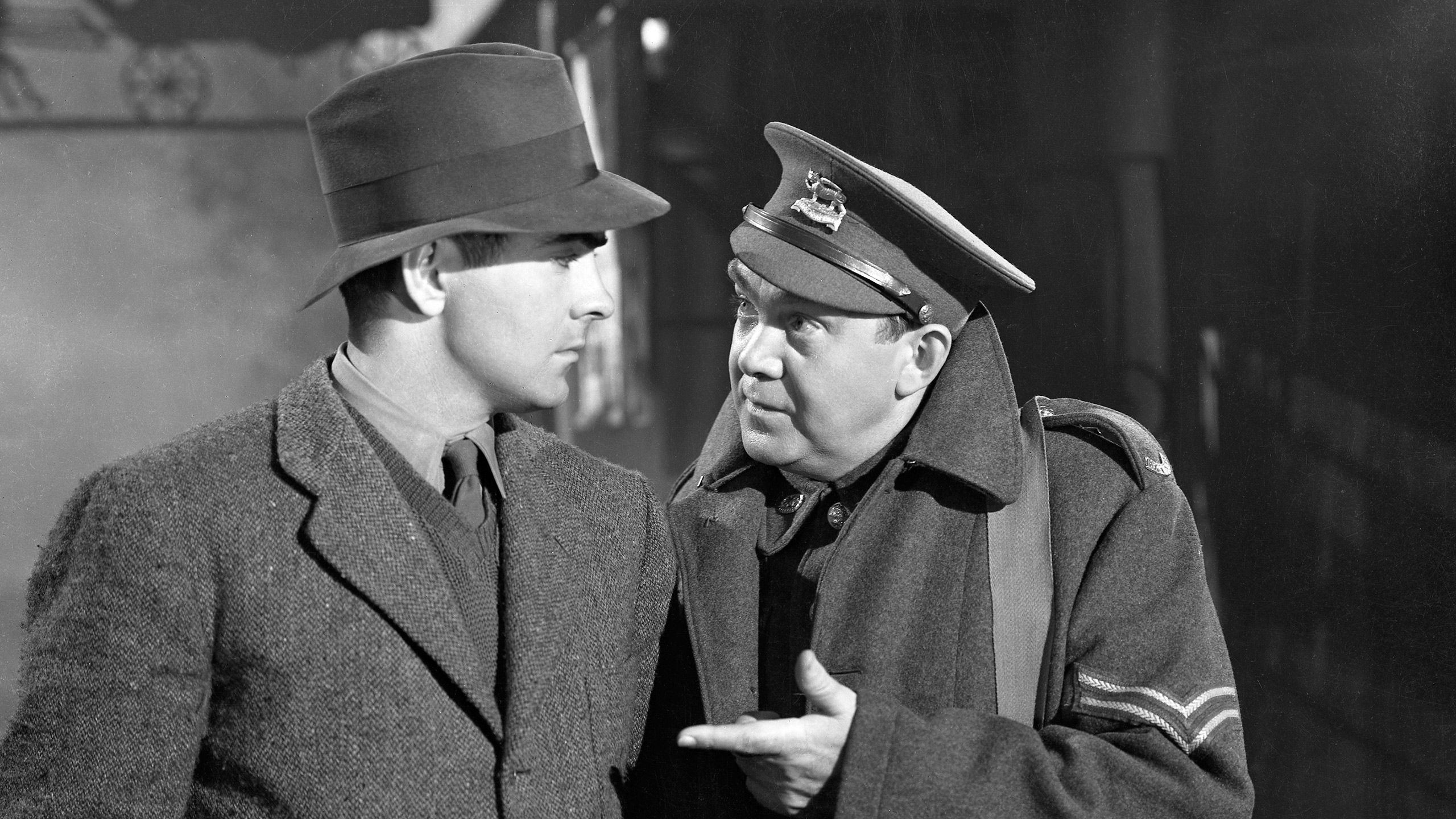
Tyrone Power and Thomas Mitchell share a secret. Image: Movies Anywhere
This Above All is a movie with lots of talking punctuated by exploding bombs. This is Britain in 1940, after all, and the German Luftwaffe is just Getting Started.
Power knows all about planes and bombs: how much they cost and how they explode, along with an array of statistics and probabilities. Power’s character is not likable, but his knowledge of munitions is truly astonishing.
The problem is this: Power is an embittered romantic. He enlisted in the war the day it was declared, but quickly became disenchanted with the British military. He calls the leadership “stupid, complacent, and out of date, with no claim to leadership but birth, class, and privilege.” He accuses them of fighting not to protect England, but to preserve “the same rotten, worn-out conditions that kept their class in comfort.”
Power’s character may not be wrong, but in a time of war, when authorities depend on every able-bodied soul to fight for King and Country, this kind of movie talk cannot go unchallenged.
Happily, Fontaine’s Save-the-World character is ready with an overwrought speech about what makes England great and worth defending. Invaders must be beaten off, because this is Bigger than All Of Us! She – who formerly snubbed British traditions – suddenly waxes eloquent about quaint British-isms and caps it off with: “We won’t be beaten. We just won’t!”
It’s not the most stirring pro-war movie speech, but Fontaine does a heroic job of it, complete with flawless British accent.
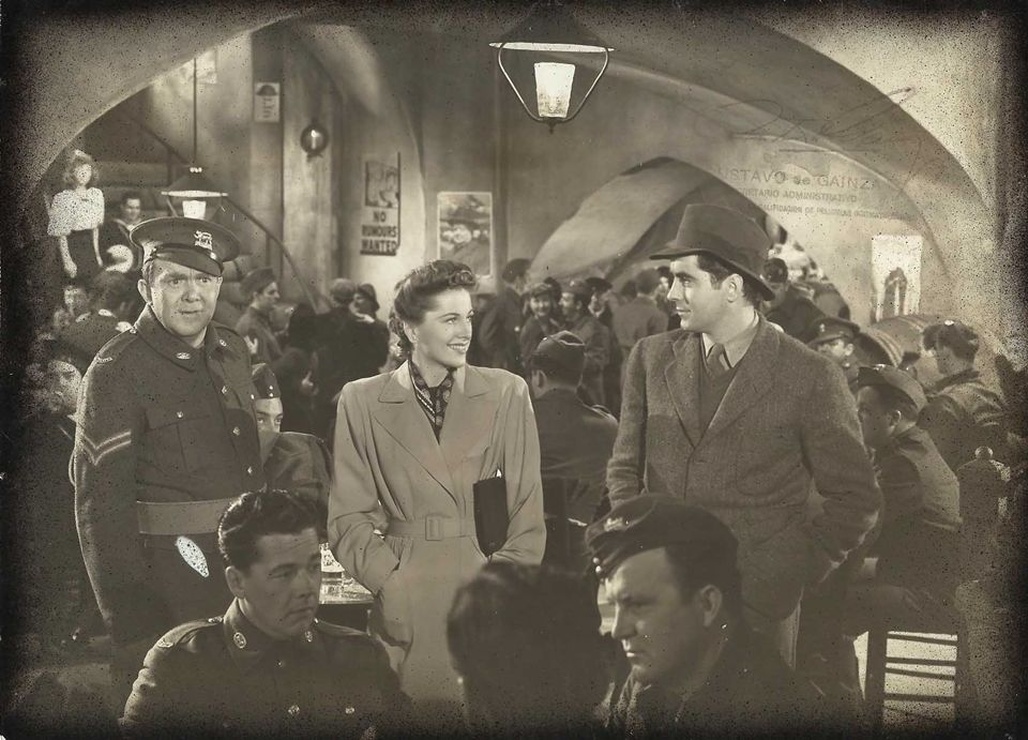
Party with the army. Image: Listal
Because you’re a smarty-pants, you knew the title of the movie, “This Above All” is a line from William Shakespeare’s Hamlet:
This above all: to thine own self be true, And it must follow, as the night follows day, That when you are not yourself, you cannot be true to any man.
(There are interesting online discussions about the deeper meanings of this piece of advice, but we’ll leave that to scholars.)
This Above All is based on a 1940 novel by British novelist Eric Knight, the same fellow who wrote Lassie. During WWII, Knight joined the U.S. army and, in 1943, he was killed in a plane crash over South America. He was 45 years old.
His novel of a wartime romance resonated with readers. Kirkus Reviews said, “It is a cross section of England, under fire; it gives one a deep conviction of something more to be won than the shell of the old England.”
This Above All, the film adaptation, is an Oscar-winning film. It won for Best Art Direction (Black and White), and was nominated for Cinematography, Editing, and Sound Recording. Indeed, this is a visually stunning movie; spurts of warfare frame the desperate beauty.
We can’t wholeheartedly recommend This Above All, because melodramas ain’t our thing, but we urge you to see it for the technical aspects. This is a lesser-known film that certainly caught the attention of the wartime Academy.
This Above All starring Tyrone Power, Joan Fontaine, Thomas Mitchell. Directed by Anatole Litvak. Written by R.C. Sherriff. 20th Century-Fox, 1942, B&W, 110 mins.
Not easy to straddle things and have it both ways, to deal with the PTSD as well as gearing people up to support war, bound to be clunky in ways. It’s been a while since I saw it but I remember Power’s performance was really good and they are a neat pair. I didn’t know that about the Lassie author! Thanks for joining in 🙂
Great review! I have seen this film many years ago and didn’t like it that much (it’s true that it looks stunning tho) but I know it has a few fans among the Joan Fontaine admirers community
Great review of a film that seems pretty forgotten, even with its big-name stars. I liked it, even though it’s far from perfect. I tend to enjoy these war melodramas mostly because it’s interesting to see how the film industry reflected the general mood of the era.
I hadn’t heard of this film before. I like war melodramas and the actors are really good, but by your review I take this is not one of the best films in this category.






Not easy to straddle things and have it both ways, to deal with the PTSD as well as gearing people up to support war, bound to be clunky in ways. It’s been a while since I saw it but I remember Power’s performance was really good and they are a neat pair. I didn’t know that about the Lassie author! Thanks for joining in 🙂
LikeLiked by 1 person
The performances are so good here, aren’t they? And Power is completely believable as a man with PTSD.
LikeLiked by 1 person
Great review! I have seen this film many years ago and didn’t like it that much (it’s true that it looks stunning tho) but I know it has a few fans among the Joan Fontaine admirers community
LikeLiked by 1 person
It’s a bit of an uneven film, isn’t it? Perhaps the novel was rather tricky to adapt to screen? However, I love Joan’s British accent here.
LikeLiked by 1 person
Good question! I wonder however if my opinion of the film might have change with the years. I must admit I saw it like 10 years ago!
LikeLiked by 1 person
It would be interesting to hear your perspective if you did see it again after a decade.
LikeLiked by 1 person
Great review of a film that seems pretty forgotten, even with its big-name stars. I liked it, even though it’s far from perfect. I tend to enjoy these war melodramas mostly because it’s interesting to see how the film industry reflected the general mood of the era.
LikeLiked by 1 person
Ah yes, that’s a good point, especially considering Joan Fontaine’s We-will-not-be-beaten speech.
LikeLiked by 1 person
I hadn’t heard of this film before. I like war melodramas and the actors are really good, but by your review I take this is not one of the best films in this category.
LikeLiked by 2 people
There are many things to like about this film, but it’s also quite melodramatic – and that’s not my thing. It has beautiful photography, though.
LikeLike