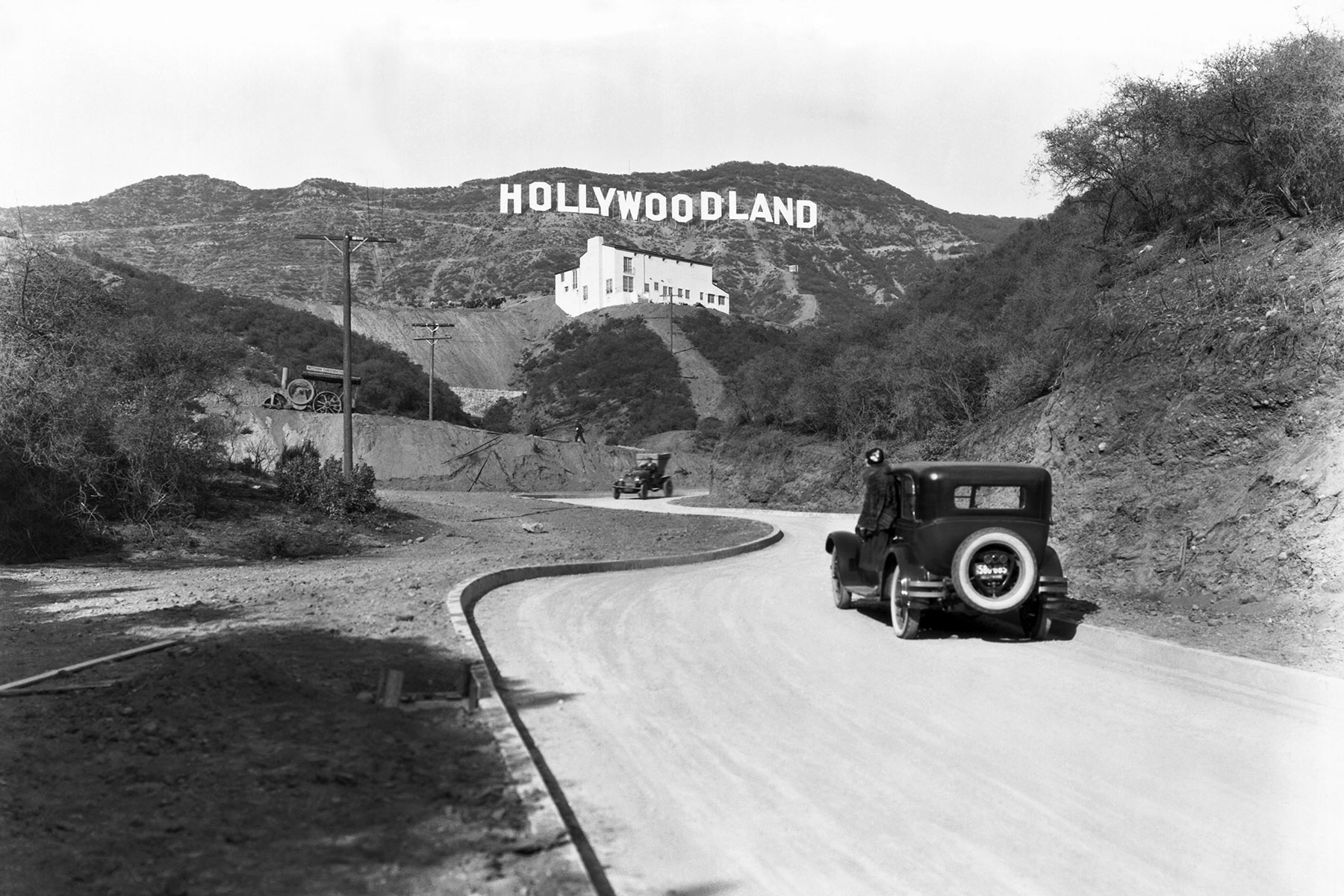
Rush hour in 1920s Hollywoodland. Image: HistoryFacts
Dear Reader, we just finished reading a delightful, soon-to-be released novel about Hollywood censorship, and we think you’ll love it.
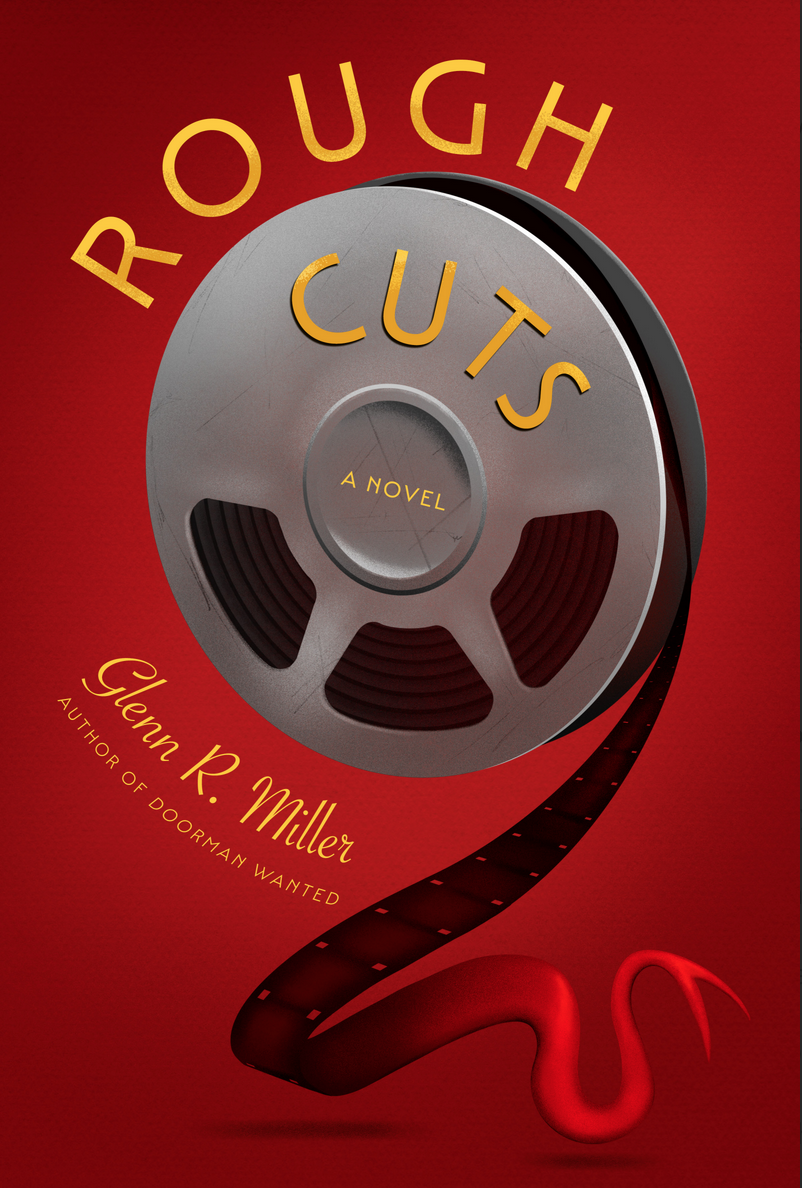
Rough Cuts, by American novelist Glenn R. Miller, is a lighthearted look at the politics of Hollywood film censorship in the mid 1920s, and is told from the perspective of two men.
The first is an acclaimed, but aging, Hollywood director who makes one last film – his masterpiece – before retiring. This final film will establish his legacy.
The other is a young, ambitious pastor languishing in Marietta, Ohio, who’s been asked to fill a vacant position on the Ohio Film Review Board. He is not to be trifled with, and he’s found the perfect film to show Tinseltown who’s really in charge.
It’s the Free Speech vs. Censorship Smackdown!
In the blue corner is Patrick J. Shepherd, a world-weary director who knows how to work the studio. He’s known for creating stunning images on film, but his genial exterior belies a cunning interior.
In the red corner is Harold Dawdry, the newly-ordained minister of the Grace Episcopal Church, and the best character in the novel. He’s a preening, combative young man, ready to browbeat the Film Establishment. “Hollywood, if you were unaware of Ohio prior to my arrival, or had trouble locating us within a map of the United States of America,” he declares, “I daresay, you will be aware of us now.”¹
When Dawdry demands twenty-five (25!) edits to Shepherd’s magnum opus, the studio realizes things have gotten out of hand. Shepherd, along with cast and crew, are dispatched to Ohio to tame the pugnacious Dawdry.
To his great surprise and anger, Shepherd discovers Dawdry is appropriating scenes from the director’s film to re-enact in his sermons, the very same scenes the pastor wanted removed.
You see, Dawdry has been enlisting members of his congregation to perform these scenes during sermon-time. This is to illustrate the evils of Hollywood, you understand, not because Dawdry likes producing stage shows. (How the pastor suffers for righteousness’ sake!) The good folk of Marietta can’t get enough of it; there’s standing room only at church on Sunday.
Shepherd moves quickly to contain this troublesome meddler. Instead of getting even with Dawdry in a traditional way, he presents the pastor with a tantalizing proposition.
Miller is an amusing, thoughtful writer. In developing his two lead characters, he shows us how each man interprets his world. We understand their desires and motivations, and we can’t wait for the inevitable Showdown.
Here’s a sample of Miller’s prose, and if you’re a writer, you’ll identify with this description of writer’s block:
If all was going on schedule, he would begin writing no later than ten-thirty. If he was struggling with plotting, characterization, or transitions, the reading portion of his morning might be extended. Or the puttering. He might determine that his books demanded immediate reshelving, his typewriter ribbon needed to be changed, pencils had to be sharpened, the temperature of the pool water required adjustment, or he needed to ask Marianna once again what was for lunch and when it would be served.2
Miller adopts an affectionate, sometimes sardonic, look at Hollywood. For example, early in the novel, Shepherd is in his office, casually glancing out the window. “[T]wo women dressed in evening flapper attire were now standing there, laughing. At times it was difficult to tell who was in costume and who was from accounting.”3
Rough Cuts is a joy to read, and it leads us, in its subtle way, to ponder the nature of censorship. What should censorship look like? Who are the people appointing themselves as society’s gatekeepers, and why are they doing it?
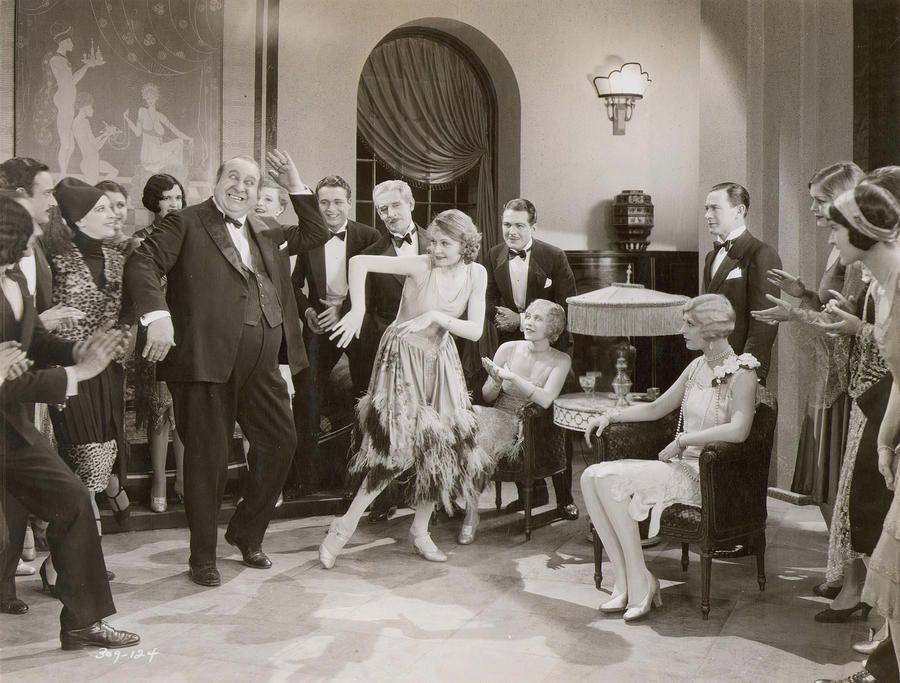
Frivolity leads to trouble. Image: Pinterest
Miller based Rough Cuts on a relative who actually was a member of the Ohio censorship board.
According to the book publicist, Books Forward, Miller’s mother-in-law had a grandfather who was a film-censoring pastor.
“[She] told me that she was going through her grandfather’s archives, which included original notecards of film edits that needed to be made by Hollywood studios,” he says in the Books Forward media release. “The fact that he, as a small-town Ohio minister, was instructing Hollywood directors and producers what needed to be changed in their films intrigued me, to say the least.”
Miller worked at NBC in Burbank for eight years, and he used this background – and no small amount of research – to make 1920s Hollywood come alive. He fully immerses you in this world and, as a result, you feel a little sad at the book’s conclusion.
We cannot recommend Rough Cuts highly enough. If you love movies, history, or a good story, you must treat yourself to this novel.
This post is dedicated to our pal Brian at Bonnywood Manor, whose writing delights us as much as this novel.
Notes
Disclosure: Books Forward sent us a copy of this book in exchange for an unbiased review.
I was going to ask for your own take on the Hays period, but I found my answer just below this post in your “Precode Adventures in Hollywood” piece from 2014. That said, Rough Cuts looks pretty good.
Your lovely dedication at the end of this piece completely made my night. (Actually, truth be told since there’s not all that much going on in my retired life, it made my month.) It was such a delight to see those words. You are truly the bee’s knees, my friend…
I haven’t read a book for longer than I care to remember but I do like the sound of Rough Cuts. The story sounds incredible, but as the saying goes truth is stranger than fiction. The fact events are set against the backdrop of 1920’s Hollywood only adds to my interest.
I had a difficult time putting this book down. Once you start reading it, you can’t wait to see what happens next. The problem with devouring it, though, is the book is finished far too soon.




I was going to ask for your own take on the Hays period, but I found my answer just below this post in your “Precode Adventures in Hollywood” piece from 2014. That said, Rough Cuts looks pretty good.
LikeLiked by 3 people
Rough Cuts is a great read. Humorous, vivid characters, a joyful book.
LikeLiked by 2 people
Dearest Ruth,
Your lovely dedication at the end of this piece completely made my night. (Actually, truth be told since there’s not all that much going on in my retired life, it made my month.) It was such a delight to see those words. You are truly the bee’s knees, my friend…
Gushingly,
Brian
LikeLiked by 3 people
Hey Brian, I think YOU are the bee’s knees with your prolific and fabulous writing, and I mean it.
LikeLiked by 2 people
I haven’t read a book for longer than I care to remember but I do like the sound of Rough Cuts. The story sounds incredible, but as the saying goes truth is stranger than fiction. The fact events are set against the backdrop of 1920’s Hollywood only adds to my interest.
LikeLiked by 3 people
I had a difficult time putting this book down. Once you start reading it, you can’t wait to see what happens next. The problem with devouring it, though, is the book is finished far too soon.
LikeLiked by 2 people
What a great premise! It reminds me of that quote a censor said: “We get paid to have dirty minds”
LikeLiked by 1 person
Ha! That’s funny, and true.
I recommend this book if you ever come across it.
LikeLiked by 1 person