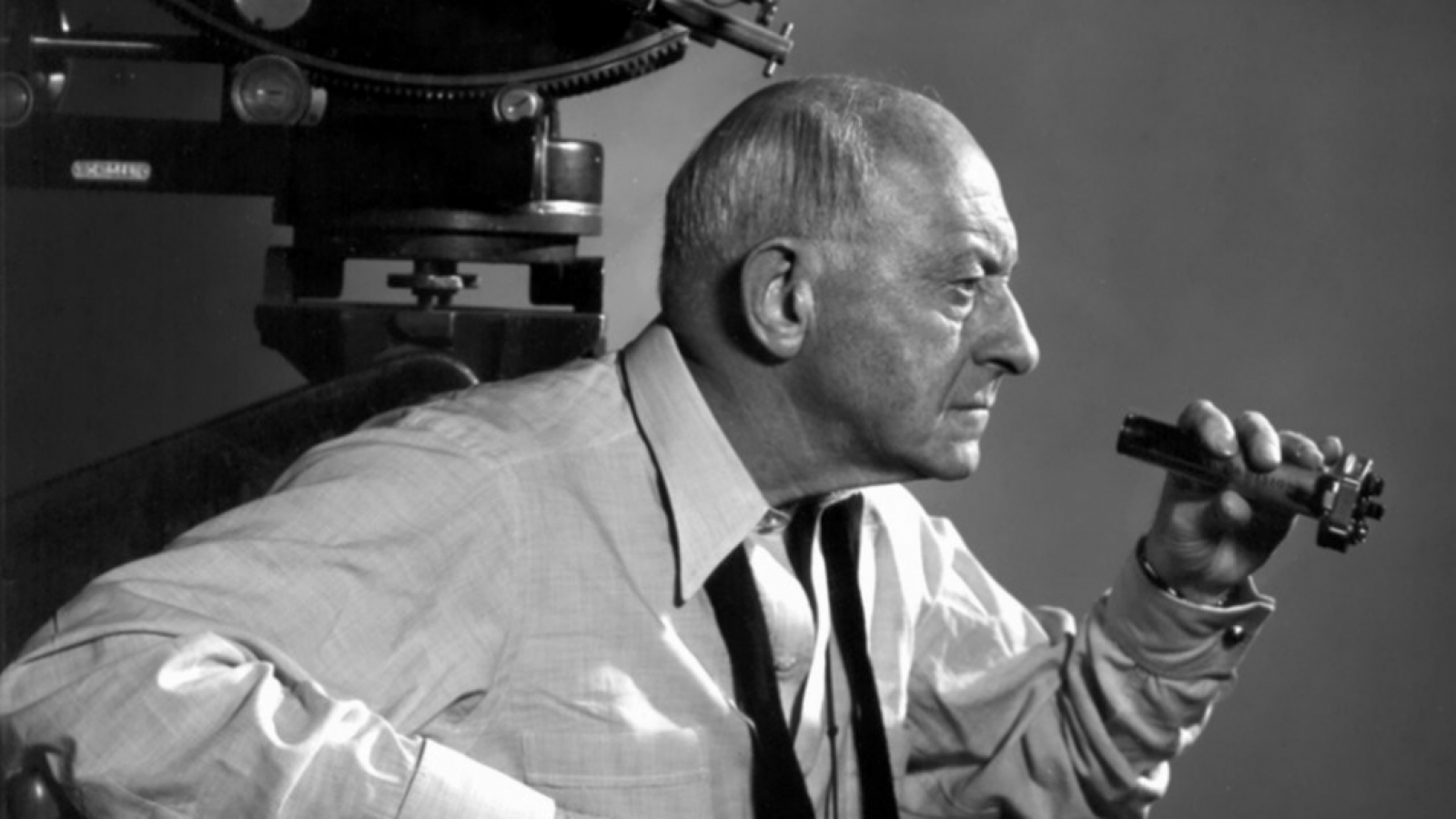
Hollywood director Cecil B. DeMille. Image: The American Academy of Dramatic Arts
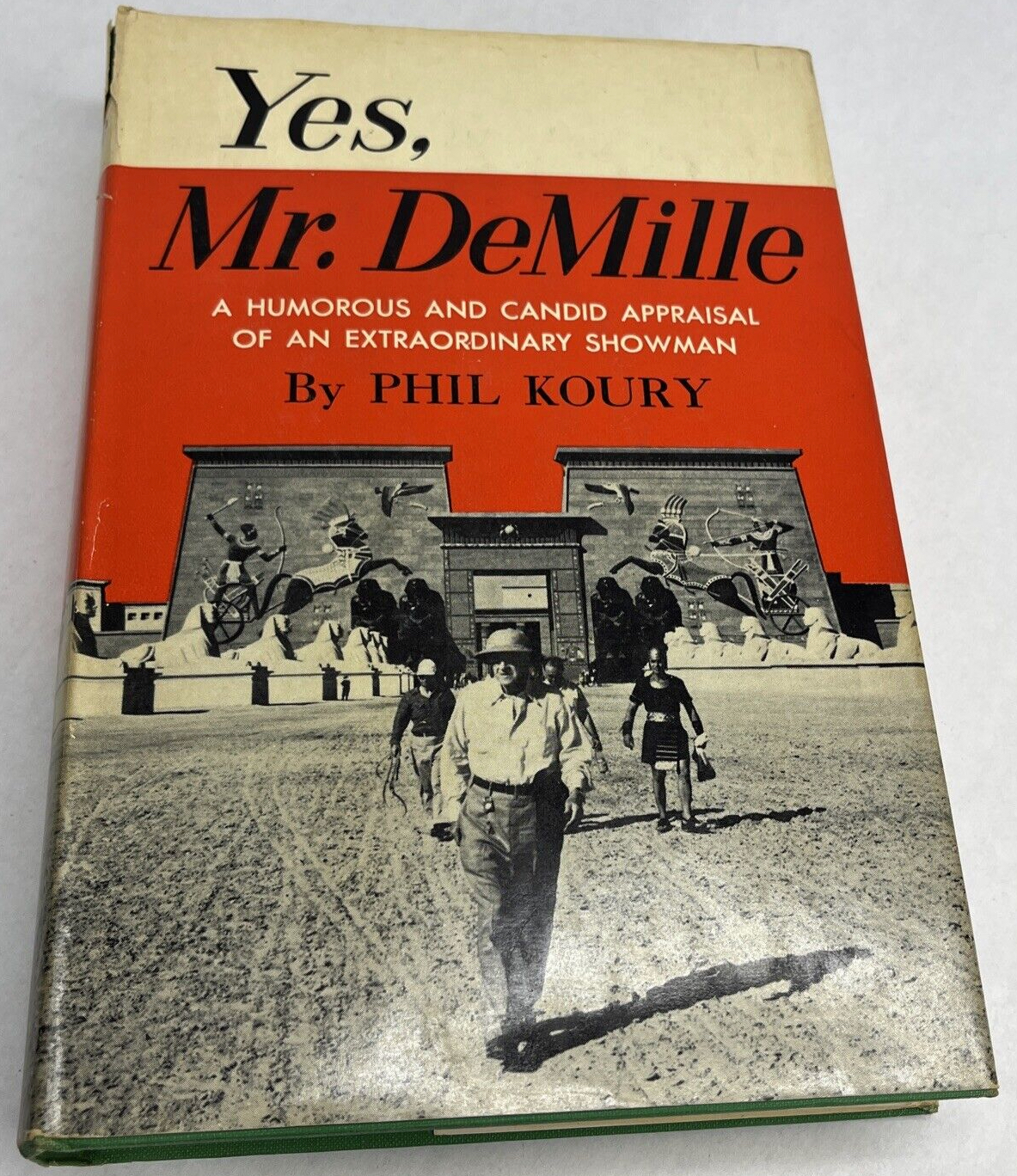
A few weeks ago, we visited an antique shop in the middle of Nowhere and, among low-tech housewares and sewing machines, we found a biography of classic Hollywood director Cecil B. DeMille: Yes, Mr. DeMille by Phil Koury.
DeMille was a film director for an astonishing 46 years. He directed over 80 movies, including The Squaw Man (1914), The Ten Commandments (1923 & 1956), The Greatest Show on Earth (1952), Union Pacific (1939), and many acclaimed silent films.
The movies were Spectacles, his characters faced momentous challenges, and his actors were pushed beyond the comfort zone vis-à-vis stuntwork or dangerous animals.
Yes, Mr. DeMille is un-put-downable. Koury, who worked for the director as an executive assistant for seven years, didn’t, it appears, miss a Thing. One wonders if Koury kept a special notepad in his desk for DeMille Observations.
The book, published shortly after DeMille’s death in 1959, is a clear-eyed appraisal of DeMille as boss and motion picture artist.
It is not, thankfully, a dissection of DeMille’s personal life. Rather, it lets us see DeMille’s approach to film projects and his treatment of his staff.
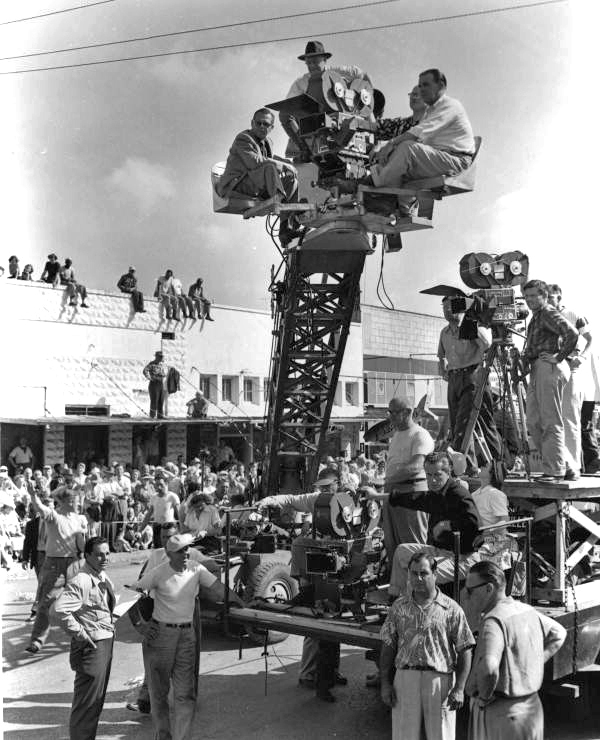
On the set of The Greatest Show on Earth. Image: Florida Memory
Koury is a witty, engaging writer who juggles cynicism of the industry with a genuine respect for DeMille’s talent.
Some of his best lines are reserved for Hollywood’s love of money: “[T]he most nutritional of all Hollywood vitamins – big returns at the boxoffice.”¹
Yet, it seems DeMille himself never approached a project without first thinking of the returns. For example, Koury documents brainstorming sessions with writers, the director firing pointed questions:
“What are the things that make an audience interested in the scene?” he asked. “What are the reactions of the people? … What’s the act – the feature? What’s going on underneath?”2
DeMille was tough on everyone who worked for him, especially writers. For The Greatest Show on Earth, seven writers were brought on board at different times – to replace others who had quit, to polish what previous writers had written, or to start a new script altogether.
Koury provides lots of colourful anecdotes on the day-to-day business of working with DeMille. In one passage, he describes the director having lunch with his staff in the Paramount café.
“Immediately upon the boss’s taking his place he was served a generous bowl of chips, which he nibbled on during the half-hour or more prior to our being served… The crunch, crunch, accompanied by digs, often not sly, at the hungry aides for work done or left undone, created a barrier to the healthy flow of the staff’s gastric juices…”
Yes, Mr. DeMille, p. 250
Observations like these make you feel you’ve met DeMille yourself. Indeed, this book is a shrewd character study.
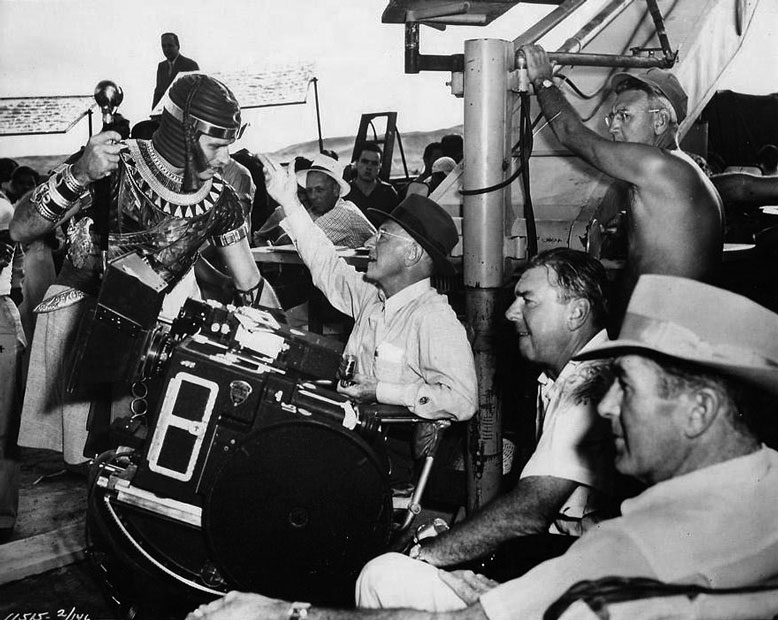
Directing Charlton Heston in The Ten Commandments. Image: IMDb
In describing DeMille’s approach to movie promotion, censorship, and unions, we learn how these things worked in Classic Hollywood.
We also learn he thrived on overcoming obstacles, such as large crowd scenes.
“Sharing with him the tensions of one crisis after another, we felt it was part of Mr. DeMille’s nature to be in a state of constant motion,” writes Koury. “He kept up a staggering pace and never seems to be happier than when chaffing under some mighty dilemma.”3
Koury was under no illusions about DeMille’s productions (“His productions were big, colorful, often gaudy.”4), but never, in the book, does he refer to his boss as “Cecil.” With Koury, it’s always “Mr. DeMille.”
Although DeMille had his faults, such as, in the 1950s, labeling people a communist if they disagreed with him, Koury doesn’t lose his sense of humour or affection for the man.
He reminds us DeMille employed women in technical roles during the late 1920s when it Wasn’t Done. This was the period of “the nine women,” which included screenwriter Jeanie Macpherson, film editor Anne Bauchens, and technical advisor Berenice Mosk.
He was often at odds with the film biz. As Koury notes: “He learned to live without the acclaim of his colleagues, always aware that Hollywood disapproved of his firebrand tactics…and particularly his irritating habit of deriving enormous profit from subjects that were supposed to spell financial ruin.”5
Yet, Koury also portrays a warm and personable DeMille, as in their first meeting in 1946.
“There was nothing epic in his manner,” writes Koury. “His voice did not sound like thunder from Mount Olympus. He stood at the door to his office, a foot propping it open, with a warm, interested, almost shy smile.”6
Are you a fan of Cecil B. DeMille? If so, which of his films appeal to you?
Image: eBay. (Our own copy is a bit rugged.)
Notes
Koury, Phil (1959) Yes, Mr. DeMille: A Humorous and Candid Appraisal of an Extraordinary Showman. New York, NY: G.P. Putnam’s Sons. ¹Ibid., p. 318. 2Ibid., p. 254. 3Ibid., p. 291. 4Ibid., p. 178. 5Ibid., p. 316. 6Ibid., p. 11.
This book sounds like a good one! I really haven’t seen many DeMille films — just Madam Satan, Cleopatra, and the remake of The Ten Commandments. The Ten Commandments is a sentimental favorite, and the one I’ve seen most often. I recently realized, though, that I have Sign of the Cross in my collection, so that’s on my watchlist now. I’ve heard so much about it!
This book is SO good. I could hardly put it down. I’ve never been a huge DeMille fan, but I’ve also seen very few of his films, and this book changed my mind about him. My goal in 2024 is to catch up on Cecil B. DeMille movies.
He seemed a larger-than-life persona in old Hollywood. Watching films like Ten Commandments or Cleopatra in today’s CGI heavy industry, one wonders how much work went into pulling off such epics.
Lovely to be back here Ruth, and exactly what a find. Sometimes it makes me(may be us) feel had been no such directors, we would almost still be prehistoric.
You said it! The film industry owes a lot to these directors. I was watching some AI-generated footage the other day, and while it was amazing, you could also see the influence of pioneering film directors.






 Silver Screenings
Mr. DeMille, I’m ready for my close-up!
LikeLiked by 2 people
Bahaha! Me too!
LikeLiked by 1 person
This book sounds like a good one! I really haven’t seen many DeMille films — just Madam Satan, Cleopatra, and the remake of The Ten Commandments. The Ten Commandments is a sentimental favorite, and the one I’ve seen most often. I recently realized, though, that I have Sign of the Cross in my collection, so that’s on my watchlist now. I’ve heard so much about it!
Karen
LikeLiked by 2 people
This book is SO good. I could hardly put it down. I’ve never been a huge DeMille fan, but I’ve also seen very few of his films, and this book changed my mind about him. My goal in 2024 is to catch up on Cecil B. DeMille movies.
LikeLike
He seemed a larger-than-life persona in old Hollywood. Watching films like Ten Commandments or Cleopatra in today’s CGI heavy industry, one wonders how much work went into pulling off such epics.
LikeLiked by 2 people
You said it! The planning & organizing that it took in pre-CGI times must have been staggering. DeMille seemed to thrive on it.
This book made me appreciate him even more.
LikeLiked by 1 person
Love you to join my blogathon lovely… https://weegiemidget.wordpress.com/2023/10/15/hammer-and-amicus-blogathon/
LikeLiked by 1 person
Would love to, Gill! I’d like to do It’s Trad, Dad (1962) from Amicus. It’s not horror, but it looks like tons o’ fun.
I can sign up via your blog post when I’m back at a computer.
LikeLike
What a lucky find, Ruth!
One of the best directors in film history. He knew how to deliver spectacle.
LikeLiked by 2 people
It was an incredibly lucky find. Such a great read, and an excellent guide to the day-to-day workings of Hollywood.
LikeLiked by 2 people
Lovely to be back here Ruth, and exactly what a find. Sometimes it makes me(may be us) feel had been no such directors, we would almost still be prehistoric.
LikeLiked by 2 people
You said it! The film industry owes a lot to these directors. I was watching some AI-generated footage the other day, and while it was amazing, you could also see the influence of pioneering film directors.
LikeLike