We’ve just become a huge fan of silent film actress Colleen Moore.
If you haven’t heard of Moore – we hadn’t until recently – she was a hugely popular movie star in the 1920s. When she was at the Top of her Game, she reportedly earned $12,500 per week (approx. $230,000 US today). That works out to $32,857.14 per day.
She was worth it. We just saw one of her movies, and we’re telling you she was a Big Deal.
In Orchids and Ermine (1927), Moore plays a switchboard operator at a cement company. In her spare time, she dreams of marrying a millionaire and designing a wardrobe of orchids and ermine.
We know Moore would be a good custodian of wealth because, at the beginning of the film, a rich woman breaks off a stem from her orchid corsage and throws it onto the street. Moore runs to snatch the orchid, even though it’s been run over by a truck, and she dusts it off and pins it to her dress.
An orchid is an orchid, after all, tire marks notwithstanding.
Back at the cement office, Moore completes her Look by draping a white cat around her neck like a misshapen ermine collar – so she can better visualize her future wardrobe – and the cat lets her.
But the cement company is a Dead End, so Moore gets a new job at a luxe Manhattan hotel where the Very Wealthy vacation. This is her best chance to find a millionaire, and she does, but there are some unexpected twists.
A florist at the hotel, woman named Ermintrude (also hunting for a millionaire), offers some Sage Advice: “New York is just a battle between blondes and brunettes – and I’m no club when it comes to chemical warfare!”
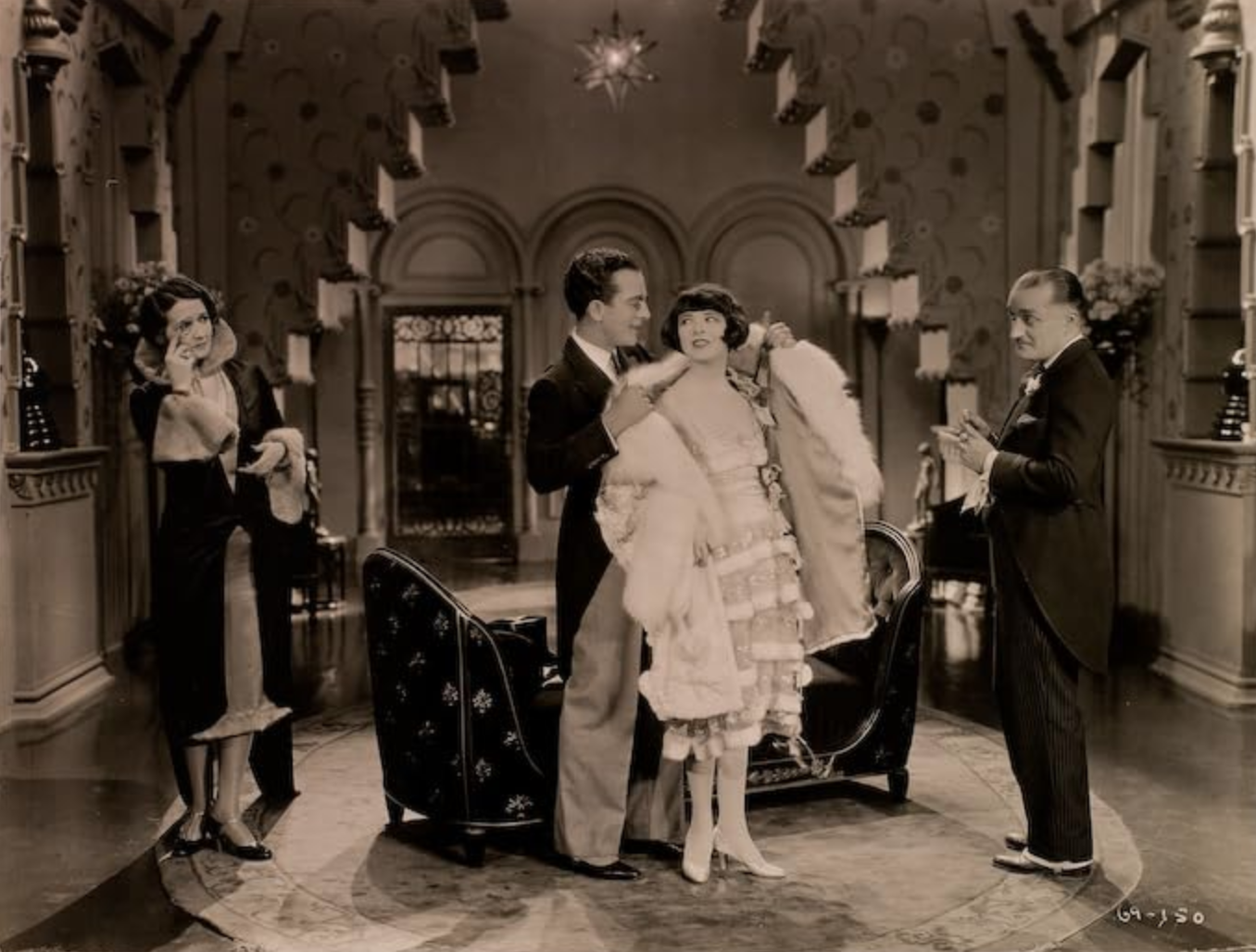
Another lovely day at the office. Image: IMDb
Moore is a woman for whom you automatically cheer. She’s a gold digger, but honest about it. She doesn’t resort to crime or trickery to snare a millionaire; she’ll marry one fair and square.
She’s funny and clever, and has a sweetness about her. When she meets her millionaire, he feels he’s the lucky one.
This is a movie of beautiful clothes, good acting, and funny lines, yet the whole thing depends on Moore. We’re keen to see her reactions to any given situation.
Her face is so expressive, you always know what she’s thinking. For example, there’s a remarkable scene near the end of the film where a shop clerk repossesses her expensive clothes. First, the clerk snatches her hat, then the ermine coat. Moore’s face is compelling: the stripping away of these clothes represents the stripping away of her happiness.
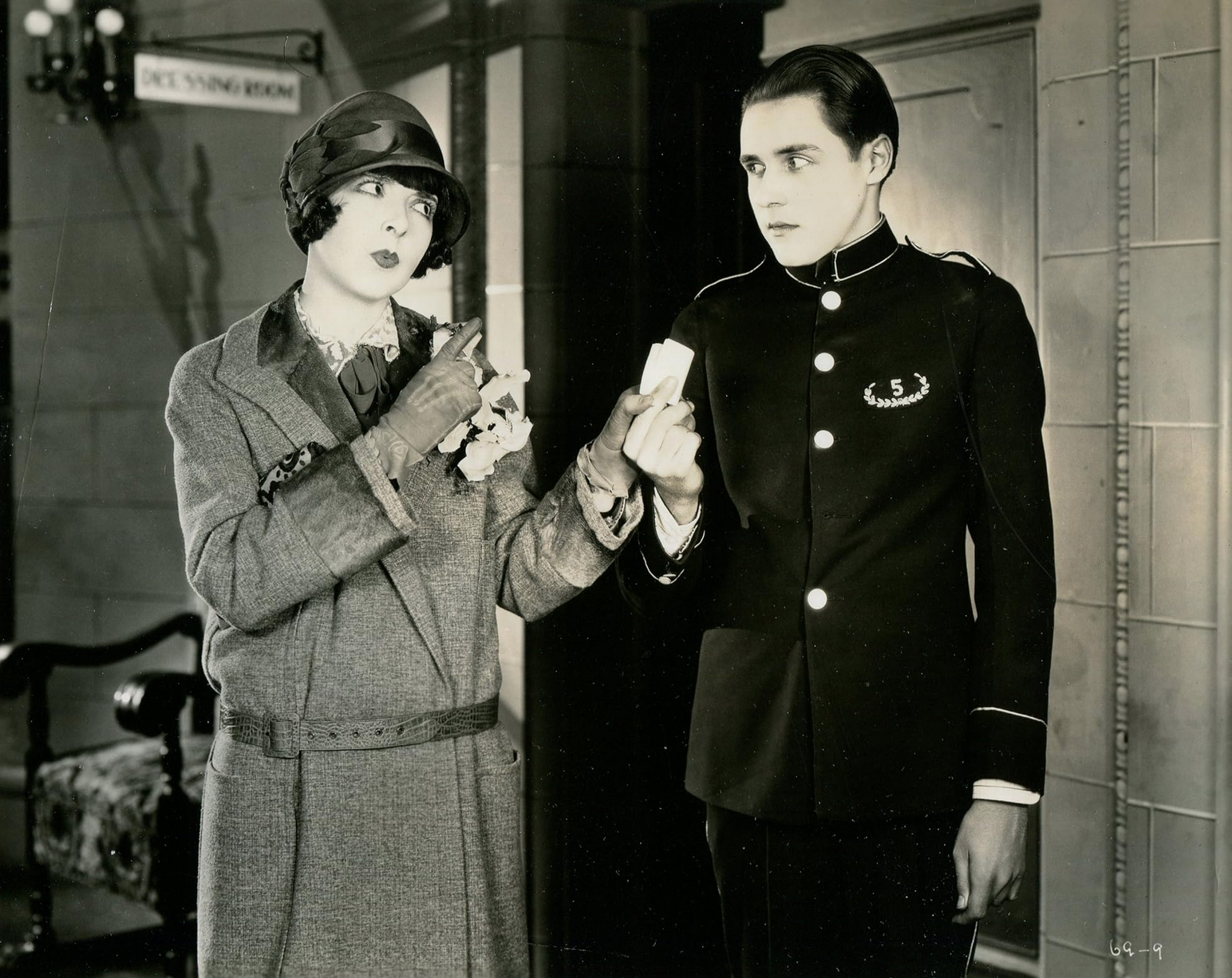
Be careful with those mash notes. Image: IMDb
Moore was known as a “flapper”, a young woman of the 1920s who rejected conventions of older generations. She looked the part with her slender, boyish frame, shorter skirts, and bobbed haircut, all things that represented Freedom.
“The movies told Americans who the flapper was, what she wore, how she behaved, and why she was different from other female movie types,” writes film historian Jeanine Basinger. “It was completely logical for the rule-breaking [movie] tomboy-girl of the teens to grow up to be a flapper, because breaking the rule was what a flapper was all about.”¹
Basinger says Moore’s Career Trajectory is similar to fellow flapper Clara Bow, even though they portrayed different kinds of women.
“[Moore and Bow] aren’t timeless stars like Garbo or Dietrich, but stars who represent their own time,” she writes. “To be that kind of movie star is the hardest job of all, because these are the actors whose films are about nothing much but themselves… The business attitude toward such actresses is always one of exploitation: make as much off them as quickly as you can before it all goes away.”²
Moore was Financially Comfortable in real life, even after retiring from Hollywood in the 1930s, thanks to Wise Investments. She wrote a guide on investing, from which Basinger quotes, “You simply can’t be comfortable without six million dollars.”³
But she wasn’t without a philanthropic bent. During the Depression, Moore enlisted Hollywood folk to build a miniature fairy castle, complete with furnishings, to tour the U.S. as a charity fundraiser. (The castle is currently on display at the Griffin Museum of Science + Industry in Chicago.)
Very few of Colleen Moore’s movies have survived to this day, which makes the remaining films even more valuable. We hope you get the chance to see her in Orchids and Ermine. You won’t be disappointed.
Orchids and Ermine starring Colleen Moore, Jack Mulhall, Sam Hardy. Directed by Alfred Santell. Written by Carey Wilson & Al Spence. First National Pictures, 1927, B&W, 70 mins.
Source
¹Basinger, Jeanine (1999) Silent Stars. Hanover, NH. Wesleyan University Press, p. 412. ²Ibid., p. 414. ³Ibid., p. 449.







 Silver Screenings
Where did you find a copy of this film? I would love to see it!
LikeLiked by 1 person
There’s a decent copy on YouTube, and I think Internet Archive (dot) org has a copy, too. It’s a thoroughly enjoyable movie.
LikeLike
She has great expression! 🙂 (And hair!)
LikeLike
Yes, she has fabulous hair. And an amazing wardrobe!
LikeLiked by 1 person
This lady sounds one sassy gal. Thanks for the introduction Ruth!
LikeLiked by 1 person
She has SO much personality. It’s impossible not to like her, in my opinion.
LikeLiked by 1 person
I’d love to see the film but also that castle!
LikeLiked by 1 person
Absolutely divine furnishings here. Outstanding set design.
LikeLiked by 1 person
She was fabulous – and let’s face it – right about being comfortable for anything less than six million.
LikeLiked by 2 people
Haha! Yes, six million is still a good number these days.
LikeLike