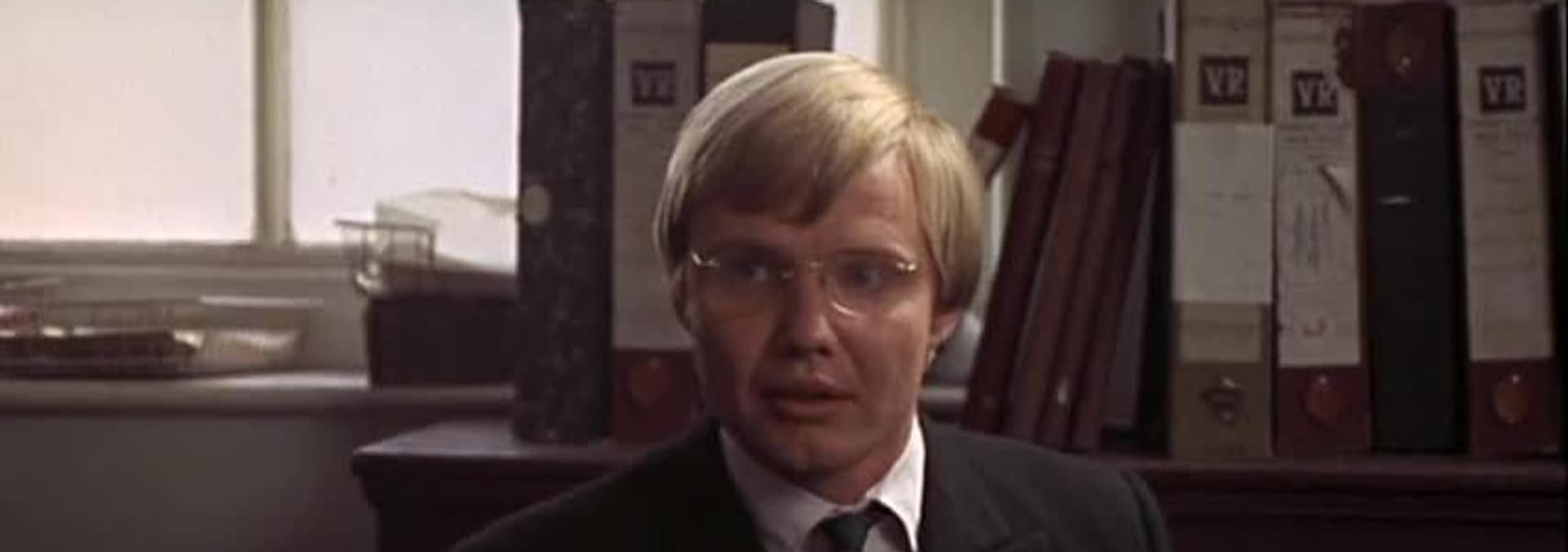
Jon Voight as a bookish revolutionary. Image: Tubi
We (yours truly) can never decide if we’re a fan of 1970s’ cinema.
There are some legendary films from the 1970s, but also some productions that are tiresome in their self-importance.
One film that falls into the latter category is The Revolutionary (1970), starring Jon Voight as an idealistic university student/ladies’ man who wants to change society in the gentlest way possible.
Voight’s character is both annoying and fascinating. He appears to be a genuine fellow, yet when he falls down a flight stairs, he leads others to believe police pushed him. (They didn’t.) He comes from a wealthy and influential family, but eschews them; he’s All In with his poverty-stricken lifestyle.
He’s an academic communist who doesn’t think things through and believes everyone can be reasoned with. Although his political beliefs are out of favour with the Powers That Be, he’s shocked when he’s suspended from the university for his activities.
Voight gradually becomes disillusioned with the nice approach to civil disobedience, and is increasingly convinced violence is the only way to achieve societal reformation. His is a gradual and inevitable radicalization.
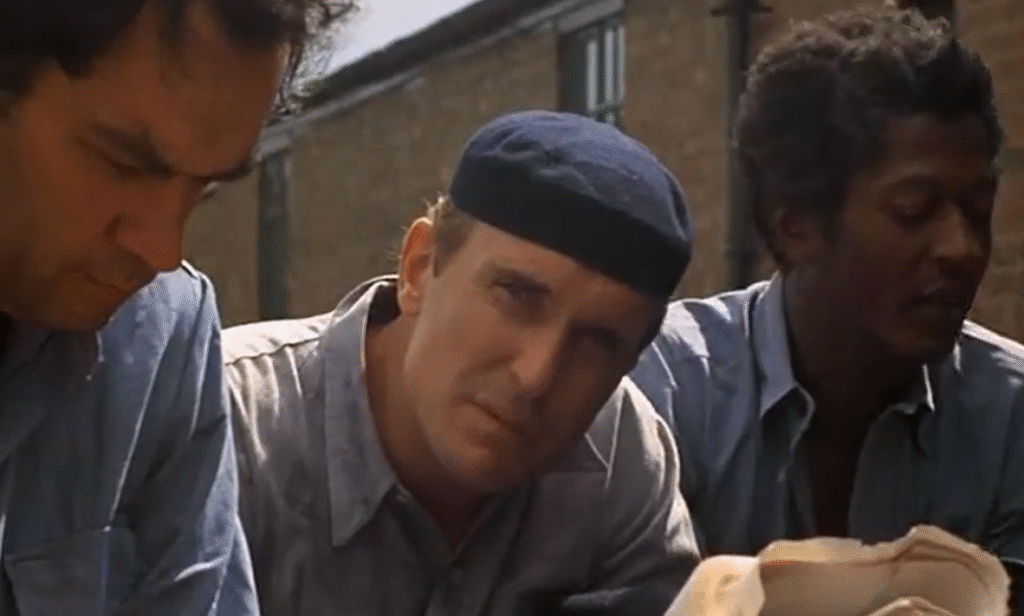
Even though this is Voight’s movie, he’s deliberately the least charismatic person here. There are far more interesting characters around, such as the activist played by Robert Duvall.
Robert Duvall, aggressive revolutionary. Image: filmfanatic.org
All the performances in The Revolutionary are superb. Nobody appears to be Acting. The dialogue is natural, and the gritty London backdrop adds to the characters’ hopelessness and frustration.
In his desire to put pressure on society, Voight seeks Robert Duvall, the leader of The League, an organization of blue-collar workers. Duvall is a realist. He sees things as they are, not as he wishes them to be, à la Voight.
Duvall may not wax poetic about Marxism, but he’s seen enough to know the score. “The rich exploit the society that exploits the poor,” he says, a truism that gallops throughout history.
He also mocks Voight, and the cause itself, telling one of his comrades, “We can use him [Voight]. He has a nice bourgeois face.”
Duvall walks around with half a smirk, as though he can’t believe he’s the only top gun in this movie. Voight is immediately drawn to his power and confidence. Duvall doesn’t drone on and on about ideology; he’s a Man of Action!
However, before long, Duvall’s character will change dramatically. His smirk will be replaced by the haunted, resentful look of one who has been Threatened.
Duvall’s performance is so striking, it makes you wonder if his story shouldn’t be the real one. How does an activist go from swagger to terror?
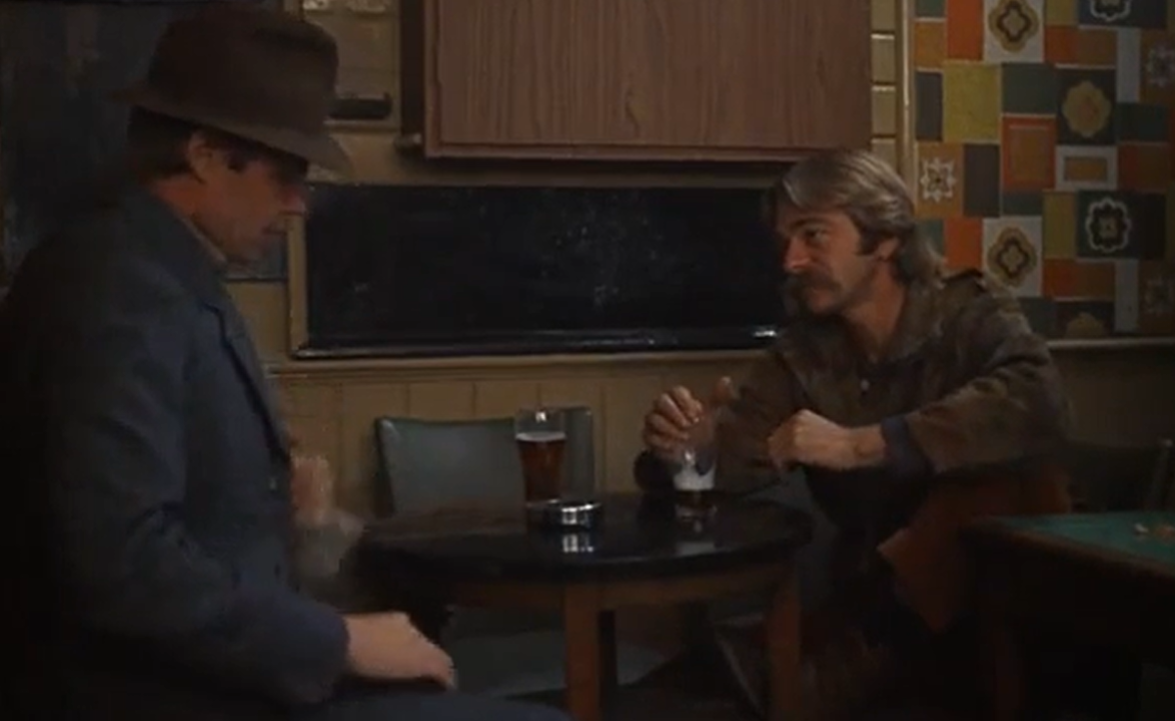
Seeking a more dangerous mentor. Image: filmfanatic.org
The Revolutionary is based on the novel by the same name, and the author, Hans Königsberger, also wrote the screenplay. Königsberger was born in Amsterdam in 1921, escaped Nazi-occupied France during WWII, and served as a sergeant and translator in the British Army. He later became a socialist and activist, and was a prolific journalist and author.
In translating The Revolutionary to the screen, filmmakers used a muted and sad colour palette, with rare glimpses of toned-down sunlight. This is an ever-present reminder that we’re navigating an authoritarian society claiming to have Free Speech, but does not. (Sound familiar?)
We were surprised to learn Roger Ebert couldn’t praise the film enough. “The Revolutionary is one of the year’s best films, and certainly one of the most perceptive,” he writes. “But the story of the student revolution, like all stories, has to be told about people. This movie does that.”¹
If you like philosophical wrangling, or if you’re a Robert Duvall completist, then The Revolutionary is a must see. It has an ending you’ll never forget, and you’ll have to see it to know what we mean.
NOTE: This film is rated “R”, which we normally avoid on this site, and which we didn’t realize until we were several minutes in.
The Revolutionary starring John Voight, Warren Hull, Robert Duvall. Directed by Paul Williams. Written by Hans Koningsberger. United Artists, 1970, Colour, 100 mins.
“We (yours truly) can never decide if we’re a fan of 1970s’ cinema.” I know how you feel! This sounds like a very interesting film (and I love some of the quotes you shared). Thanks for this great review, Ruth!
I’d love to hear what you think about this film if you do get the chance to see it. Thought-provoking and an unforgettable ending. Although I don’t love it, I do think it ought to be more well known.
Great review. The Revolutionary was part of a strange 1970 mini-trend of Hollywood films centered around campus unrest, which included The Strawberry Statement, R.P.M. and Getting Straight.
You know you have a good film when it has a theme which survives time. The whole thing with the “academic” type who never seem to get their own hands dirty, which really makes them a lot like the “capitalist exploiters” they are always crying about…well, that just never gets old.
I’d be really interested in what you think of this movie if you ever see it. But I’m more interested to know what sports analogy you would pair with it.
My gut reaction would be to compare the failed upstart revolutionaries to the guys who started the Federal League – a short-lived attempt to become a third baseball “major league” to rival the American and National Leagues.
Yeah, I’m with you on 70s movies–they’re kind of a grab bag. Glad Duvall puts in a good performance here, though. As usual, right? Thanks again for joining the blogathon, Ruth! This was fun.
I’ve never heard of this film, which is surprising given it stars Robert Duvall and Jon Voight. I like your line “…tiresome in their self-importance.” It’s very appropriate for some films released in the 70s.
I’d be interested in hearing what you think about this film if you get the chance to see it. The performances are amazing, although Duvall is criminally underused.






 Silver Screenings
Thanks for the review. I wasn’t aware of this flick.
LikeLiked by 1 person
I wasn’t aware of it, either. You should check it out! Some amazing performances.
LikeLiked by 1 person
“We (yours truly) can never decide if we’re a fan of 1970s’ cinema.” I know how you feel! This sounds like a very interesting film (and I love some of the quotes you shared). Thanks for this great review, Ruth!
LikeLiked by 1 person
I’d love to hear what you think about this film if you do get the chance to see it. Thought-provoking and an unforgettable ending. Although I don’t love it, I do think it ought to be more well known.
LikeLiked by 1 person
Great review. The Revolutionary was part of a strange 1970 mini-trend of Hollywood films centered around campus unrest, which included The Strawberry Statement, R.P.M. and Getting Straight.
LikeLiked by 1 person
Good to know – thanks! Which of the movies you listed would you most recommend?
LikeLike
Although they’re all dated, the best of the bunch is Getting Straight with Elliot Gould and Candice Bergen, which has a sense of humor.
LikeLiked by 1 person
I’ll look for it. Thanks!
LikeLike
You know you have a good film when it has a theme which survives time. The whole thing with the “academic” type who never seem to get their own hands dirty, which really makes them a lot like the “capitalist exploiters” they are always crying about…well, that just never gets old.
LikeLiked by 1 person
I’d be really interested in what you think of this movie if you ever see it. But I’m more interested to know what sports analogy you would pair with it.
LikeLike
My gut reaction would be to compare the failed upstart revolutionaries to the guys who started the Federal League – a short-lived attempt to become a third baseball “major league” to rival the American and National Leagues.
LikeLiked by 1 person
Oh yeah! Even I have heard about that league, and I think it’s a perfect match here.
LikeLike
I would need to do some homework to be sure, but it feels that way…
LikeLiked by 1 person
Yeah, I’m with you on 70s movies–they’re kind of a grab bag. Glad Duvall puts in a good performance here, though. As usual, right? Thanks again for joining the blogathon, Ruth! This was fun.
LikeLiked by 1 person
Exactly – Duvall is his usual fab self. Aggressive when needed, but also subtle when called for. Such good performances here!
LikeLike
I’ve never heard of this film, which is surprising given it stars Robert Duvall and Jon Voight. I like your line “…tiresome in their self-importance.” It’s very appropriate for some films released in the 70s.
LikeLiked by 1 person
I’d be interested in hearing what you think about this film if you get the chance to see it. The performances are amazing, although Duvall is criminally underused.
LikeLiked by 1 person
Duvall sounds like the more interesting character here. Watching that confidence slowly turn into fear could almost be a movie of its own.
LikeLiked by 1 person
So true! Duvall’s character arc would make a fascinating movie in its own right.
LikeLike