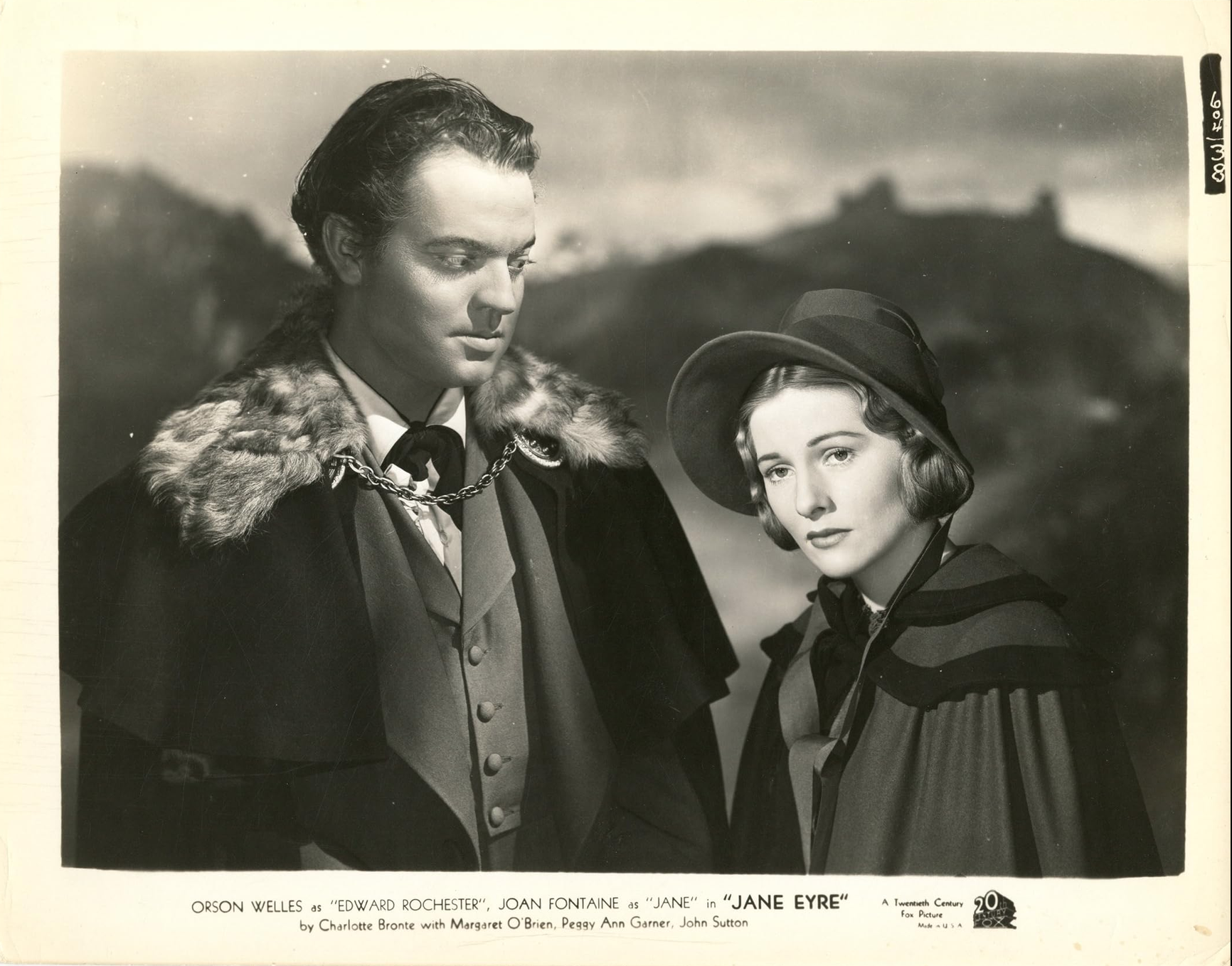
You’d think this is brilliant casting. Image: IMDb
Well, we just watched the 1943 version of Jane Eyre, based on the 1847 novel by Charlotte Brontë.
As you know, Jane Eyre (the character) is a strong-willed, free-thinking young woman in Victorian England who clashes with authority and potential suitors alike. She suffers no fools.
There have been dozens of film adaptations of Jane Eyre, the first of which was in 1910. The 1943 version, starring Orson Welles and Joan Fontaine, is often praised for its “gloomy”ambiance, and it appears on many “Best-Jane-Eyre-Movies” lists.
We wanted to love this movie, Dear Reader. Alas, we felt, in the end, it was kind of a rehash of another Joan Fontaine movie, Rebecca (1940).
Now, we realize page-to-screen adaptations are difficult. Much trimming is needed to squash a novel into an hour-and-a-half runtime, and sacrifices must be made – of which the 1943 Jane Eyre makes us painfully aware.
But before we put you off the thing completely, let’s look at the marvelous cast.
Orson Welles stars as Mr. Rochester, the unconventional lord of Thornfield Hall, a gruff, bossy man with whom Jane falls in love. Watch him stride across the screen, cape billowing in the wind, the embodiment of power and wealth.
(As an aside, Welles said he received negative reviews for his performance, which isn’t entirely unfair.)
A de-glammed Joan Fontaine is the titular Jane, playing exactly the same character she played in the aforementioned Rebecca. This was a surprise, because we were expecting the feisty Jane of the novel. Even so, Fontaine the actress does have a way of growing on you, and she looks fab in those 1840s’ fashions.
The supporting cast is stellar, including Agnes Moorehead, Margaret O’Brien, and (briefly) Elizabeth Taylor. They bring Brontë’s characters to life, and we wish they had more screen time. (Yes, we’re looking at you, Agnes Moorehead.)
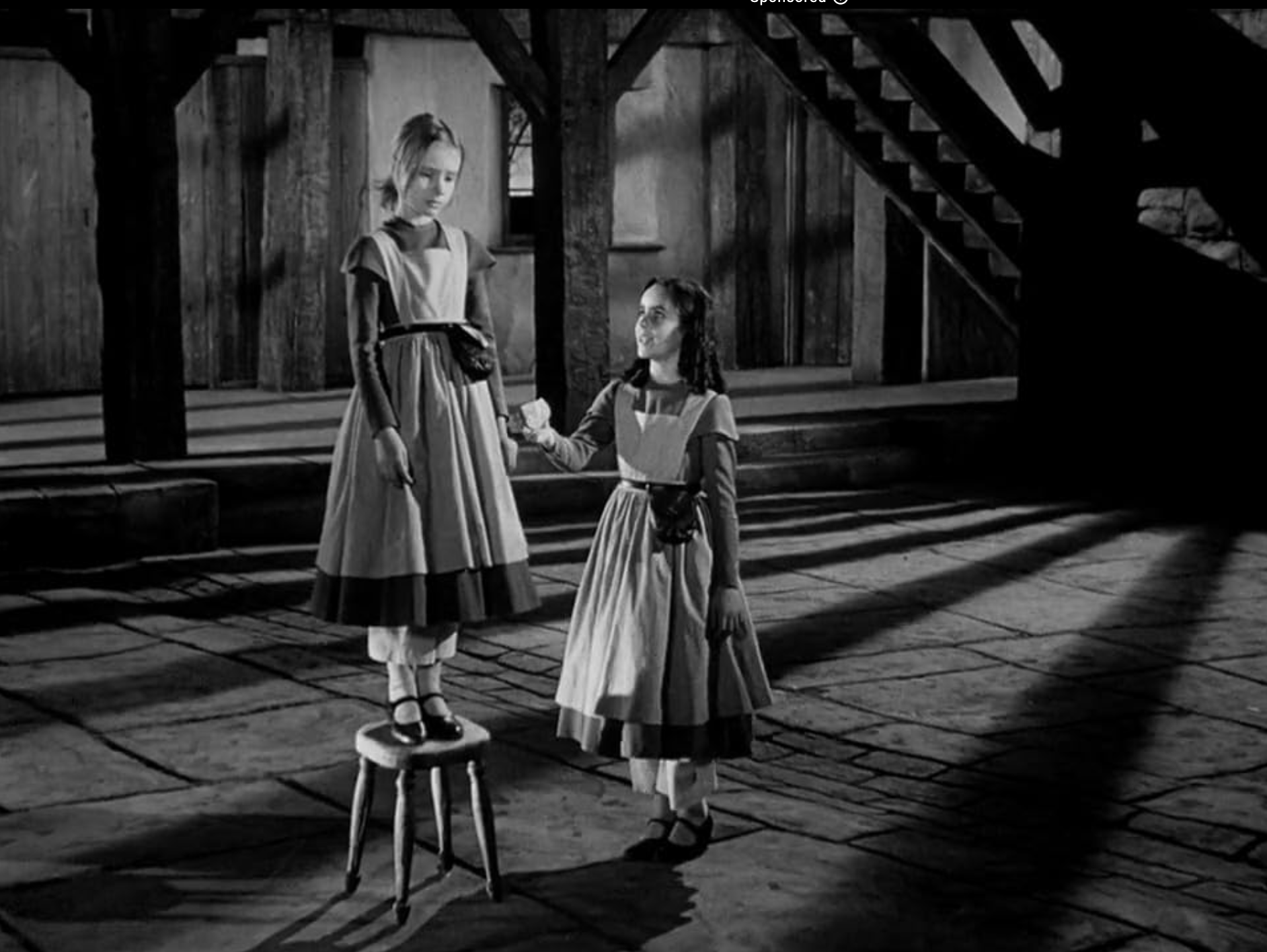
Elizabeth Taylor befriends our young rebel. Image: IMDb
The movie, like the book, begins with Jane as an orphaned child who lives with put-upon relatives. Her affluent aunt cannot stand Jane and makes life miserable for the poor kid.
Jane is soon sent away to Lowood Institution, a jail of a school that tries to break her spirit. You see, the young Jane of the Movie is just as sassy as the young Jane of the Novel.
But, when she reaches adulthood, most of Jane’s sass has been worn down, leaving behind a timid, meek soul. This is a character Fontaine plays well, yet it does a disservice to the relationship with Mr. Rochester. In the novel, Jane and Mr. Rochester spar as equals, each as smart as the other. In the movie, Mr. Rochester steamrolls over our unfortunate heroine.
Also, Novel Jane is hard working, resourceful, and industrious, qualities we don’t often see in Movie Jane.
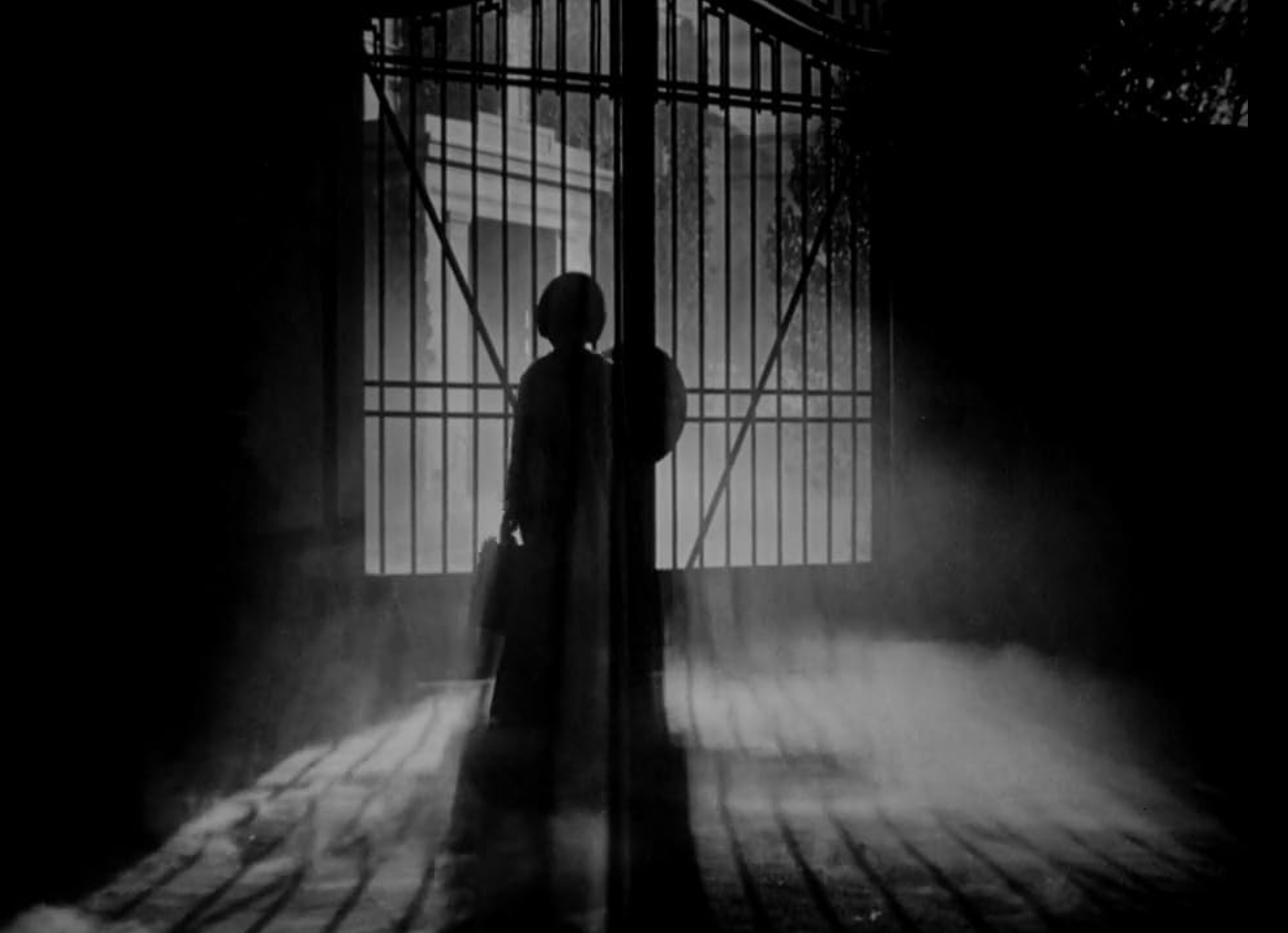
These, however, are shortcomings of the script, and they do not take away from the excellent technical aspects. The sets are suitably gothic and, well, gloomy, and Bernard Hermann’s score helps create the film’s distinct atmosphere.
If you’ve seen this version of Jane Eyre, you’ve probably wondered if Welles directed some of the scenes. We wondered the same thing. Welles doesn’t have a directing credit, but there are shots so striking and innovative – in a Welles’ sort of way – we almost gasped out loud.
Sadly, there are too few of these scenes. As good a director as Robert Stevenson is, it would be interesting to see if Welles-as-director might have better glossed over the movie’s flaws.
Jane has had Enough. Image: IMDb
There are at least three writers who worked to adapt this film to the screen, including director Stevenson, a former collaborator-cum-enemy of Welles (John Houseman), and novelist Aldous Huxley.
Given these three notable talents, the script can be astonishingly clumsy. For example, in one scene, Mr. Rochester remarks, “Fortune’s knocked me about, kneaded me with her knuckles, till I flatter myself I’m as hard and as tough as an India rubber ball.”
Whatever you say, Mr. Rochester.
This Jane Eyre project began when independent studio head David O. Selznick bought the screen rights, and signed Welles to play Rochester to Fontaine’s Jane. Then he sold it as a package to Twentieth Century-Fox.
IMDb says Selznick originally wanted to cast Vivien Leigh, so her daughter could play Jane as a child, which would have been intriguing. But Leigh’s ex-husband intervened and said No Way.
We recommend Jane Eyre (1943) only if you are a Welles or Fontaine completist. If you’re looking for a film adaptation that more closely aligns with the novel, we recommend looking elsewhere.
This post is part of THE 2026 CLASSIC LITERATURE ON FILM BLOGATHON, hosted by Silver Screen Classics.
Jane Eyre starring Orson Welles, Joan Fontaine, Margaret O’Brien. Directed by Robert Stevenson. Written by Aldous Huxley & Robert Stevenson. Twentieth Century-Fox, 1943, B&W, 97 mins.
So interesting! Your write-up definitely makes me want to watch this one again. I’m sure I’ve seen it, but maybe I don’t really remember because I wasn’t as fond of it as I think I was supposed to be. Loved this, btw: “Whatever you say, Mr. Rochester.” LOL I wonder why Vivien Leigh’s ex-husband didn’t want her to do it. Who was he, anyway, and why did he even have a say?!?!
Vivien’s ex-husband was Leigh Holman, and he ended up with custody of their daughter Suzanne, apparently. I hope you get the chance to see this film again. If you do, let me know if I’ve been too harsh.
I like this one more than you, Ruth, but I agree that the atmosphere and visuals are the highlights. This and most of the other screen adaptations either cut too much, or they try and cram it all in in a very rushed way.
The best adaptation, and the one that is closest to the book, is the 1983 miniseries starring Zelah Clarke and Timothy Dalton.
I urge everyone to watch the 1934 version. It has me crying with laughter because it is so bad.
Keep meaning to check a Jane Eyre movie out again, I’m sure I saw a version as a kid and loved it. This version with Welles and Fontaine does sound an interesting pairing.. good to see we both covered Elizabeth Taylor’s career in adaptations. Does she have much to do in this movie?
Elizabeth Taylor’s role in this film is small but crucial. So glad filmmakers left her character in the film! Welles and Fontaine is an interesting pairing, as you say, and they do have good chemistry.
Beginning with Johnny Tremain I have seen every film that Robert Stevenson had directed that had some sort of Disney connection. I grew up watching theatrical releases and The Wonderful World of Disney. Deep down I guess I knew he had a career that predated Tremain, but I haven’t seen any of them. Never have gotten around to reading the source material for this. But that was mostly because I thought it was a romance… maybe I’ve been misjudging it….
I watched this movie many years ago and what stayed with me was Young Jane and her little friend Elizabeth Taylor. I haven’t read the novel, but you make good points about a poor adaptation. And the line about the India rubber ball made me laugh!
Well, it isn’t exactly like the book, which I read in high school, but I really liked it, mostly for its superb chiaroscuro cinematography and its cast, including little Liz. Personally, my favorite adaptation is the one with Charlotte Gainsbourg as Jane, but I seem to be in the minority on that one. Interesting tidbit about Vivien Leigh — I think she may have been too beautiful for the role.
I chewed on this one for a while. You make a good case. Unfortunately, this was the jane eyre I grew up on and subsequently, was the one endearing to me (also because of my love of all things Welles).
But I do see your point. For me the atmosphere, vis a vis the gloomy and dark air of it makes it good. But you have a point about the choices in casting.
The roughest one for me to get past was when I realized that the Christmas Carol version with the chubby Cratchett was probably not the best one, even though beloved from my wee years.
Oh boy, I know the feeling. A couple of years ago, I re-read a book that was a favourite of mine as a preteen. I discovered the book was not very good, with unlikeable characters. So disappointing! Or the time I re-watched Snowball Express with Dean Jones and felt like a fool for having loved it so much as a kid. There’s much to admire about the Orson Welles – Joan Fontaine film, especially Orson’s booming voice. What’s not to love about him, right?
I actually quite like this version, as to me, Fontaine’s Jane seemed reserved and shy, uncertain in some of her new circumstances, but not meek. And I was so pleasantly surprised by the puckish humor Welles gave Rochester.
That’s a good way to describe Welles’ portrayal of Mr Rochester. I would love to see this film on the big screen to study the beautiful sets & costumes.






 Silver Screenings
So interesting! Your write-up definitely makes me want to watch this one again. I’m sure I’ve seen it, but maybe I don’t really remember because I wasn’t as fond of it as I think I was supposed to be. Loved this, btw: “Whatever you say, Mr. Rochester.” LOL I wonder why Vivien Leigh’s ex-husband didn’t want her to do it. Who was he, anyway, and why did he even have a say?!?!
LikeLiked by 1 person
Vivien’s ex-husband was Leigh Holman, and he ended up with custody of their daughter Suzanne, apparently. I hope you get the chance to see this film again. If you do, let me know if I’ve been too harsh.
LikeLiked by 1 person
I like this one more than you, Ruth, but I agree that the atmosphere and visuals are the highlights. This and most of the other screen adaptations either cut too much, or they try and cram it all in in a very rushed way.
The best adaptation, and the one that is closest to the book, is the 1983 miniseries starring Zelah Clarke and Timothy Dalton.
I urge everyone to watch the 1934 version. It has me crying with laughter because it is so bad.
LikeLiked by 1 person
Ha! Thanks for the 1934 recommendation. I can’t wait to see it!
A lot of people online recommend the 1983 miniseries with Clarke and Dalton, and I’ll be looking for it. Thanks for stopping by.
LikeLike
Keep meaning to check a Jane Eyre movie out again, I’m sure I saw a version as a kid and loved it. This version with Welles and Fontaine does sound an interesting pairing.. good to see we both covered Elizabeth Taylor’s career in adaptations. Does she have much to do in this movie?
LikeLiked by 1 person
Elizabeth Taylor’s role in this film is small but crucial. So glad filmmakers left her character in the film! Welles and Fontaine is an interesting pairing, as you say, and they do have good chemistry.
LikeLiked by 1 person
Beginning with Johnny Tremain I have seen every film that Robert Stevenson had directed that had some sort of Disney connection. I grew up watching theatrical releases and The Wonderful World of Disney. Deep down I guess I knew he had a career that predated Tremain, but I haven’t seen any of them. Never have gotten around to reading the source material for this. But that was mostly because I thought it was a romance… maybe I’ve been misjudging it….
Quiggy @ The Midnite Drive-In
LikeLiked by 1 person
I love the idea of watching Robert Stevenson movies with a Disney connection! I might copy you.
LikeLike
I watched this movie many years ago and what stayed with me was Young Jane and her little friend Elizabeth Taylor. I haven’t read the novel, but you make good points about a poor adaptation. And the line about the India rubber ball made me laugh!
Thanks for the kind comment!
Le
LikeLiked by 1 person
Oh yeah, that girl who played the Young Jane Eyre is amazing. She was exactly as described in the novel.
I’m going to use the line about the India rubber ball in my day-to-day life. Thanks for stopping by!
LikeLike
Well, it isn’t exactly like the book, which I read in high school, but I really liked it, mostly for its superb chiaroscuro cinematography and its cast, including little Liz. Personally, my favorite adaptation is the one with Charlotte Gainsbourg as Jane, but I seem to be in the minority on that one. Interesting tidbit about Vivien Leigh — I think she may have been too beautiful for the role.
LikeLiked by 1 person
I agree Vivien Leigh would have been too beautiful as Jane. And the cinematography! Stunning!
LikeLiked by 1 person
I chewed on this one for a while. You make a good case. Unfortunately, this was the jane eyre I grew up on and subsequently, was the one endearing to me (also because of my love of all things Welles).
But I do see your point. For me the atmosphere, vis a vis the gloomy and dark air of it makes it good. But you have a point about the choices in casting.
The roughest one for me to get past was when I realized that the Christmas Carol version with the chubby Cratchett was probably not the best one, even though beloved from my wee years.
LikeLiked by 1 person
Oh boy, I know the feeling. A couple of years ago, I re-read a book that was a favourite of mine as a preteen. I discovered the book was not very good, with unlikeable characters. So disappointing! Or the time I re-watched Snowball Express with Dean Jones and felt like a fool for having loved it so much as a kid. There’s much to admire about the Orson Welles – Joan Fontaine film, especially Orson’s booming voice. What’s not to love about him, right?
LikeLiked by 1 person
He was a one of a kind, to be sure.
Do you have strong feelings about the best Sherlock Holmes adaptation?
LikeLiked by 1 person
No, oddly enough. I just realized I’m neutral about Sherlock Holmes’ adaptations. What about you? Who is/are your fave(s)?
LikeLike
I enjoy all but especially Basil Rathbone and Nigel Bruce. But I only just recently started reading the books. So stay tuned 🙂
LikeLiked by 1 person
Me too! I love the Rathbone-Bruce combo.
LikeLike
I actually quite like this version, as to me, Fontaine’s Jane seemed reserved and shy, uncertain in some of her new circumstances, but not meek. And I was so pleasantly surprised by the puckish humor Welles gave Rochester.
LikeLiked by 1 person
That’s a good way to describe Welles’ portrayal of Mr Rochester. I would love to see this film on the big screen to study the beautiful sets & costumes.
LikeLike
My mom introduced me to this movie. I still like it, but I also like the Samantha Morton version with Ciaran Hinds–that one’s really good.
LikeLiked by 1 person
Ooh – thanks for the rec. I’ll look for this one too.
LikeLike