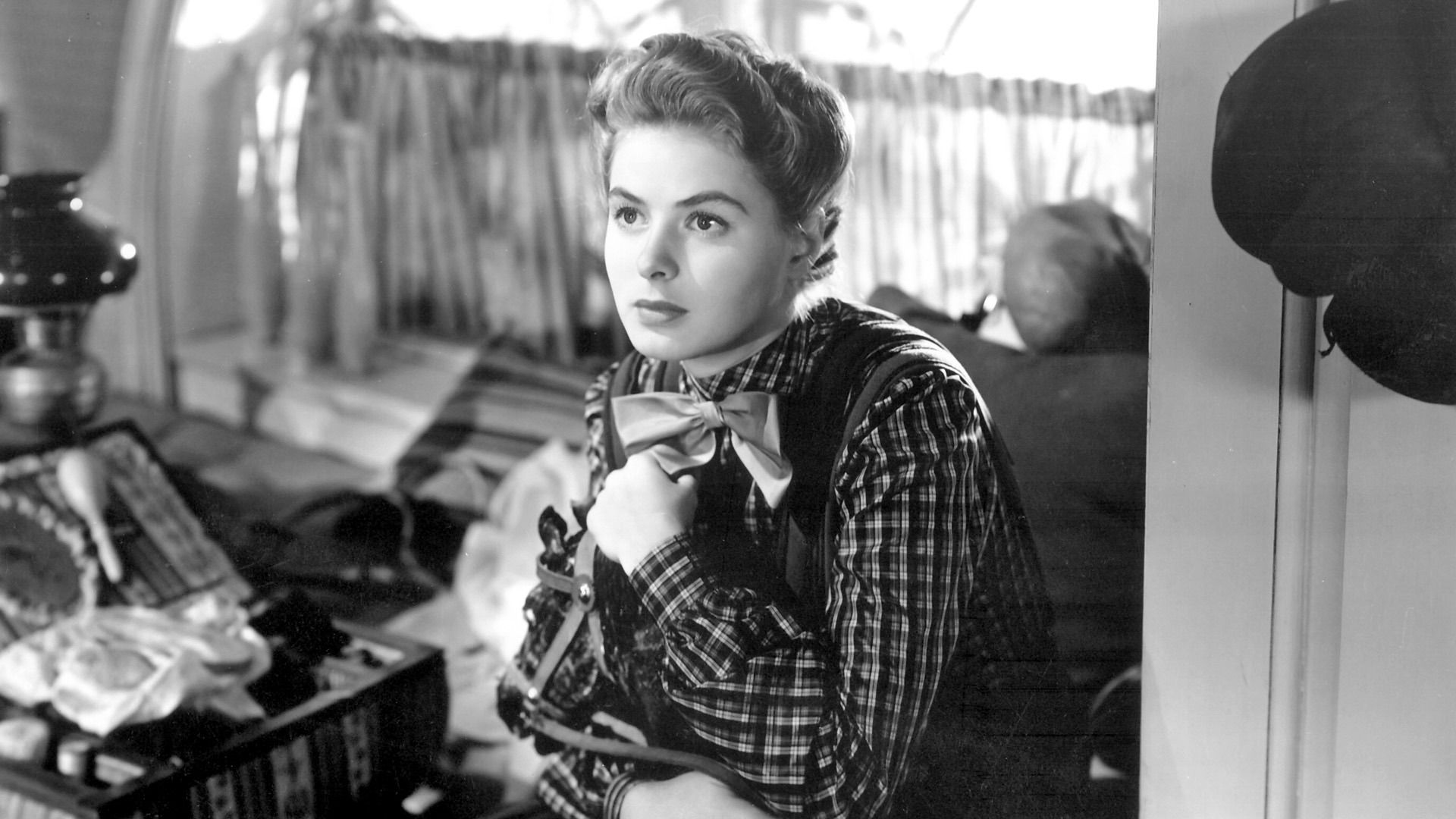
Ingrid Bergman gets some bad news. Image: Reelgood
Ingrid Bergman always gives an audience their money’s worth.
The legendary actress, born in Stockholm, Sweden, came to Hollywood in 1939, where she made such films as Casablanca (1942), The Bells of St. Mary’s (1945), and The Inn of the Sixth Happiness (1958). She also won three Oscars, and was nominated for an additional four.
So, she knew a thing or two about being in the pictures and consistently gave stellar performances, even if she didn’t think the script was particularly good. One example is Adam had Four Sons (1941).
This is a period melodrama, set before, and immediately following, WWI. Bergman plays a fresh-off-the-boat French governess employed by a wealthy family with four lively boys. She becomes further ensconced in the household when their mother dies.
Alas, this is 1907 and the stock market crashes. The family loses their fortune, and Bergman is sent back to France.
What we’ve not told you is the pater familias, played by Warner Baxter, is still a handsome man, and when it breaks his heart to return Bergman to France, we’re heartbroken, too. But there’s No Other Way! He and his youngest son are forced to live in a Brooklyn apartment in reduced circumstances. What’s to be done?
Now, Bergman may not have felt this movie was award-winning material, but there are many things it does well. The understated farewell scene between Baxter and Bergman is one of them. As the two characters, hearts broken and miserable, say goodbye to each other, we the audience want to scream, “You could get married!”
But that doesn’t occur to them – or maybe it does, but you know how it is sometimes – and Bergman boards the ship to France.
This film pulls you in and, even though you see the tricks filmmakers are using to ensnare you, you can’t help but care about this family.
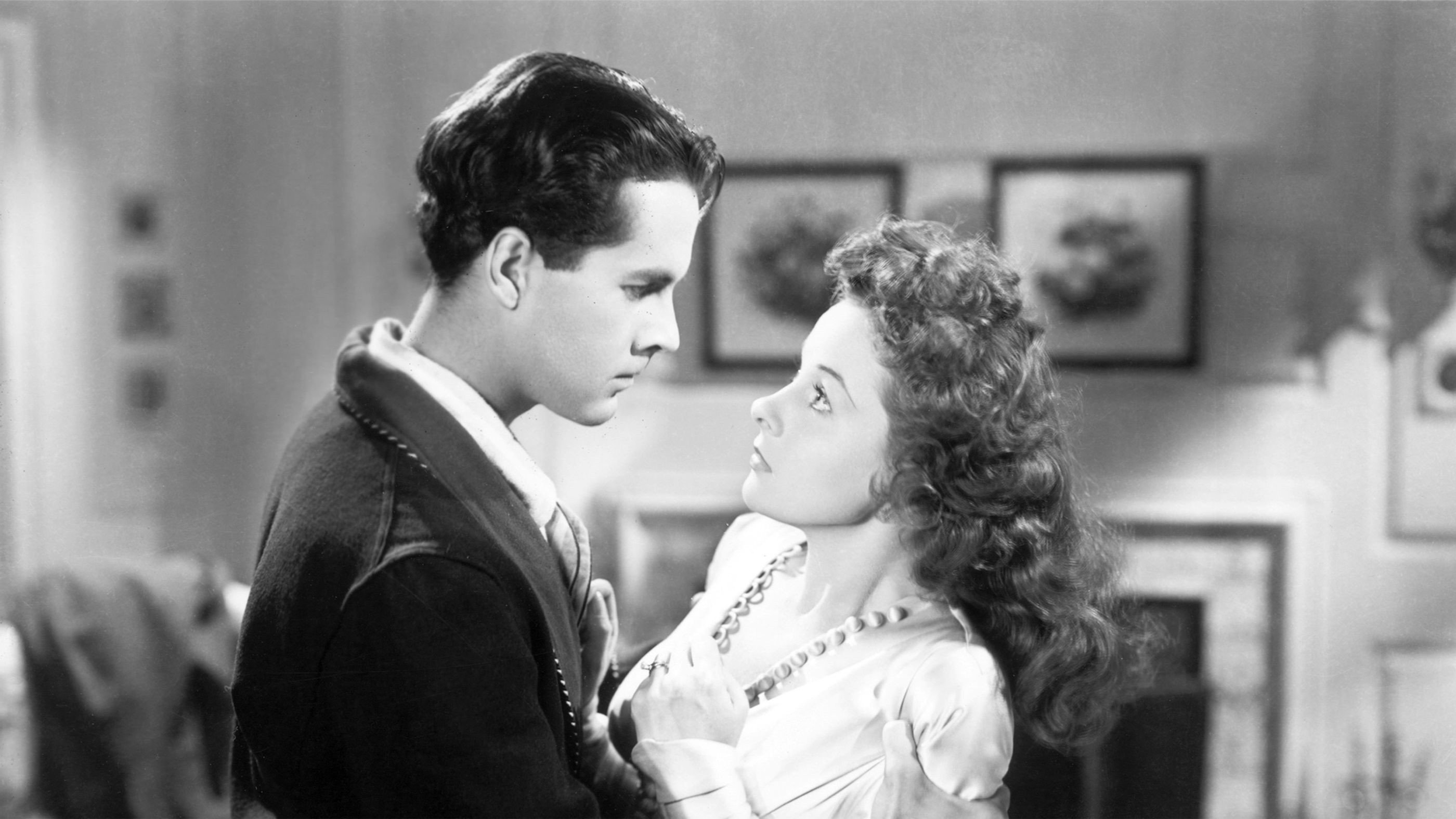
Susan Hayward looks innocent, but she is Trouble. Image: The Movie Database
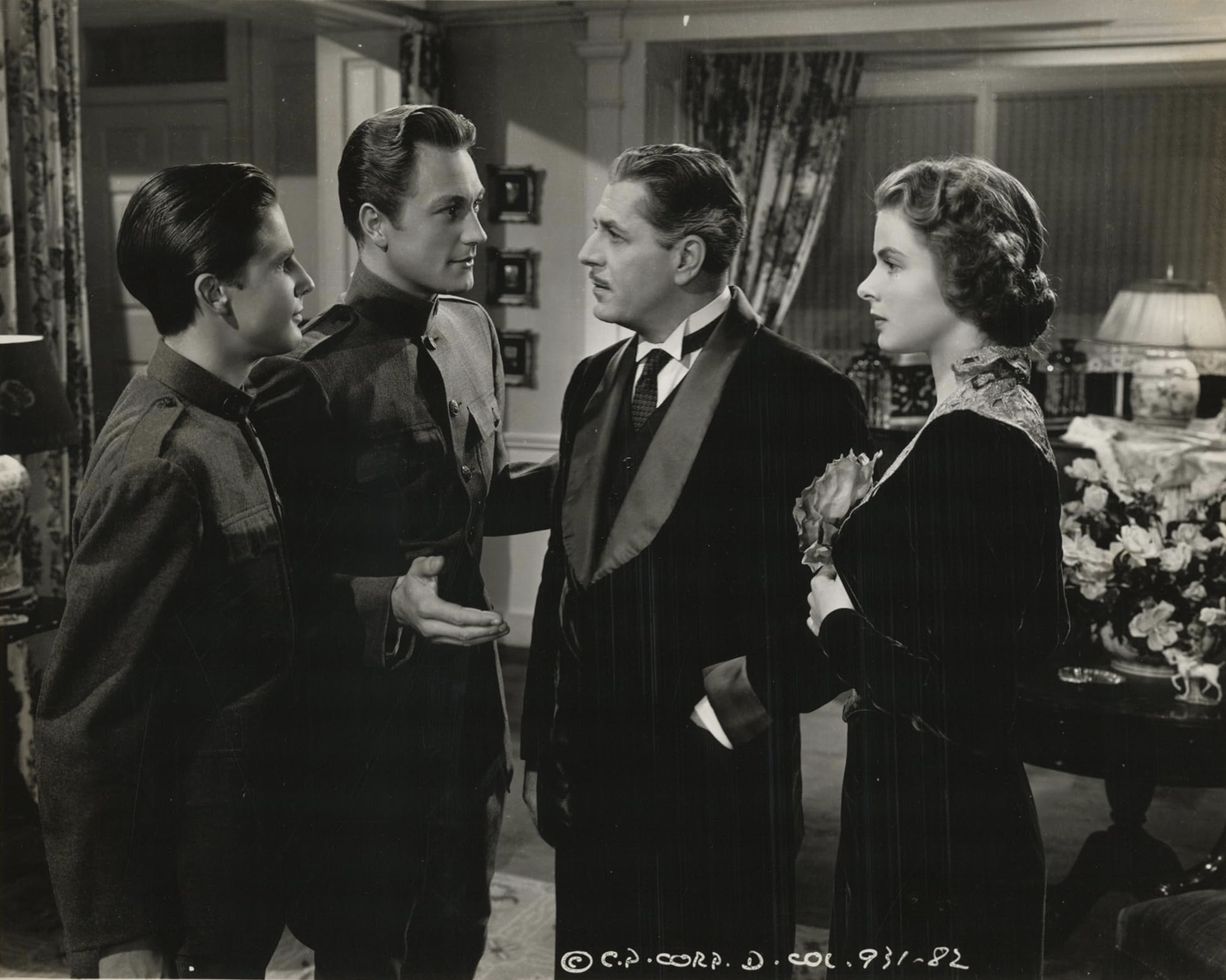
Bergman does return to the U.S., though, a decade later, just as WWI is drawing to a close. Baxter has summoned her because his manufacturing company made truckloads of wartime money. Even though the boys have grown and enlisted in the army, Baxter has not forgotten Bergman, and she, evidently, has not forgotten him.
Meanwhile, one of the sons has unexpectedly married a young woman with ulterior motives regarding his three brothers… if you know what we mean.
Bergman and Hayward dislike each other, and they engage in a restrained power struggle. Bergman is guarded, Hayward is brash. Yet Hayward asks the question we’ve all been wondering: “Why does a woman cross the ocean to be a governess to four grown men? Or is there another interest that brought you?”
Indeed. Bergman’s character has been in France for the last 10 years, four of those a World War, and she never married. It’s as though her character sat and waited until Baxter sent for her. That an attractive young woman would whittle away her youth in such a fashion is rather unlikely, but Bergman’s lost decade is not in the scope of this movie.
The 10-year waiting period, however, provides an interesting subtext to the increasing tension between Bergman and Hayward.
Hayward has no respect for Bergman and her long-suffering demeanour. As for Bergman, she sees through Hayward, and despises her dismantling the family.
Ultimately, this is a film about women: a dying mother, a spinster cousin, an unfaithful young wife, and a devoted governess. Adam and his four sons, despite having the movie named after them, are auxiliary characters.
Adam’s sons go to war. Image: IMDb
Adam had Four Sons is based on the 1940 novel, Legacy, by Charles Bonner, who wrote four novels, 200+ published stories, and several film and television screenplays. He also worked as a consultant for a public relations firm.
This film was Bergman’s second in Hollywood, and it was directed by Gregory Ratoff, who also directed her first Hollywood feature, Intermezzo (1939).
“At last something my teeth could bite into, but it was not such a good apple,” Bergman later said, in regards to the 1941 melodrama. “We had a script to work with but the dialogue was made up minute by minute as we went along, and they had no idea how to end the picture. … [A] great affection for the crazy Gregory Ratoff, so it all left a very pleasant souvenir.”¹
Bergman is in excellent company in this melodrama. Warner Baxter has a thankless role, yet he always brings surprising depth to his characters. Susan Hayward, in one of her early films, is superb as a conniving gal with a take-no-prisoners vibe.
The film received mixed reviews when first released, but we think it’s withstood the Test of Time. If you’re in a mood for an Ingrid Bergman melodrama, or a melodrama that steadily builds tension, we recommend Adam had Four Sons.
This post is part of THE 8th WONDERFUL INGRID BERGMAN BLOGATHON, hosted by Wonderful World of Cinema.
Adam Had Four Sons starring Ingrid Bergman, Warner Baxter, Susan Hayward. Directed by Gregory Ratoff. Written by William Hurlbut & Michael Blankfort. Columbia Pictures, 1941, B&W, 81 mins.
There’s something about this movie that I like, although I really dislike the way Susan Hayward’s character is written — she’s just so irredeemably, over-the-top awful, almost a caricature. Beyond that, I really enjoyed your write-up, and I learned several things — I had no idea that Ingrid Bergman had been nominated for so many Oscars, or that Gregory Ratoff was the director of this film (and Intermezzo)!
You’re right about Susan Hayward’s character. She is completely over the top, and I am here for it! I wonder if playing such a character is somewhat cathartic?
“We had a script to work with but the dialogue was made up minute by minute as we went along, and they had no idea how to end the picture.” Ahhh this reminds me of something else ;))
Honestly, I did enjoyed Adam Had Four Sons a lot when I saw it! I thought it was an engaging story and with great performances. Not perfect, but certainly not bad. Thank you so much for your great and thoughtful article about it! I’m glad you could participate in the blogathon! 🙂
What a great insight into this period of Ingrid Bergman’s career and this film is so underrated as well. Great to see it showcased here and as part of the blogathon!
Kinda because of my Mum I guess. She liked the old Universal Horror Monster movies, so we used to watch them on TV, and maybe as I loved B&W films so much I guess I’ve always gravitated towards that era of cinema – especially pulp crime moves / noir, thrillers, and 50’s Sci-fi especially as well. Classic cinema was the forge of much of the modern cinema and Tv that we have now. I find classic cinema the perfect way to chill out and unwind from the mad, mad world around us now and the frenetic CGI spectacles that dominate popular culture now.
Those old Universal films are terrific. Some historians say they helped keep that studio afloat during the depression – those and the remarkable Deanna Durbin. I agree the old classics are comforting: they don’t lecture (much), and they tell a good story.
There seem to be very few old movies you haven’t heard of or seen. Thanks for sharing!
This was one of the first Bergman movies I ever saw. I caught it on a late-night TV showing many years ago, and I remember it fondly. At the time, I thought it was a nice little drama, and I just wanted to see more of that beautiful lady with the accent.
She’s really beautiful here, isn’t she – as in all her movies. No artifice in her performances. You believe her to be the character she says she is. And what a great into to her filmography!
Gosh, this sounds such a weepie. I must see this.. it sounds like the perfect one to wallow in the plot . I like that they didn’t know the ending or what would happen next so they never knew what would happen next. Like life..
She is absolutely marvellous. A beautiful and talented woman, that’s for sure. And I know what you mean about the excitement in seeing her in a new-to-me film. That’s how I felt watching this one.
Lovely review, Ruth. Thanks for recommending this one, a film I’ve heard of but haven’t gotten around to watching yet. I love both Bergman and Hayward, so it will be delightful seeing them together.







There’s something about this movie that I like, although I really dislike the way Susan Hayward’s character is written — she’s just so irredeemably, over-the-top awful, almost a caricature. Beyond that, I really enjoyed your write-up, and I learned several things — I had no idea that Ingrid Bergman had been nominated for so many Oscars, or that Gregory Ratoff was the director of this film (and Intermezzo)!
LikeLiked by 2 people
You’re right about Susan Hayward’s character. She is completely over the top, and I am here for it! I wonder if playing such a character is somewhat cathartic?
LikeLike
“We had a script to work with but the dialogue was made up minute by minute as we went along, and they had no idea how to end the picture.” Ahhh this reminds me of something else ;))
Honestly, I did enjoyed Adam Had Four Sons a lot when I saw it! I thought it was an engaging story and with great performances. Not perfect, but certainly not bad. Thank you so much for your great and thoughtful article about it! I’m glad you could participate in the blogathon! 🙂
LikeLiked by 2 people
Yes, her recollections of the scripting process is very similar to another movie, isn’t it? Thanks for your kind comment. 🙂
LikeLiked by 1 person
What a great insight into this period of Ingrid Bergman’s career and this film is so underrated as well. Great to see it showcased here and as part of the blogathon!
LikeLiked by 1 person
This film is underrated, isn’t it? I can’t believe it took me so long to finally see it?
I’ve noticed that you are quite a classic film connoisseur. How did you start to discover these movies?
LikeLiked by 1 person
Kinda because of my Mum I guess. She liked the old Universal Horror Monster movies, so we used to watch them on TV, and maybe as I loved B&W films so much I guess I’ve always gravitated towards that era of cinema – especially pulp crime moves / noir, thrillers, and 50’s Sci-fi especially as well. Classic cinema was the forge of much of the modern cinema and Tv that we have now. I find classic cinema the perfect way to chill out and unwind from the mad, mad world around us now and the frenetic CGI spectacles that dominate popular culture now.
LikeLiked by 1 person
Those old Universal films are terrific. Some historians say they helped keep that studio afloat during the depression – those and the remarkable Deanna Durbin. I agree the old classics are comforting: they don’t lecture (much), and they tell a good story.
There seem to be very few old movies you haven’t heard of or seen. Thanks for sharing!
LikeLiked by 1 person
I don’t know how I’ve never seen this, but now it’s. going to the top of my list. Great post! Thanks!
LikeLiked by 1 person
I hope you enjoy, if you get the chance to see it. It’s beautifully filmed, and the costumes are really lovely.
LikeLiked by 1 person
Thanks so much for the intro to this one, Ruth. Sounds like a film that is right up my street.
Maddy
LikeLiked by 1 person
I think you’d like this one, Maddy. It’s well worth a watch.
LikeLike
This was one of the first Bergman movies I ever saw. I caught it on a late-night TV showing many years ago, and I remember it fondly. At the time, I thought it was a nice little drama, and I just wanted to see more of that beautiful lady with the accent.
LikeLiked by 1 person
She’s really beautiful here, isn’t she – as in all her movies. No artifice in her performances. You believe her to be the character she says she is. And what a great into to her filmography!
LikeLiked by 1 person
Gosh, this sounds such a weepie. I must see this.. it sounds like the perfect one to wallow in the plot . I like that they didn’t know the ending or what would happen next so they never knew what would happen next. Like life..
LikeLiked by 1 person
Yes, exactly! Not knowing the ending is just like life, as you say. I think you’d like this one. I didn’t expect the tension here.
LikeLiked by 1 person
Thanks for the recommendation, you have impeccably sold as always Ruth.
LikeLiked by 1 person
Thanks!
P.S. I’m off watermelon now. New fruit obsession is apples.
LikeLiked by 1 person
Apples as cider or in puddings?
LikeLiked by 1 person
Apple as in cider.
LikeLiked by 1 person
Fruit or homemade??? or both…?
LikeLike
Ingrid is a gift from the god’s of cinema. She is so beautiful it’s always a pleasure to watch her in new (to me) films.
LikeLiked by 1 person
She is absolutely marvellous. A beautiful and talented woman, that’s for sure. And I know what you mean about the excitement in seeing her in a new-to-me film. That’s how I felt watching this one.
LikeLiked by 1 person
You found a film here starring Ingrid B that I have never heard of. Will have to put it on my list. X
LikeLiked by 1 person
Oh yes, you ought to see it, if you have time in between all your travels. 😉 Hope you enjoy!
LikeLiked by 1 person
Lovely review, Ruth. Thanks for recommending this one, a film I’ve heard of but haven’t gotten around to watching yet. I love both Bergman and Hayward, so it will be delightful seeing them together.
LikeLiked by 1 person
Oh yes, it’s well worth your time. Bergman and Hayward are in top form here.
LikeLiked by 1 person
Great review! I’m not surprised that the script was so seat-of-the-pants–it kinda shows.
LikeLiked by 1 person
It does kinda show, doesn’t it?
LikeLike