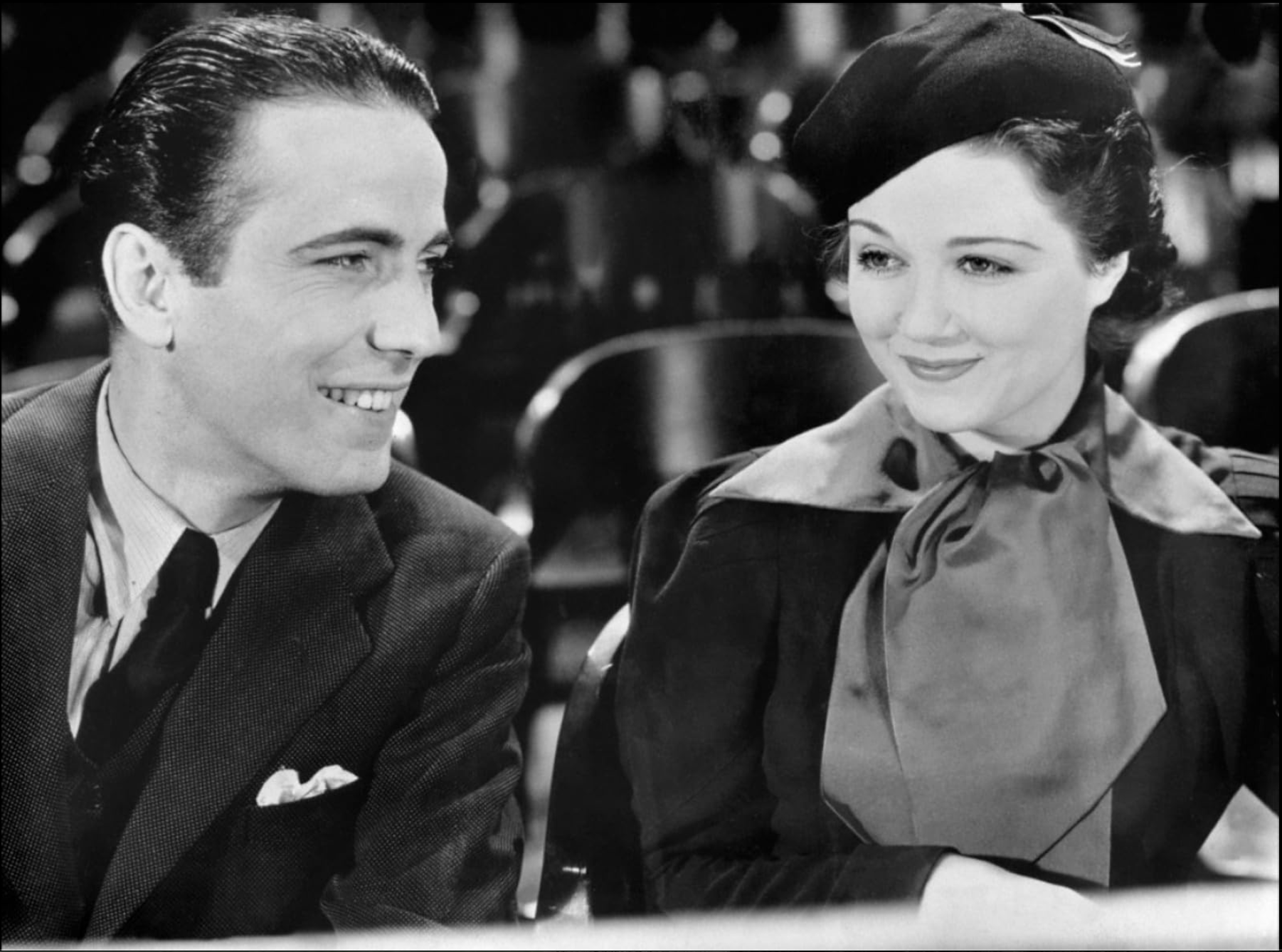
Sidney Fox (right) with boyfriend, Humphrey Bogart. Image IMDb
One of the most awkward social occasions is what to do whilst awaiting an execution.
There are the women who knit, as Charles Dickens described in A Tale of Two Cities, but yarn hobbies aren’t for everyone. Besides, Dickens’ novel was set during the blood-soaked French Revolution, when people slaughtered their enemies. In our kinder, more tolerant age, we need genteel activities, especially if an execution is scheduled at midnight, far past a civilized bedtime.
Midnight (1934), re-released in 1949 as Call it Murder, explores the waiting for an execution and studies it from different vantage points.
But first, how did this execution come about?
A woman is on trial for murdering her husband and stealing his money. It was a Crime of Passion, as these things sometimes are, but, as lawyers are getting down to the Nitty Gritty in court, the jury foreman interrupts them to ask the accused woman a question. Did she take the money from her husband before or after he died? She admits she took the money afterwards, which makes it look as though she killed her husband for the money.
Well! That question-and-answer Seals her Fate, and she is sentenced to die in the electric chair.
(Points of Order: 1. The movie goes to great lengths to explain the jury foreman was within his rights to interrupt court proceedings. 2. IMDb clarifies the “theft.” In the 1930s, a bank account owned by a husband and wife wasn’t considered a joint account. It was regarded as the man’s money, so in the minds of the jury, the woman stole from her dead husband.)
The foreman innocently skews the results of the trial, but he’s also a man of principle, genuinely trying to get to the truth. He realizes later his question affected the outcome, and it weighs heavily on his conscience.
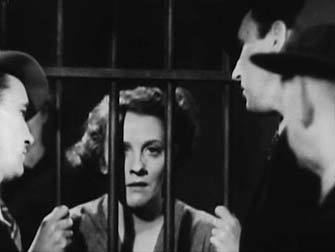
It also weighs heavily on the condemned woman, alone in her cell, wrestling her emotions until the appointed hour of midnight.
Then there are the foreman’s grown children and son-in-law, who are oblivious to his guilt-ridden conscience due to their own activities.
Such are the people awaiting a midnight execution.
The condemned woman. Image: Alchetron
So, what does a person do whilst waiting for someone to be terminated in the electric chair?
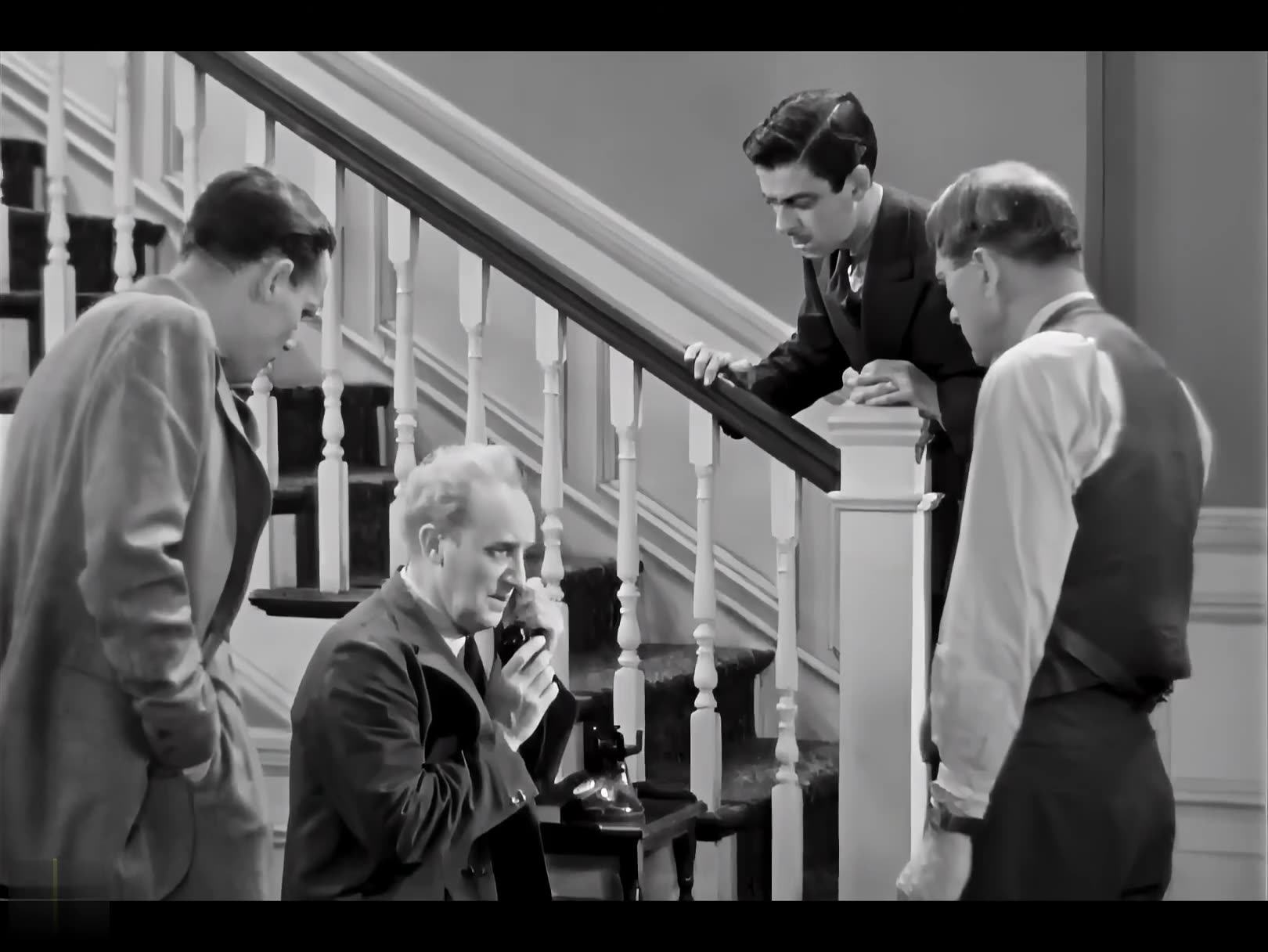
Our foreman is having a miserable time of it. He’s in a state of barely-controlled hysteria, seeking assurance that he did the right thing in the courtroom. He’s desperate to know what’s going on at the prison, yet he cannot stand having the radio on.
(The radio, you see, is broadcasting updates from the prison, even though there’s precious little to report.)
Speaking of the media, a reporter has talked the foreman’s son-in-law to letting him into their home. He pretends to be a friend, but he’s stalling until midnight when he can smuggle in a photographer to record the foreman’s reactions.
The son-in-law has sold access to his father-in-law’s misery for a paltry sum, but it makes him feel important. After all, it’s not every day a woman is executed.
We should point out that many reporters are camped outside the foreman’s house, waiting for juicy tidbits, because there’ll be brisk newspaper sales. Remember the old adage? If it bleeds, it leads.
While the foreman waits and frets, a few relatives drop by to get the inside scoop – er, rather, to offer comfort. They insist the radio stays on as they play bridge. They even rope the reporter into the game, making him part of the fun. Midnight is a long way off, after all.
One of the foreman’s daughters is having a situation of her own. Her boyfriend, Humphrey Bogart, tells her he’s “leaving on a trip.” She’s no fool; she knows he ain’t coming back, and before the evening is over, this situation will have a grim, irreversible outcome.
The condemned woman must pass the time, too, and she reviews newspaper articles about her trial between moments of distress. She’s in tears as she clings to the priest administering her last rites. But, at the end of it, she leaves her cell with squared shoulders and walks down the passageway to the electric chair.
There’s one final group of people waiting for the execution, witnesses gathered to watch the woman die. We see this group as the door opens to the execution room. The camera pans their faces as they gape at her with pity and apprehension, like she’s a rare animal at the zoo.
No last-minute stays of execution have been sent by the governor, and authorities get on with the business at hand.
Desperate negotiations. Image: Rumble
Midnight was based on a 1930 play of the same name written by Clare and Paul Sifton. It ran on Broadway for 48 performances, and starred playwright Clifford Odets as the foreman of the jury.
The film adaptation was made for $50,000 US (approx. $1.25M US today), and is mentioned in very few 1934 Top Movie lists. This is a shame because it’s a film that makes you think. The events are presented in a thoughtful way that builds the tension until the final scene.
Nor does it convince you to form a particular opinion. A woman will be executed, and the foreman of the jury is wracked with guilt. You decide for yourself about all of it.
Midnight feels like it’s based on an actual event. We couldn’t verify this, but in 1928 there was a woman named Ruth Snyder who was electrocuted for the murder of her husband. Yet the case is even more infamous than that. A reporter from the Chicago Tribune strapped a camera to his leg to sneak it into the execution room. He took a photo of Snyder in mid-execution and published it.
We’re not saying Midnight is based on Snyder’s case, but her execution would have been a recent event in movie-goers’ memory in 1934.
We recommend this haunting film. It’s not a movie you’ll soon forget.
Midnight (or, Some Call it Murder) starring Sidney Fox, O.P. Heggie, Humphrey Bogart. Directed by Chester Erskine. Written by Paul & Claire Sifton. United Artists, 1934, B&W, 76 mins.






This does sound an interesting topic, but I believe Snyder’s case inspired a few noir films.
LikeLiked by 1 person
Yes, I believe you’re right. How could Hollywood NOT make movies from this case?
LikeLiked by 1 person
I did think exactly that when I discovered Chicago, was loosely based on a true story…
LikeLiked by 1 person